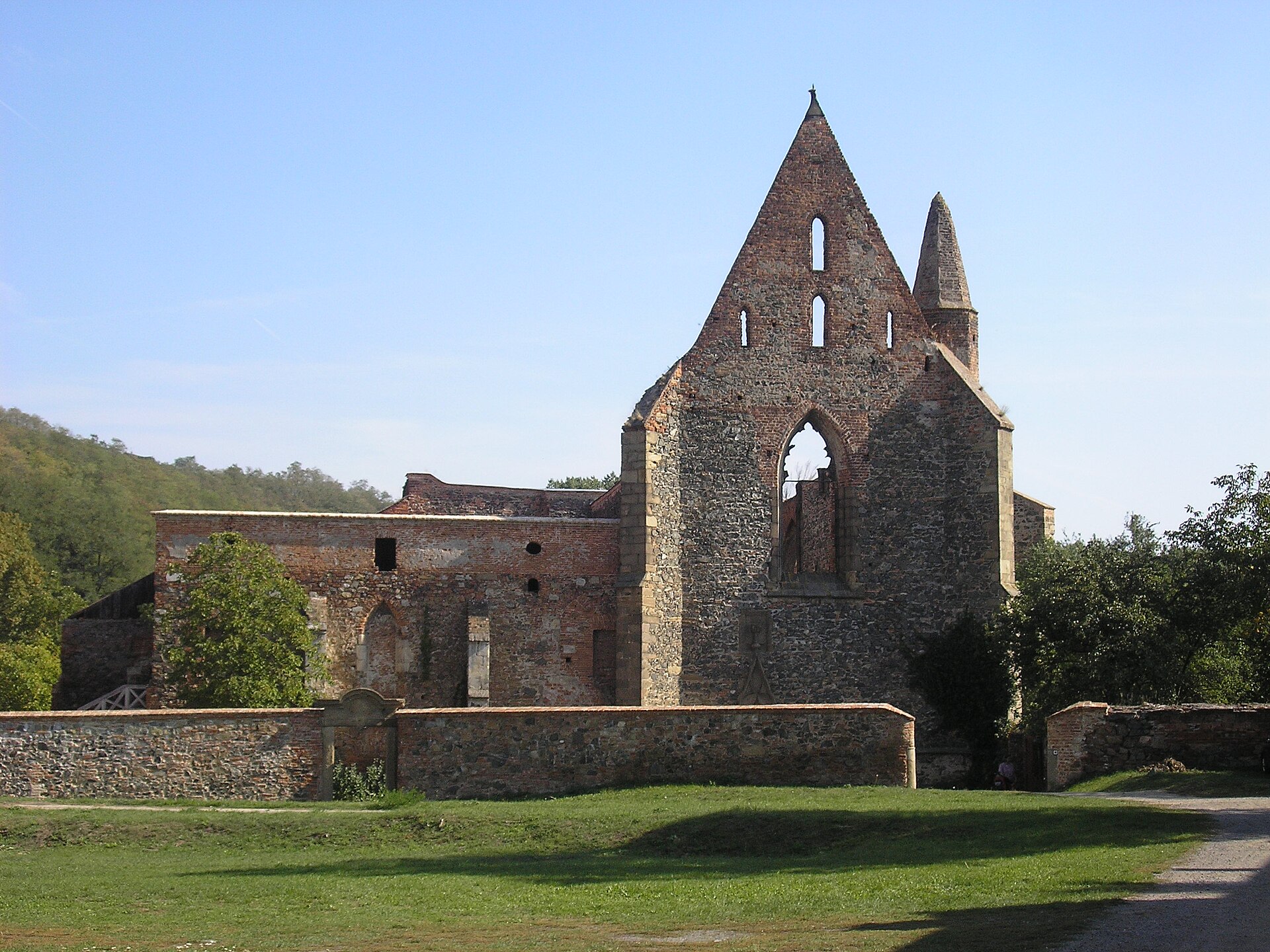
About this place
Rosa Coeli monastery is a Gothic ruin of a former Premonstratensian convent in Dolní Kounice, a small town in South Moravia set above the Jihlava River. Its name means "Heavenly Rose," and the site is considered one of the oldest women's monasteries in Moravia, with its remains now ranking among the most visited landmarks in the region.
How to get there?
Dolní Kounice lies in the South Moravian Region, a short drive from Brno, making the town easy to reach by car. The monastery ruins stand on a hill above a bend of the Jihlava River, right at the edge of the town, so they are easy to find and reachable on foot from the center. The site sits at roughly 49.074° north latitude and 16.485° east longitude, placing it in the heart of South Moravia's wine country — an area also known for its vineyards and tourist trails linking the region's historic sites.
The founding
According to tradition, the monastery was founded in 1181 by William of Pulín as an act of penance for deeds committed during wartime. Two years later, in 1183, Premonstratensian sisters settled in the newly built convent under prioress Petra of Louňovice. The name Rosa Coeli — Heavenly Rose — was meant to underline the spiritual character of the place, and the convent is regarded as the oldest women's monastery in Moravia. Construction of the church and main monastic buildings began in the founding year itself, and the whole complex — including the cloister surrounding an inner courtyard and a fortified monastery castle built on a nearby hill — was completed in the 14th century.
Monastic life and architecture
Life inside the convent followed an unusually strict rule: the nuns spent seven to eight hours a day in prayer, and their order forbade them from ever leaving the church grounds. The complex combined religious and defensive functions — the monastery church was built in Gothic style, while the surrounding cloister and courtyard created a space typical of contemplative women's communities of the period. The fortified castle on the hill above was meant to protect the abbey from outside attack, a reminder of how unsettled the times were in which the community lived.
Destruction and lasting ruin
The monastery's fate changed during the Hussite Wars of the 15th century, when the buildings were burned. The final blow came in 1526, when the complex was completely destroyed. From 1808 onward the women's convent was never rebuilt, and it gradually became the permanent ruin visible today. Even after centuries of decay, surviving wall fragments, pointed Gothic window openings, and remnants of the cloister still hint at the abbey's former grandeur.
Restoration and today
Rosa Coeli is now one of the most visited attractions in the South Moravian Region. In autumn 2024, EU-funded restoration work began on the site, including opening the southern part of the monastery garden, building a new visitor information center, and revitalizing the historic church and cloister. The site also regularly hosts cultural events and historical town festivities that bring visitors closer to the medieval past of Dolní Kounice.
Frequently asked questions
When was Rosa Coeli monastery founded? The monastery was founded in 1181, and Premonstratensian nuns moved in starting in 1183.
What does the name Rosa Coeli mean? It is Latin for "Heavenly Rose," a name meant to reflect the spiritual character of the women's religious community.
Why is the monastery in ruins today? The buildings burned during the Hussite Wars in the 15th century and were completely destroyed in 1526; the site was never rebuilt after 1808.
Is the site currently being restored? Yes — EU-funded restoration work has been underway since autumn 2024, covering the church, cloister, and the opening of the monastery garden.
Nearby places

Earn badges for the places you visit
Download NextOnTrip, discover new places and check off your trails.