About this place
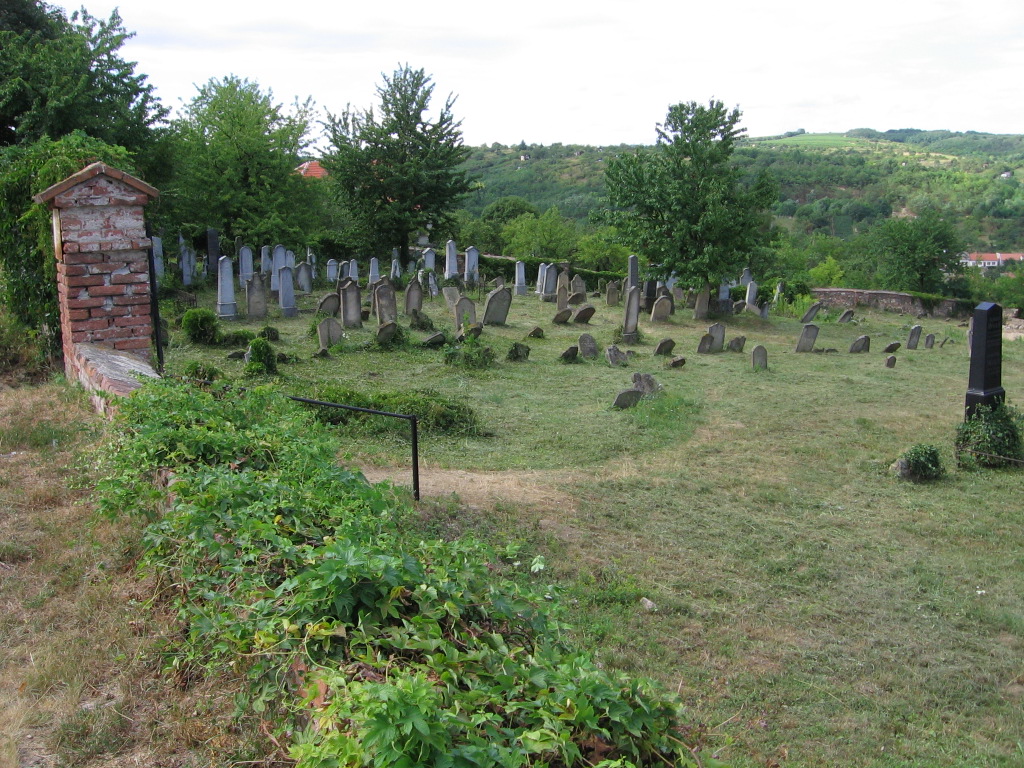
The Jewish cemetery in Dolní Kounice ranks among the largest and best-preserved Jewish burial grounds in Moravia, spread across a hillside on the southern edge of the town, along Trboušanská Street, close to the municipal Christian cemetery.
When was the cemetery founded?
The burial ground was established in 1680, replacing an earlier Jewish cemetery that had stood elsewhere in the town before being closed. Originally the site was reached from the north, along a footpath climbing the slope; today's entrance instead lies to the south, off Trboušanská Street. The cemetery kept expanding into the 19th century, a period when the local Jewish community reached its greatest size and prosperity.
How many tombstones remain, and what do they look like?
Between roughly 1,300 and 1,500 tombstones survive on the site, scattered irregularly across the slope rather than arranged in neat rows. A massive stone wall encloses the whole burial ground. The oldest surviving stones date from the late 17th and 18th centuries and stand mostly in the northern part of the cemetery; many display Baroque and Classicist stylistic features. Hebrew inscriptions dominate the older markers, while German lettering becomes common on the 19th-century stones, mirroring the gradual assimilation of the local Jewish population. The cemetery today holds protected cultural-monument status.
Who is buried here?
Among those interred is Rabbi Dr. Heinrich Flesch, along with members of the family of Austrian Chancellor Bruno Kreisky. These graves point to how far the social and family ties of the Kounice Jewish community reached, despite the modest size of the town itself.
What was life like for the local Jewish community?
Jews are recorded as having settled in Dolní Kounice as early as the mid-15th century, with some sources tracing the community back even further, to the second half of the 14th century. The congregation reached its peak in the 19th century: in 1848 it numbered 595 people, at times making up as much as a quarter of the town's total population. From then on, numbers steadily declined — 206 in 1900, 71 in 1921, and just 53 by 1930, or 1.6% of the population. The Jewish quarter suffered a devastating fire in 1823 and further damage from a flood in 1862, both of which weakened the community's standing in the town.
What happened to the community during World War II?
The centuries-long history of the Jewish community in Dolní Kounice came to a tragic end in 1942, when the Nazi occupation authorities deported nearly all local Jews to death camps. According to historical accounts, only a single member of the community survived — Ruth Kopečková-Morgensternová. Since then, the cemetery has stood as a silent witness to a community that ceased to exist.
Frequently asked questions
Can visitors tour the cemetery? Yes, the site is open to visitors as a protected cultural monument and memorial site; the entrance is reached from Trboušanská Street.
How old is the oldest tombstone? The oldest surviving stones date from the late 17th century, not long after the cemetery's founding in 1680.
Why is the cemetery historically significant? It is one of the best-preserved records of the centuries-long Jewish presence in southern Moravia, a community almost entirely destroyed during the Holocaust.
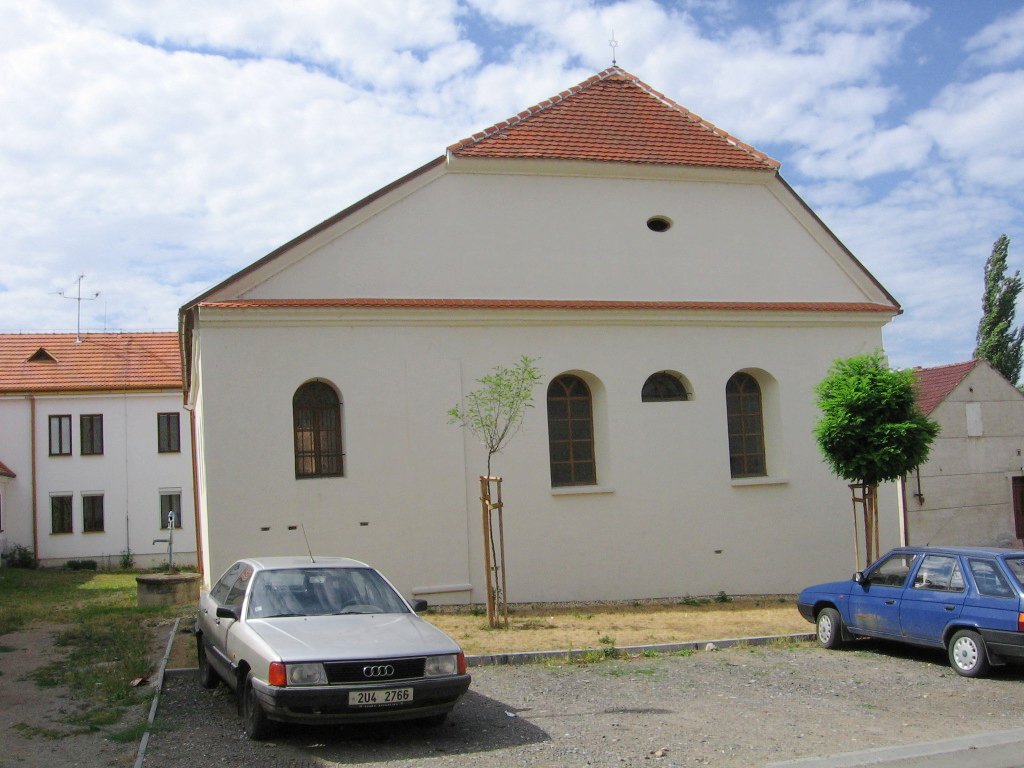
Are there other Jewish heritage sites in the town? Yes, Dolní Kounice also preserves a former synagogue, which together with the cemetery bears witness to the history of the local Jewish congregation.
Nearby places

Earn badges for the places you visit
Download NextOnTrip, discover new places and check off your trails.