About this place
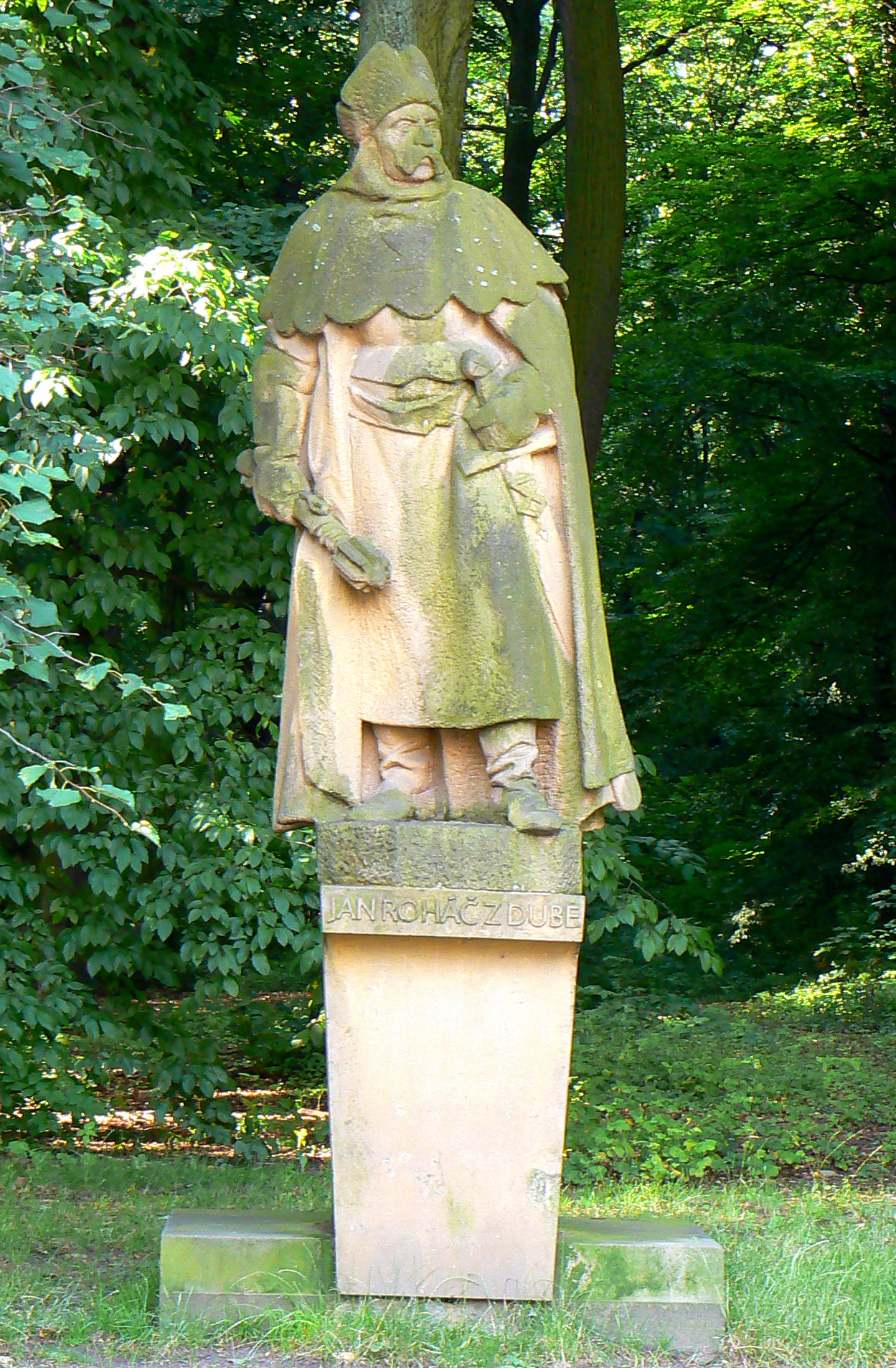
Statue of Zeus stands in Cibulka Park in Prague's Košíře district, one of several stone figures of classical deities that have decorated this landscaped park since the early 19th century — a quiet green retreat popular with locals looking for a break from the busier parts of the city.
Where exactly is it?
The statue stands deep within Cibulka Park, in the Košíře cadastral area, near a small pond and the remains of an old pergola. The location sits at roughly 50.066, 14.354. From central Prague, the easiest approach is by tram or bus toward Košíře, followed by a short walk through the park. There's no single main entrance — paths lead in from several directions, so it helps to follow the signposts naming the individual features along the way.
Where does the statue come from?
Cibulka Park took shape in the first half of the 19th century, when the estate was rebuilt as an Empire-style residence set within a large landscaped park. Its owner at the time, Prince Leopold Linhart Thun-Hohenstein, who acquired the property in 1817, laid out the grounds in the romantic style then in fashion — scattering small structures and sculptures among the trees and winding paths. The statue of Zeus belongs to that decorative tradition, alongside other figures drawing on classical mythology, including a nearby statue of Diana. The exact sculptor and date of the Zeus statue itself aren't widely documented, which is typical of many minor ornamental pieces from 19th-century romantic parks — what mattered most at the time was the overall atmosphere these figures created together with their surroundings.
What else is worth seeing nearby?
Cibulka Park offers far more than a single sculpture — it's a compact ensemble packed with points of interest. Close by stands a stone lookout tower offering views over the surrounding hills, along with the remains of a Chinese pavilion, reflecting the period fashion for oriental motifs in romantic-style parks. It's also worth seeking out the nearby statue of Diana with two dogs, once sheltered under a pergola that was demolished in the 1970s. Small ponds and springs round out the scene, giving the park an intimate, natural feel despite lying well within the city limits.
Why visit?
Cibulka Park shows a different side of Prague — away from the crowds of the Old Town, surrounded by greenery and 19th-century decorative features with romantic roots. Walking among statues of classical gods, the ruins of ornamental pavilions, and the view from the lookout tower gives a sense of what the countryside estates that once ringed Prague felt like.
Frequently asked questions
What does the statue in Cibulka Park depict? It depicts Zeus, a deity from Greek mythology, and forms part of a wider set of sculptures placed throughout the park.
When was Cibulka Park created? The park took its current romantic layout in the first half of the 19th century, after Prince Leopold Linhart Thun-Hohenstein bought the estate in 1817.
Are there other similar statues in the park? Yes, a statue of Diana with two dogs stands nearby — both pieces belong to the tradition of decorating romantic parks with classical mythological themes.
How do you get to Cibulka Park? The park is in Prague's Košíře district; the easiest way is by public transport toward Košíře, followed by a walk along the park's paths.
Is there an entrance fee? The park is open public green space, so walking through it and viewing the statues doesn't require a ticket.
Nearby places

Earn badges for the places you visit
Download NextOnTrip, discover new places and check off your trails.