About this place
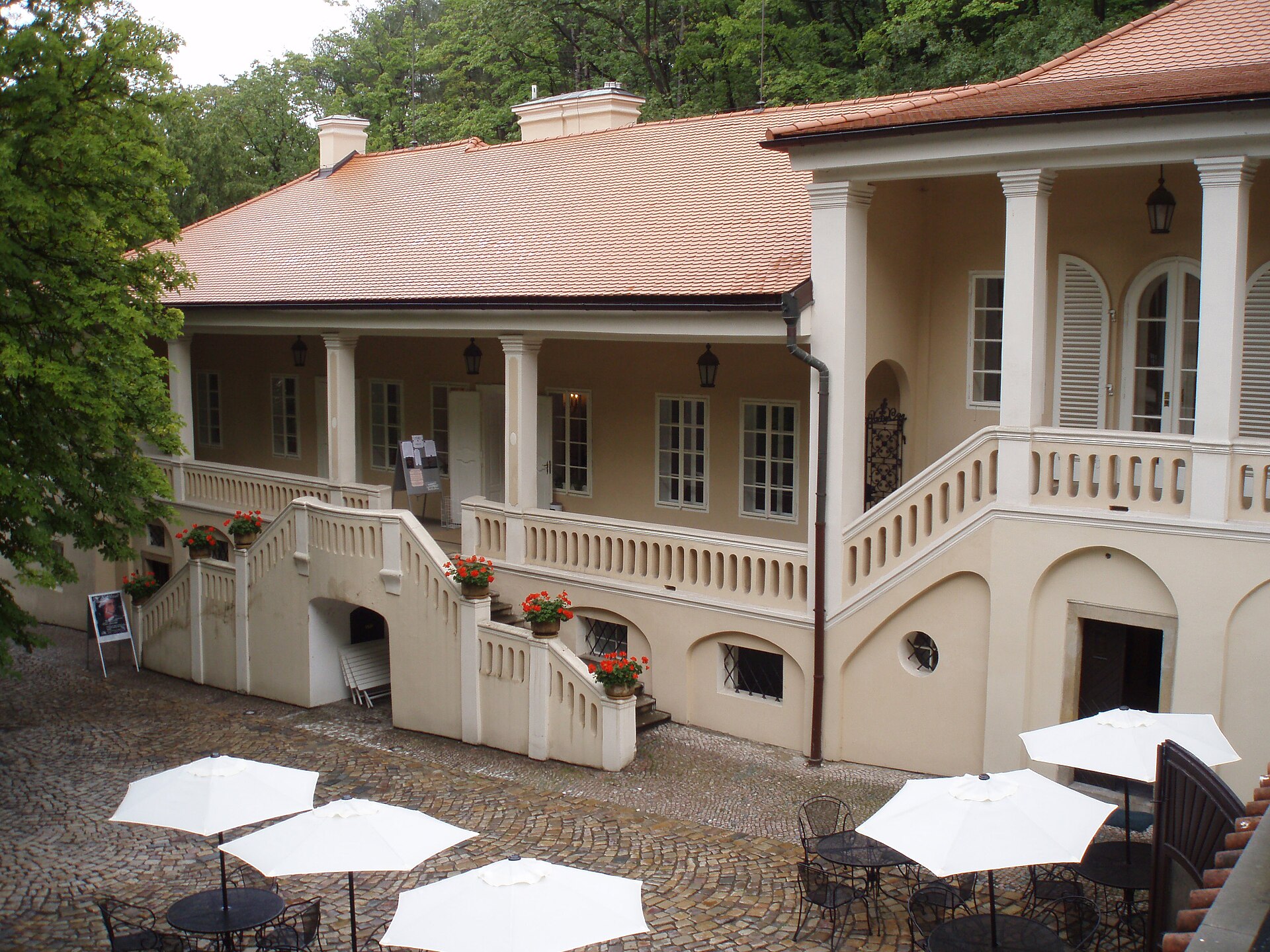
Jinonice Castle (Jinonický zámeček) is a modest baroque chateau in Prague's Jinonice district, part of Prague 5, that spent decades quietly decaying before a major renovation turned it into one of the city's more unusual blends of historic architecture and modern housing.
How far back does the site's history go?
The settlement of Jinonice is first documented in 1088, in the founding charter of the Vyšehrad chapter, making it one of the older recorded place names in this part of Prague. A defensive fortress (tvrz) once stood on the site but was destroyed during the Thirty Years' War. Only after the war ended did the estate pass to Pavel Michna of Vacínov, who had a farm court and small chateau built where the old fortress had stood.
Who rebuilt it into its current form?
Ownership after the Michna family was anything but stable. The estate passed to Michna's son Václav, then to Count Georg Ludwig von Sinzendorf, whose financial troubles eventually forced the property to auction. Ferdinand of Schwarzenberg bought it, and a coat of arms above the entrance still commemorates him and his wife, Anna Maria von Sulz. It was Jan Adolf of Schwarzenberg, however, who carried out the defining reconstruction in 1685, rebuilding both the farm court and the chateau itself in an early baroque style that — despite later, smaller alterations — has largely defined the building's character ever since. A further round of classicist updates followed in 1815. The Schwarzenberg family held the estate continuously until 1945, when it was nationalized.
What happened to the chateau in the 20th century?
After nationalization, the chateau and its adjoining farm buildings were repurposed for agricultural use, and the complex spent decades slowly falling into disrepair. The site has a few notable names attached to its past: Czech poet, linguist, and National Revival figure Antonín Jaroslav Puchmajer is said to have lived here, and local history also credits a brewer named Poupě as a formative figure in the early days of Czech brewing.
What does the chateau look like today?
After decades of neglect, the complex underwent an extensive, multi-year restoration carried out under the supervision of heritage conservators. The project, which cost roughly half a billion Czech crowns and took more than two years to complete, brought back original features including timber roof trusses, historic box windows, and vaulted corridors, along with restored details such as a sundial, a small turret, and a stone footbridge. The former farm court and chateau now house more than fifty apartments — the building is primarily residential today rather than a public heritage site, so in practice visits are limited to viewing the facades and courtyard from outside.
Is it worth a visit?
For anyone interested in Prague's architecture and history, the chateau makes an interesting stop on a walk through Jinonice, a district that mixes residential streets with green space around the Jinonice pond and the Prokop Valley. It's best treated as one stop on a longer walking route through this part of Prague 5 rather than a standalone destination, since the interior is now private housing.
Frequently Asked Questions
When was Jinonice Castle built? Its current form dates mainly to a 1685 reconstruction led by Jan Adolf of Schwarzenberg, though the Jinonice settlement itself is first recorded in 1088.
Who owned the chateau over the centuries? Owners included Pavel Michna of Vacínov, the Sinzendorf family, and — for the longest stretch, until 1945 — the Schwarzenberg family.
Can visitors go inside the chateau today? No. Following its renovation, the building is used as residential apartments, so only the historic facade and courtyard can be viewed from outside.
When was the most recent restoration completed? The multi-year renovation finished in 2023, with the first residents moving in that spring.
Which notable historical figure is linked to the site? Czech poet and National Revival figure Antonín Jaroslav Puchmajer is associated with having lived at the chateau.
Nearby places

Earn badges for the places you visit
Download NextOnTrip, discover new places and check off your trails.