- Sacred Monuments
- Religious monuments
Statue of Saint Anthony of Padua on the Cloak Bridge in Český Krumlov
About this place
The Statue of Saint Anthony of Padua on the Cloak Bridge is one of four Baroque statues decorating the stone balustrade of the famous castle viaduct in Český Krumlov. The bridge, known in Czech as Plášťový most, links the Upper Castle with the Baroque castle theatre and the fifth courtyard and castle gardens, making it one of the most distinctive structures of the entire castle complex.
Where exactly is the statue located?
The sculpture stands on the stone balustrade of the bridge, which spans the deep moat separating the different sections of the sprawling Český Krumlov Castle in southern Bohemia. The bridge takes the shape of a multi-level viaduct — a structure regarded by architectural historians as both technically daring and remarkably striking for its era. It is from these upper levels of the bridge that some of the finest views over the old town and the winding Vltava river open up.
Why is there a statue here at all?
The bridge's balustrade is adorned with copies of four Baroque statues of saints: Saint Anthony of Padua, Saint Felix of Cantalice, Saint Wenceslas, and Saint John of Nepomuk. Because of their historical value and the need to protect them from weathering, the original sculptures were removed and are now kept in the castle lapidarium, while faithful copies stand in their place on the bridge. This kind of conservation practice is common across many Czech Baroque monuments — it preserves the originals while still allowing visitors to experience the structure's full historic appearance.
Why Saint Anthony of Padua specifically?
Saint Anthony of Padua, a Franciscan friar and preacher who lived in the 13th century, was one of the most widely venerated saints in Baroque Central Europe, and his image was a common feature on bridges, chapels and squares decorated during that period. Placing his statue alongside Saint John of Nepomuk — the patron traditionally invoked against floods and accidents, and a figure customarily placed on bridges throughout Bohemia — fits a broader Baroque custom of adorning river crossings and viaducts with protective saints.
What is the history behind the bridge itself?
The Cloak Bridge did not always look the way it does today. In 1777, two previously separate corridors of the structure were joined into a single unit, giving the bridge its current form. This reconstruction was part of wider Baroque modernization works carried out at Český Krumlov Castle, aimed at unifying and updating the appearance of the entire complex.
What else is worth seeing nearby?
The Cloak Bridge forms a natural passage between the Upper Castle and the Baroque castle theatre — one of the few theatres in the world to preserve its original 18th-century stage machinery — as well as the fifth courtyard and the extensive castle gardens. Walking across the bridge, past the balustrade lined with statues of saints, is an essential part of any visit to the Český Krumlov castle complex, which is inscribed on the UNESCO World Heritage List.
Frequently asked questions
Is the statue on the bridge original? No — the balustrade holds a copy, while the original Baroque sculpture is kept in the castle lapidarium.
How many statues decorate the Cloak Bridge? Four: Saint Anthony of Padua, Saint Felix of Cantalice, Saint Wenceslas and Saint John of Nepomuk.
When did the bridge take its current form? In 1777, when two separate corridors were joined into one structure.
What does the Cloak Bridge connect? The Upper Castle with the Baroque castle theatre, the fifth courtyard, and the castle gardens.
Nearby places
-

Statue of Saint Wenceslaus on the Cloak Bridge in Český Krumlov
Czeski Krumlov
-
Statue of Saint Joseph on the bridge over the bear moat in Český Krumlov
Czeski Krumlov
-
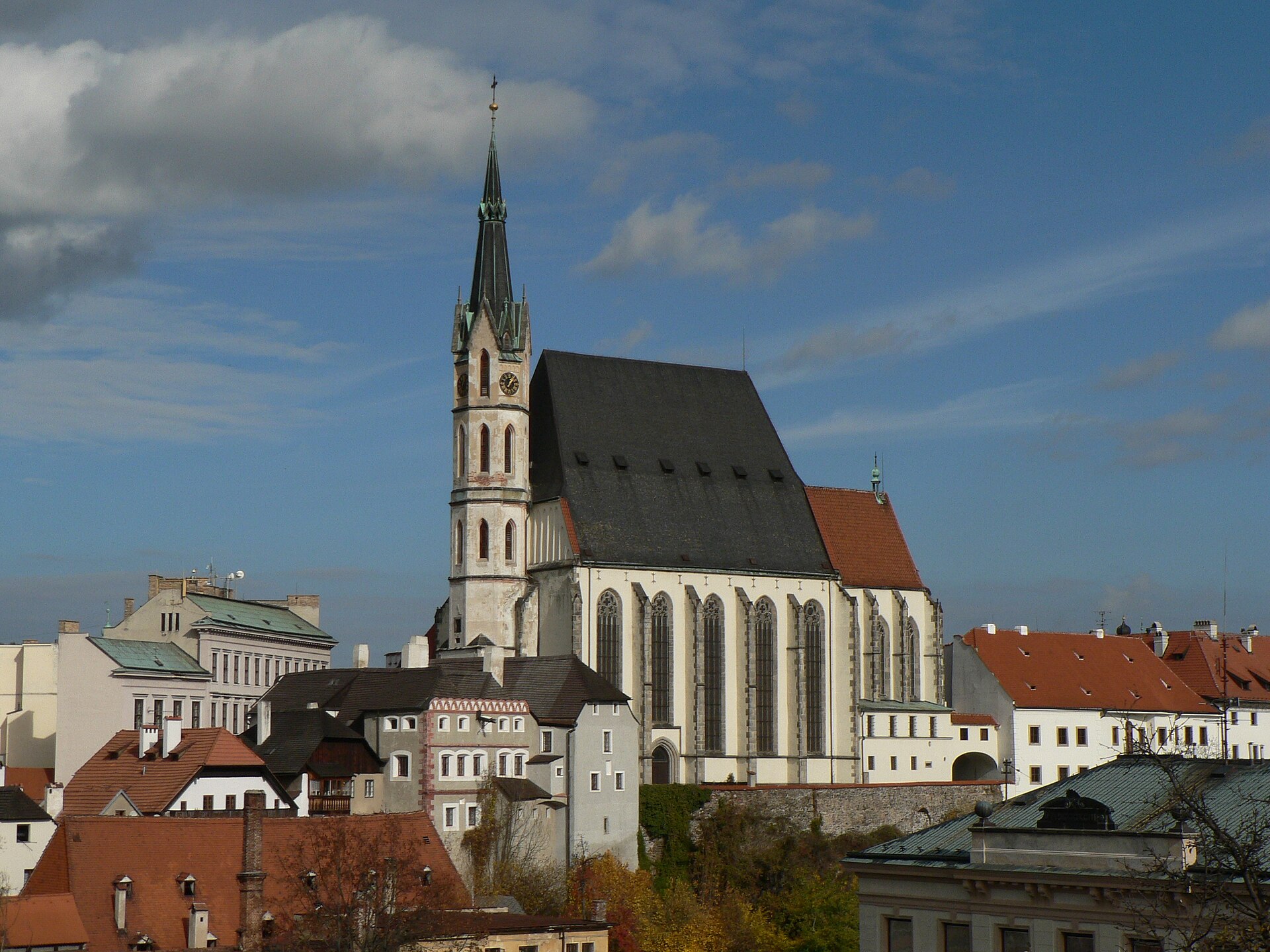
Church of Saint Vitus
Český Krumlov
-
Boží Tělo a Panna Marie
Český Krumlov
-
Statue of Saint John of Nepomuk on the head of Edvard Beneš Bridge in Český Krumlov
Czeski Krumlov
-
Minorite monastery in Český Krumlov
Czeski Krumlov
Earn badges for the places you visit
Download NextOnTrip, discover new places and check off your trails.