About this place
The Minorite Monastery in Český Krumlov stands in the Latrán district, right below the castle, in the heart of the town's UNESCO-listed historic centre. The complex once housed three different religious communities side by side — Franciscan Minorites (Friars Minor Conventual), Poor Clares, and Beguines — making it one of the rare examples of a so-called triple monastery in this part of Europe.
When was the monastery founded, and by whom?
The foundation was initiated in 1350 by Kateřina of Rožmberk, widow of Petr I of Rožmberk, together with her four sons — Petr II, Jošt, Oldřich, and Jan. The first friars did not arrive until seven years later, in 1357. The monastery church was consecrated to the Body of God (Corpus Christi) and the Virgin Mary, a dedication still reflected in the name of the church within the complex today.
What makes this monastery complex so unusual?
What sets the Krumlov complex apart from other 14th-century foundations is that it functioned from the start as a shared home for three distinct forms of religious life. Alongside the Minorites, a community of Poor Clares settled here: the first sisters entered the convent in 1361 under Abbess Elizabeth of Opava. Roughly a decade later, in 1375, a group of Beguines — lay women living a religious life without taking full monastic vows — joined the community as well. Housing three separate orders under one roof was unusual for the period and gave the Krumlov foundation its distinctive character.
How did the monastery's appearance change over the centuries?
The original Gothic buildings were repeatedly reshaped as the community's needs and architectural tastes evolved. Between 1490 and 1500, the complex underwent a late Gothic remodelling. A further major building phase followed in the 17th and 18th centuries, when Baroque alterations gave the monastery much of the appearance it still shows today.
What happened to the monastery in the 20th century?
The three communities met different fates over time. The Poor Clares' convent was already suppressed in 1782, as part of the Josephine reforms that dissolved numerous contemplative monasteries across the Habsburg lands under Emperor Joseph II. The Minorite monastery survived considerably longer, but it too eventually shared the fate of many religious communities in Czechoslovakia: in 1950 it was forcibly closed by the Communist authorities, and the buildings lost their original function for decades.
What can visitors see at the monastery today?
After years of neglect, the complex underwent an extensive revitalisation, completed in 2015. The former monastic buildings now house cultural and educational institutions that introduce visitors to art, history, and traditional crafts connected to the region. The former religious complex has thus gained a new lease of life as a place to engage with Český Krumlov's heritage, while remaining a striking part of the town's historic skyline right next to the castle and the Vltava river.
Frequently asked questions
Who founded the Minorite Monastery in Český Krumlov? It was founded in 1350 by Kateřina of Rožmberk together with her four sons.
How many religious communities lived in the complex? Three — Minorites, Poor Clares, and Beguines — making it a rare example of a triple monastery.
When did the Minorite community stop operating here? The monastery was forcibly dissolved by the Communist authorities in 1950.
What is housed in the monastery buildings today? Following a revitalisation completed in 2015, the buildings host cultural and educational institutions dedicated to art, history, and crafts.
Where exactly is the monastery located in Český Krumlov? In the Latrán district, directly below the castle, within the town's UNESCO-listed historic centre.
Nearby places
-

Boží Tělo a Panna Marie
Český Krumlov
-
Statue of Saint Joseph on the bridge over the bear moat in Český Krumlov
Czeski Krumlov
-
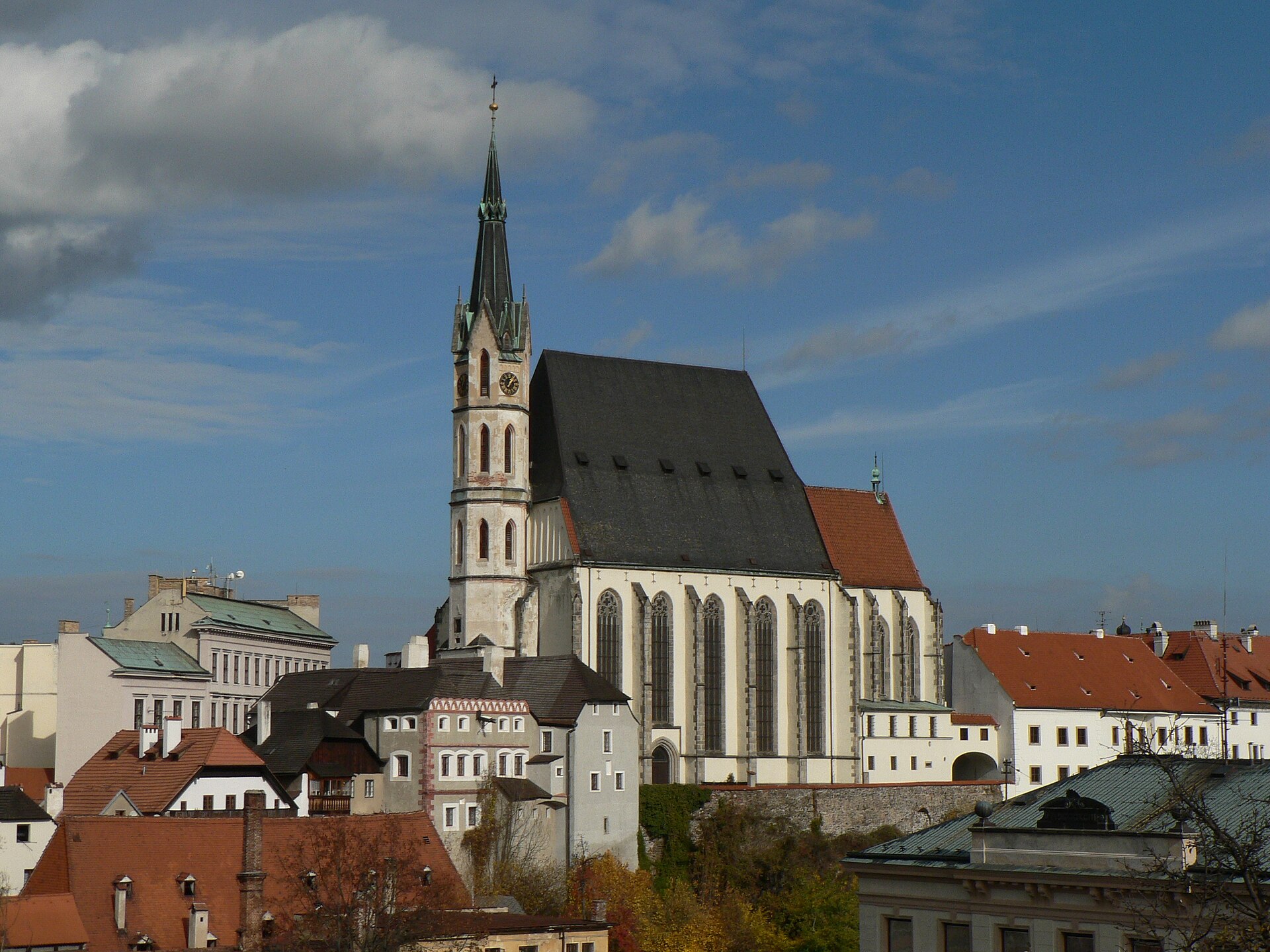
Church of Saint Vitus
Český Krumlov
-
Statue of Saint Anthony of Padua on the Cloak Bridge in Český Krumlov
Czeski Krumlov
-
Statue of Saint Wenceslaus on the Cloak Bridge in Český Krumlov
Czeski Krumlov
-
Chapel of Saint Martin
Český Krumlov
Earn badges for the places you visit
Download NextOnTrip, discover new places and check off your trails.