About this place
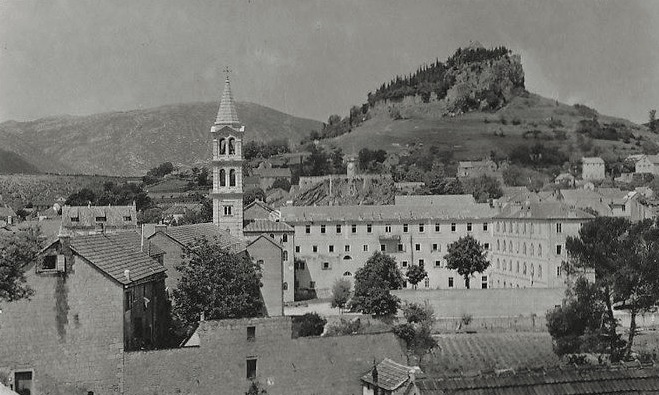
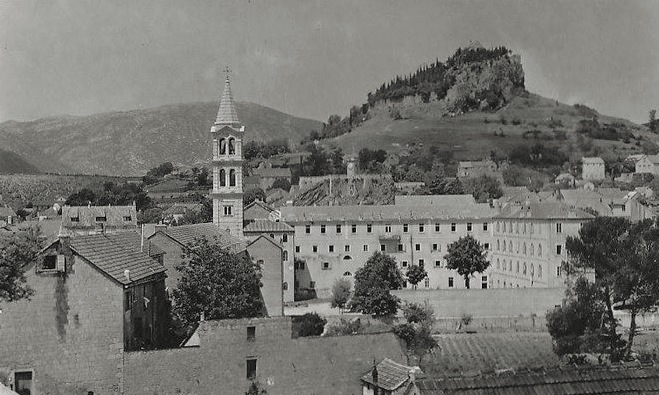
Stari grad is the ruined medieval fortress that rises above the town of Sinj, in the Dalmatian hinterland of central Croatia. Perched on a hill known simply as Grad, right above the Cetina River valley, it served for centuries as one of the region's key strongholds.
What is the history behind the fortress?
The hill has been fortified since Illyrian times, when a hillfort called Osinium stood here. In the 6th century the Byzantines held their own stronghold on the site, known as Asinio. The fortress reached its most important period in the 14th century: in 1345, Hungarian king Louis I granted the castle to the Croatian nobleman Ivan Nelipčić, and the Nelipić family made it their permanent seat. From here they controlled the entire Cetina valley, turning the fortress into one of the region's major centers of power.
From the mid-15th century onward, Ottoman forces repeatedly appeared beneath its walls. Early attempts to seize the castle failed, but the Ottomans eventually captured it in the early 16th century. Ottoman rule over Sinj lasted until 1686, when Venetian forces retook the town and castle and subsequently reinforced and modernized its defenses.
The fortress's most famous moment came in 1715, when a small garrison of roughly 700 defenders managed to repel a siege by a vastly larger Ottoman army — a victory still remembered as one of the defining events in the history of this part of Dalmatia. The castle's defensive role ended in 1808, when French troops mined and destroyed its fortifications in retaliation for a local uprising. It has stood in ruins ever since.
How do you get to Stari grad?
The fortress sits directly above the center of Sinj, on a hill visible from almost anywhere in town. The Grad hill now functions as a public park, and access to the former castle grounds is free and open to everyone. It makes a natural stop for anyone exploring Sinj and the surrounding Cetina valley.
What will you see on site?
Little of the original fortress survives intact. Centuries of conflict, earthquakes, and the French demolition of its walls mean that today visitors mainly find scattered defensive walls and the outline of the old fortifications rather than an intact castle. Even so, the hill itself remains a rewarding place to walk, with views over Sinj, the surrounding hills, and the Cetina river valley. For anyone interested in the history of Dalmatian border defense and the long Croatian-Ottoman conflict, the site carries significant symbolic weight despite its modest physical remains.
When is the best time to visit?
Since the site is an open hilltop with no covered areas, it is most comfortable to visit outside the peak of summer heat — spring, early summer, or autumn, when temperatures in Dalmatia's inland climate are milder. A visit to the hill pairs naturally with exploring the town of Sinj at its base.
Frequently asked questions
Is entry to the fortress site free? Yes. The Grad hill and the fortress ruins form an open public area that visitors can access freely at any time.
How much of the original fortress remains today? Very little in its original form — centuries of warfare, earthquakes, and the French demolition of 1808 left mainly fragments of the defensive walls standing.
Why is this fortress historically significant? In 1715, a small garrison stationed here repelled a siege by a far larger Ottoman force, making the site a lasting symbol of resistance to Ottoman expansion in Dalmatia.
Who built the fortress and who controlled it over time? The hill was fortified as early as Illyrian and Byzantine times, but the castle as later known developed from 1345 under the Croatian Nelipić family, before passing successively under Ottoman and then Venetian control.
Nearby places

Earn badges for the places you visit
Download NextOnTrip, discover new places and check off your trails.