About this place
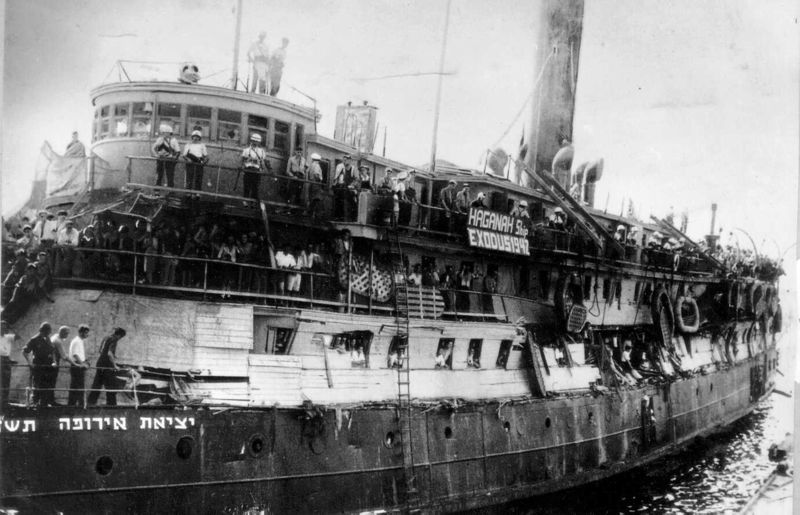
SS Exodus marks one of the most significant memorial sites in Sète, a port city on France's Mediterranean coast, from which a ship departed in July 1947 that would become a symbol of the struggle for the creation of Israel. Commemorative plaques now stand on the Môle Saint-Louis, one of the breakwaters guarding the harbor, recalling those events.
What happened here?
On the night of July 10 to 11, 1947, the vessel President Warfield, previously sailing under a Panamanian flag, left the port of Sète. On board were 4,554 people — men, women and children who had survived the Holocaust and were hoping to reach Palestine, then under British mandate. The voyage was organized and chartered by the Haganah, the Jewish paramilitary organization responsible for the entire clandestine operation.
A few days after leaving French territorial waters, the ship was renamed Exodus 1947, and its Panamanian flag was replaced with an Israeli one. As the vessel approached the coast of Palestine, British reconnaissance aircraft tracked its course, and shortly afterward Royal Navy warships intercepted it on international waters. On July 18, a violent confrontation broke out between British sailors and the passengers. The ship was forced to dock at Haifa, where British soldiers removed the refugees from board. After Britain failed to persuade France to accept them, the passengers were sent back to displaced-persons camps in Germany.
Who was responsible for the ship's safe departure?
Commissioner Leboutet was in charge of port security in Sète in July 1947. It was his decision to organize the ship's departure under calm and controlled conditions, relying on the goodwill and solidarity of the local population toward the refugees.
What can visitors see today?
The Môle Saint-Louis in Sète today holds several commemorative plaques dedicated to this history. One bears the name "Exodus 1947," another honors Commissioner Leboutet, and a more recent one includes a QR code linking to the full story of the voyage. City authorities unveiled part of this memorial on the seventieth anniversary of the events, underscoring the importance of preserving the memory of this episode in both Sète's history and the story of Israel's founding.
How to get there?
The Môle Saint-Louis lies within the port area of Sète, in an easily accessible part of the city, close to the quays and the main tourist attractions. It can be reached on foot from the town center — walking along the canals and harbor front is one of the most popular ways to explore Sète.
When to visit?
The site can be visited year-round, though spring and autumn offer the most pleasant conditions for a walk along the breakwater and harbor, with mild temperatures and fewer crowds than in midsummer. Visiting in July, around the anniversary of the 1947 departure, is worthwhile too, since Sète occasionally holds commemorative events at that time.
Frequently asked questions
What was the Exodus ship? It was the vessel President Warfield, chartered by the Haganah to carry Holocaust survivors to Palestine. During the voyage it was renamed Exodus 1947, giving its name to the entire historic episode.
How many people were on board? The ship carried 4,554 passengers — men, women and children who had survived the war and the Holocaust.
Why did the ship depart from Sète specifically? Sète was a port where the departure could be organized under relatively calm conditions. A key role was played by Commissioner Leboutet, responsible for port security, who agreed to allow the vessel to sail.
What happened after the British intercepted the ship? On July 18, 1947, British warships stopped the Exodus in international waters, a clash with passengers followed, and the ship was forced into Haifa. The refugees were sent to displaced-persons camps in Germany after France declined Britain's request to accept them.
Nearby places

Earn badges for the places you visit
Download NextOnTrip, discover new places and check off your trails.