About this place
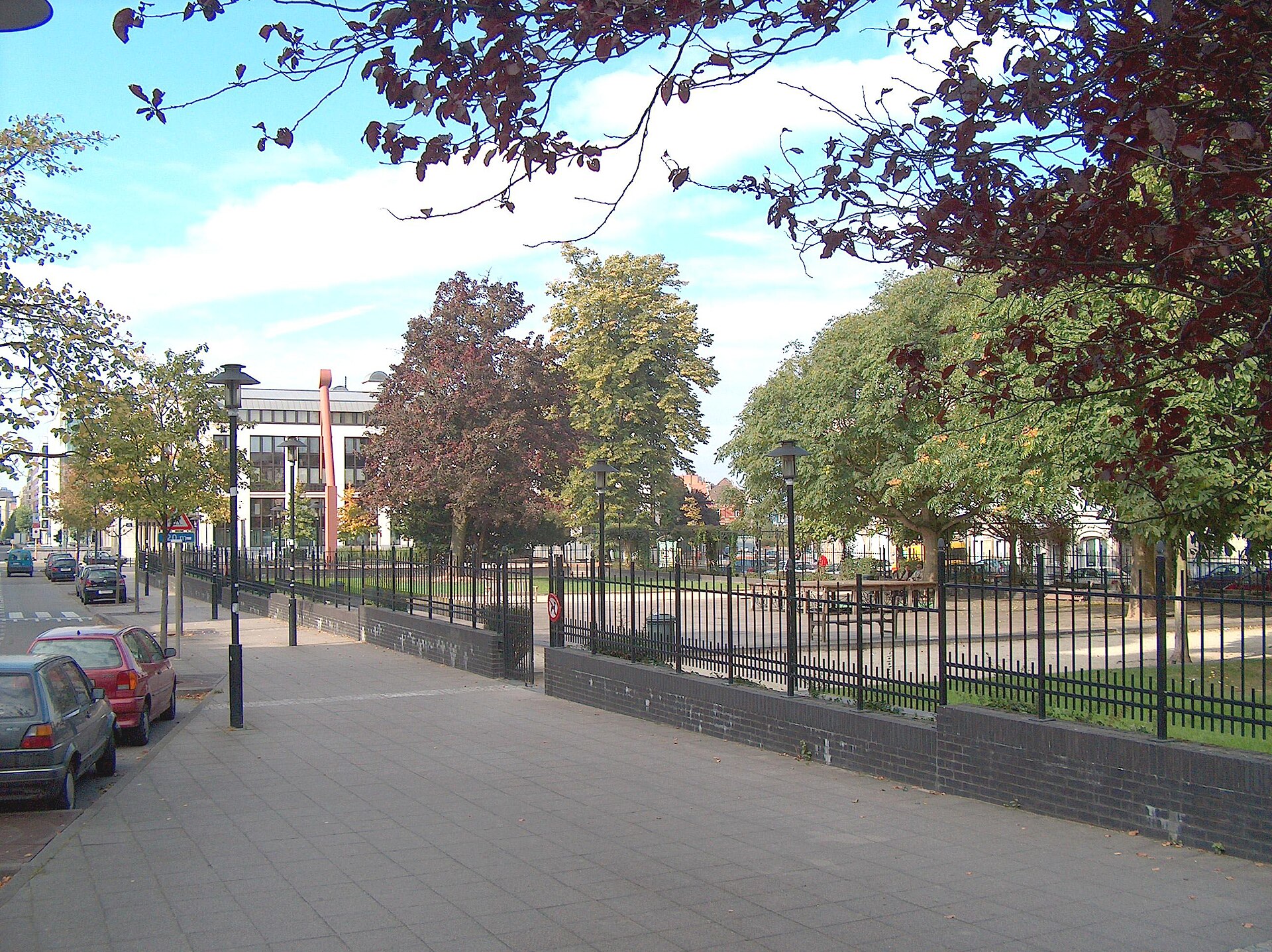
Square Groupe G is a small square in Brussels commemorating one of the most effective resistance organizations active in occupied Belgium during the Second World War. Located right next to the Université Libre de Bruxelles (ULB), it has served for decades as a place of remembrance for students and residents interested in Belgium's wartime sabotage history.
Who was Groupe G?
Groupe G, the General Sabotage Group, was founded in 1942 by former Université Libre de Bruxelles students Andre Wendelen and Jean Burgers. The organization's name came from Burgers's wartime codename, "Gaby." Unlike many resistance cells that operated locally, Groupe G worked across the whole of Belgium, and its ranks were filled overwhelmingly by university students. Between 1942 and September 1944, more than four thousand people passed through the organization.
Why is it considered so effective?
Groupe G specialized in sabotaging German railway and power infrastructure. Its most spectacular operation was the so-called "Grande coupure" of January 1944, when members sabotaged 28 high-voltage pylons supplying numerous German-run industrial plants across the country. The coordinated strike on the power network cost German forces an estimated ten million man-hours of repairs before communications and production were restored to pre-attack levels. Historians regard Groupe G as one of the most effective resistance organizations in occupied Belgium — its actions were scientifically planned, with an explicit effort to minimize the risk of reprisals against the civilian population.
Where did the memorial square come from?
The square was created as an expression of gratitude from the ULB academic community toward the organization's fallen members. A temporary wooden monument was unveiled on 17 November 1994, marking the fiftieth anniversary of Belgium's liberation. The permanent monument, funded through a public fundraising campaign led by the student Bureau des étudiants administrateurs, was finally inaugurated on 19 November 1996.
What does the monument look like?
The composition combines a grey stone pyramid with twelve metal columns, drawing on Masonic symbolism. Three faces of the pyramid — two left rough and one polished — are meant to represent the potential for human self-improvement. The broken columns refer to those who gave their lives in the fight for liberty.
What set Groupe G apart from other resistance organizations?
Historians point to several defining traits: its strong roots in the ULB academic community, a scientific approach to planning operations, internal debate over the consequences of sabotage actions, and a comparatively open recruitment process. This blend of academic rigor and clandestine practice distinguished Groupe G from many other, more spontaneously organized resistance cells.
Frequently asked questions
Where exactly is Square Groupe G located? The square sits in Brussels, directly adjacent to the Université Libre de Bruxelles, the institution historically tied to the organization it commemorates.
When was the current monument unveiled? The permanent version of the monument was inaugurated on 19 November 1996, following an earlier temporary memorial from 1994.
What does the monument's design symbolize? The grey stone pyramid and twelve metal columns draw on Masonic symbolism — the pyramid's faces represent human self-improvement, while the broken columns commemorate those who died.
What did Groupe G do during the war? The group carried out sabotage of German railway and power infrastructure, most notably a coordinated attack on 28 high-voltage pylons in January 1944.
Nearby places

Earn badges for the places you visit
Download NextOnTrip, discover new places and check off your trails.