- City Parks
- Recreation and entertainment
Square du Petit Sablon - Kleine Zavelsquare
About this place
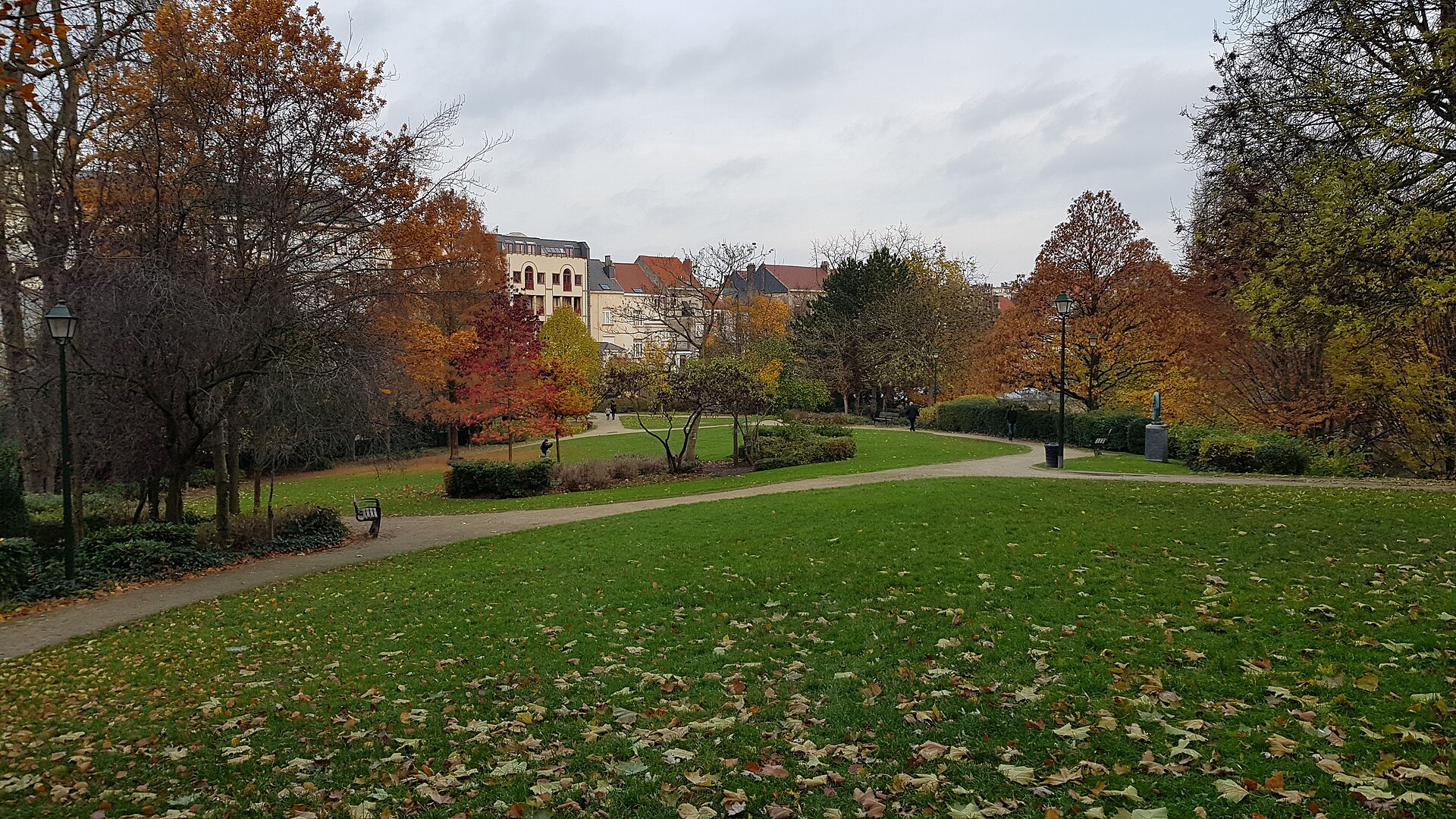
Square du Petit Sablon (Dutch: Kleine Zavelsquare) is a small but richly detailed park in the heart of Brussels, in the Sablon neighbourhood, right at the edge of the Pentagon — the historic city centre once ringed by medieval fortifications. The garden sits below the hill crowned by the Egmont Palace and faces the Church of Our Lady of the Sablon, making it a natural resting point for anyone walking between the Grand Place and the city's museum quarter.
Where does the name come from and how was the garden created?
The names Sablon (French) and Zavel (Dutch) both mean fine sand, a type of soil between silt and sand, typical of the ground through which the Zavelbeek stream once flowed. For centuries the area was an unused patch of land on the edge of the city, with wetlands and sandy stretches where, according to local tradition, a hermit once lived. Later the site served as a horse market. It was only at the end of the 19th century, in 1890, that a formal municipal garden was laid out here on the initiative and design of architect Henri Beyaert, inspired by the style of 15th-century gardens — with a geometric layout of paths, low greenery and numerous sculptural elements.
What can visitors see in and around the garden?
The main attraction of the Petit Sablon is the wrought-iron fence surrounding it, decorated with 48 small bronze statuettes representing the medieval guilds and trades of Brussels — from masons and brewers to bookbinders and fishmongers. Each figure symbolises a different profession, which is why the garden is sometimes described as an open-air museum of the city's craft history. Near the entrance closest to the Church of Our Lady of the Sablon stands the figure representing the guild of the "Four Crowned Trades" (ambacht van de Vier Gekroonden), which united bricklayers, stonemasons, paviours and roofers in a single guild.
Inside the garden, arranged around a central fountain, stand ten statues honouring prominent Flemish and Brabantine humanists and scholars of the 16th century, including the cartographers Gerardus Mercator and Abraham Ortelius, creators of some of the most important maps of the early modern era. Their presence highlights the region's intellectual heritage during the Renaissance, when Brussels and the surrounding towns were an important centre of scholarship and cartography.
Why is it worth a visit?
The Square du Petit Sablon compresses several layers of Brussels history into a very small space: medieval craftsmanship, Renaissance scholarship and 19th-century garden art. It is a favourite spot both for visitors looking for a quiet, shaded pause and for locals crossing the Sablon district, known for its elegant townhouses, antique dealers and chocolate shops. The garden is compact enough to walk through in a matter of minutes, yet the wealth of sculptural detail draws many visitors back for a closer look at the figures.
Its location — right beside the Egmont Palace and close to the larger Grand Sablon square with its weekend antiques market — makes it easy to combine a visit here with other sights in the city's historic centre.
Frequently asked questions
Is entry to the garden free? Yes, the Square du Petit Sablon is a public city park, open and free to visit year-round.
How long does a visit take? Given its small size, 10–20 minutes is usually enough, though those interested in the sculptural details may spend longer studying all 48 statuettes on the fence.
What is nearby? The Church of Our Lady of the Sablon, the Egmont Palace, and the Grand Sablon square with its antique and chocolate shops.
Nearby places

Earn badges for the places you visit
Download NextOnTrip, discover new places and check off your trails.