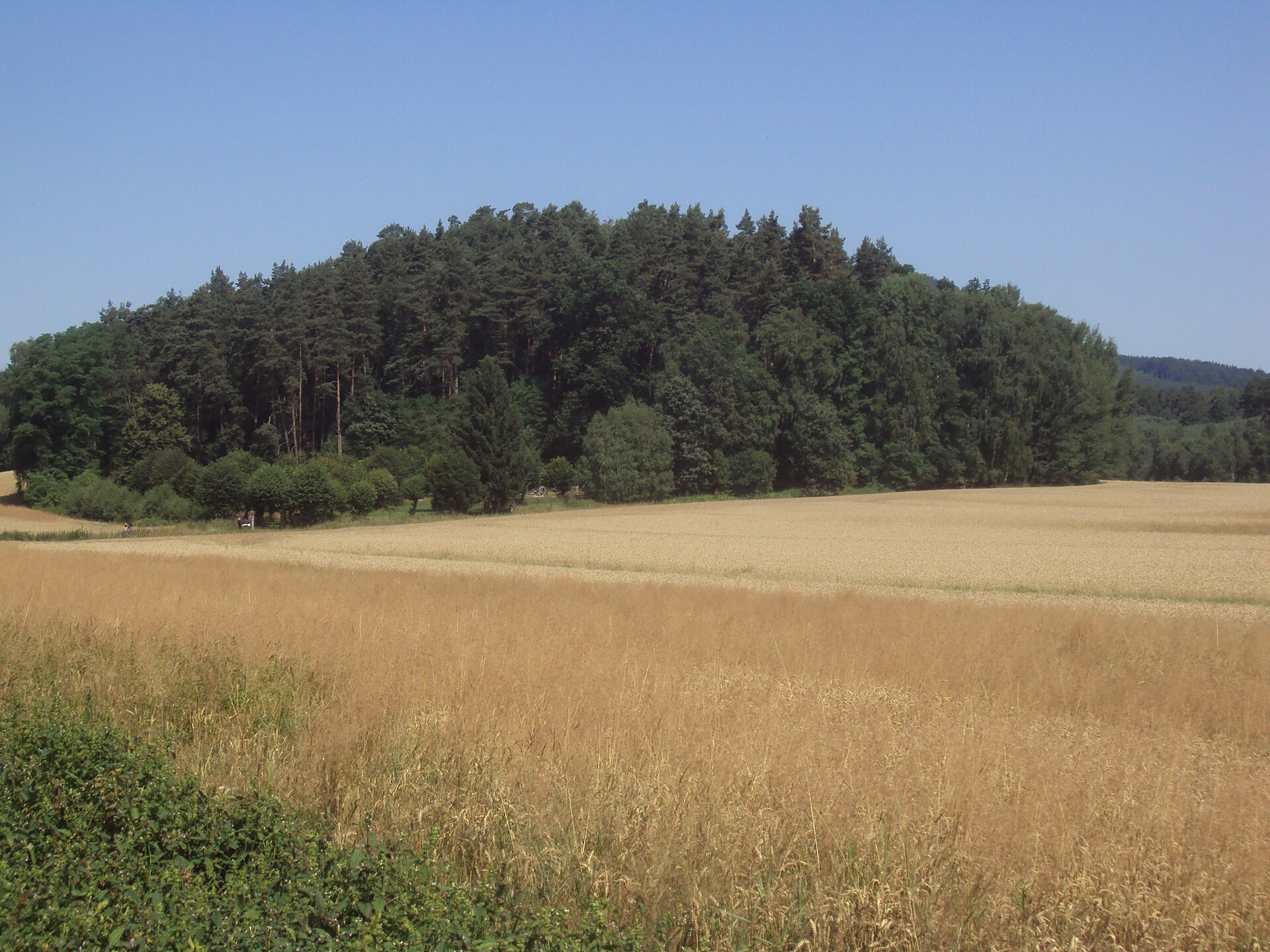
About this place
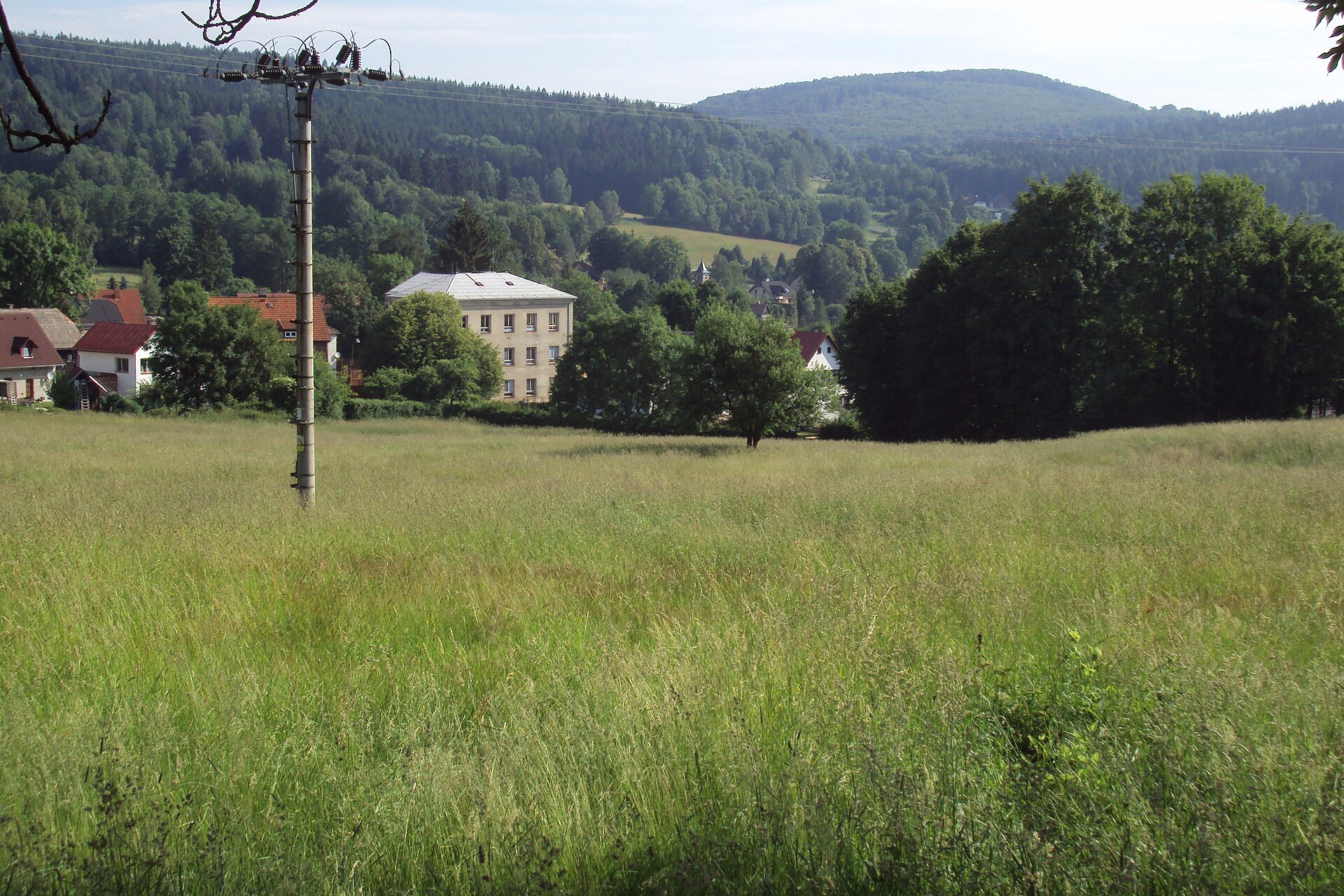
Špaččí vrch is a small, forested hill rising to 360 m above sea level, about a kilometer west of the village of Radvanec in the Česká Lípa district of the Liberec Region, right in the heart of the Lusatian Mountains (Lužické hory). It is a modest, little-known summit — yet its mining and geological past turns out to be far more colorful than its quiet present-day appearance suggests.
Where does the hill's name come from?
The name Špaččí vrch (German: Starberg, also recorded as Starbergel) comes from two columnar basalt rocks that once stood on the hill's northern spur. Locals called them "Velký" and "Malý Špaččí mužík" — the Great and Little Špaččí Fellow. Neither formation survives today: both fell victim to quarrying in the late 19th century.
What happened to the rocks?
A basalt quarry opened on the hill in 1880–1881, and stoneworkers blasted and broke up both columnar rocks for gravel. The southern and eastern slopes also preserve traces of older, abandoned sandstone quarries — in one of them, the year 1886 is carved into the rock face, a small physical record of that industrial era.
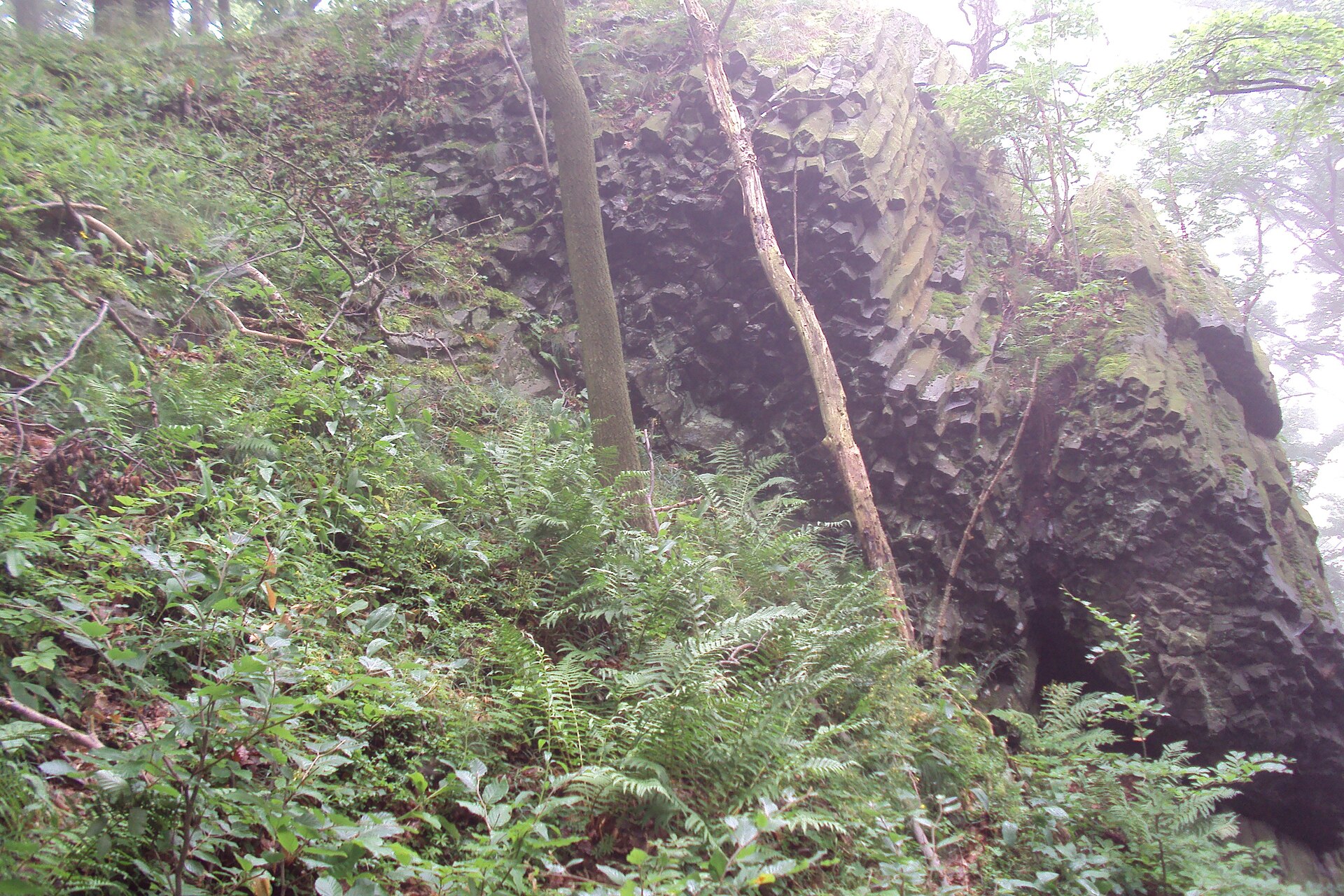
The summit itself is built of sandstone, while the northern part of the hill was basaltic — which explains the presence of minerals prized by collectors. The now-disused basalt quarry was once well known among mineral enthusiasts: white botryoidal natrolite and chabazite crystals, both zeolites that form in cavities of volcanic rock, were found there.
Why does it appear on maps as "Nad hřbitovem"?
On current hiking and cadastral maps, the hill is often labeled with the local name "Nad hřbitovem" (Above the Cemetery), since Radvanec's village cemetery lies right at its southern foot. That neighboring graveyard is why the older, mining-derived name Špaččí vrch has gradually given way to the more descriptive label — though the historic name is still the one used among regional guidebooks and Lusatian Mountains enthusiasts.
Is it worth visiting for the view?
The sandstone summit once offered a fairly wide view over the surrounding countryside, but over the decades, as forest has thickened on the slopes, that panorama has narrowed considerably. Today Špaččí vrch is more a destination for those interested in mining history and geology than a scenic lookout — a quiet spot under tree cover, away from the region's main hiking routes.
What else is worth seeing nearby?
Radvanec and its surroundings are one of the more rewarding corners of the Lusatian Mountains for nature lovers. Just north of the village rise the Havraní skály (Raven Rocks), a group of sandstone rock towers with a viewpoint atop one of them. Radvanec's cadastral area also includes other small hills of volcanic origin, such as Pomahačův vrch, as well as the higher Strážný, crowned by a lookout tower.
Frequently asked questions
How high is Špaččí vrch? 360 meters above sea level.
Where does the hill's name come from? From two columnar basalt rocks known as "Velký" and "Malý Špaččí mužík," destroyed during quarrying in 1880–1881.
Why is the hill sometimes called "Nad hřbitovem"? Because Radvanec's village cemetery sits at its southern foot.
Is there a good view from the summit? There used to be — today, thickened forest on the slopes has narrowed the view considerably.
Can minerals be found here? The now-disused basalt quarry once yielded zeolite crystals — natrolite and chabazite — which made the site known among mineral collectors.
Nearby places

Earn badges for the places you visit
Download NextOnTrip, discover new places and check off your trails.