About this place
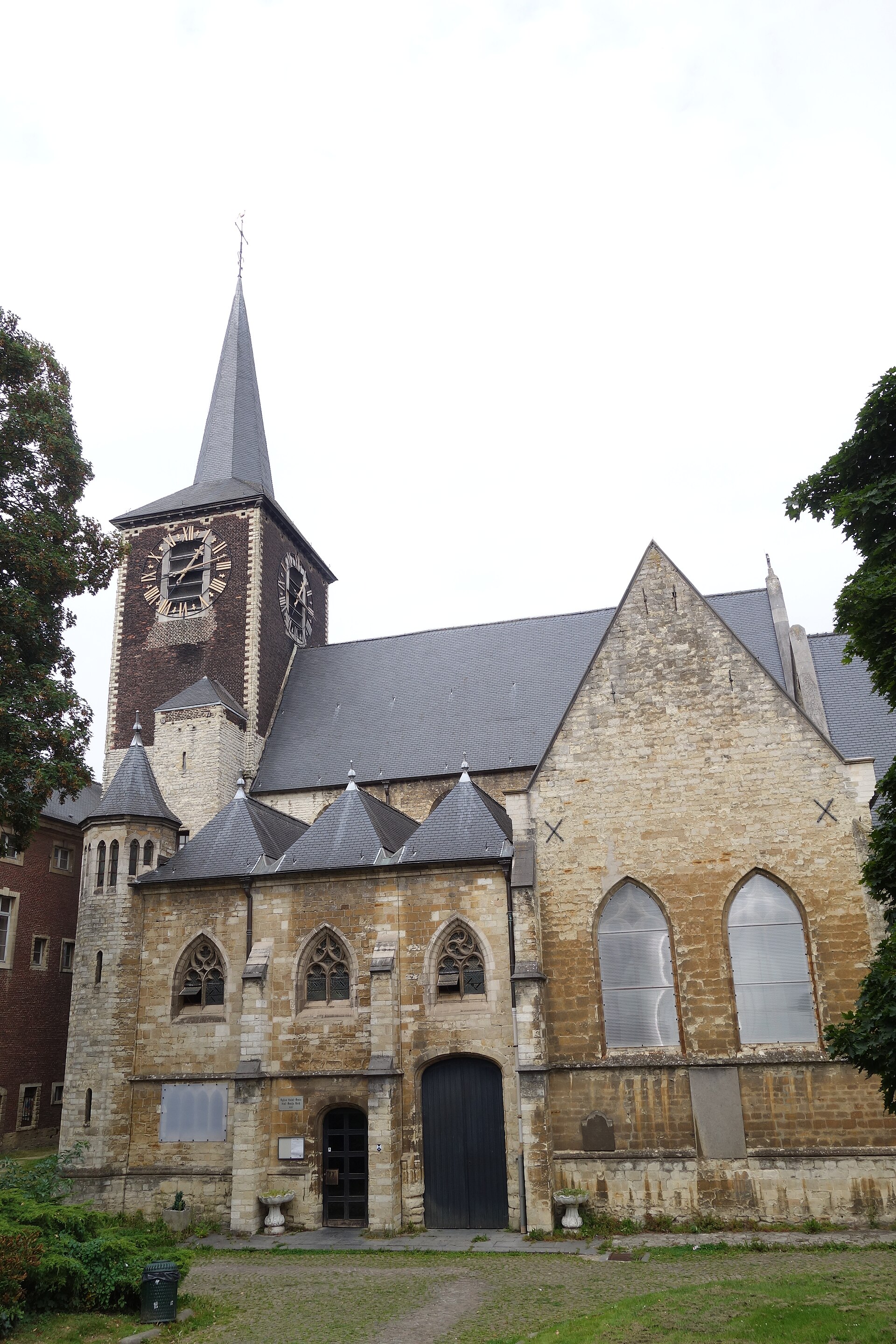
Sint-Sebastiaanskerk is the parish church of Linkebeek, a small municipality in the Belgian province of Flemish Brabant, just south of Brussels. The brick, classicist building visitors see today dates from 1773–1778, but the site's history stretches back much further, spanning at least four distinct construction phases.
How far back does the site's history go?
The oldest part of the complex is a chapel built in 1110 by Godfrey with the Beard, Count of Leuven. It was dedicated to Saint Sebastian, patron saint of archers — a fitting choice in a region where archery guilds held real social weight. This early, Romanesque phase is the first of four recognizable stages in the building's history, alongside its Gothic choir sections and a later thorough reconstruction.
What role did Charles the Bold play?
In 1469, during a visit to Linkebeek, Charles the Bold, Duke of Burgundy, founded the "Brotherhood of Saint Sebastian" and presented it with a guild book (guldenboek) that still survives today. The funds tied to this foundation allowed the church to be enlarged with "three choirs": transepts on the north and south sides and a high choir to the east. It was this Gothic phase that gave the building the spatial layout whose traces partly survived later rebuilding.
Why was the church rebuilt in the 18th century?
The reconstruction unfolded in three clearly documented phases. In 1751, a sacristy was added on the east side. In 1773, the tower was rebuilt slightly further west, an investment financed by the abbess of the Forest (Vorst) abbey, historically tied to this area. The most radical change came in 1778: most of the church's nave was demolished, leaving only the Gothic transepts and the wall adjoining the sacristy standing. As a result, the current structure combines medieval fragments with classicist architecture from the second half of the 18th century — hence the distinctive mix of styles within a single building.
What is the church's heritage protection status?
The church and its surroundings were listed as a protected landscape on 13 August 1953, while the building itself was granted monument status on 7 April 1995. This two-step protection — first the surrounding landscape, only later the building — reflects how Belgian heritage authorities historically approached such sites: the setting was valued first, and the architecture itself was formally recognized decades later.
What should visitors look out for?
Visitors can spot a clear contrast between the older Gothic sections — the transepts and the fragment of wall by the sacristy — and the newer classicist portion built in the 1770s. For anyone interested in local history, the surviving guild book of the archers' brotherhood is a notable relic, a tangible link to the medieval traditions built around the cult of Saint Sebastian in the town.
Frequently asked questions
How old is the Sint-Sebastiaanskerk in Linkebeek? Its oldest element, a chapel, dates from 1110, while the current, largely classicist building was constructed between 1773 and 1778.
Why is the church dedicated to Saint Sebastian? Saint Sebastian is the patron saint of archers, and archery guilds had a long tradition in the region — which is why the dedication was chosen already for the 12th-century chapel.
Who contributed to the church's medieval expansion? Charles the Bold, Duke of Burgundy, founded the Brotherhood of Saint Sebastian in 1469 and funded the addition of three choirs.
Since when has the church been a protected monument? The surroundings have been protected since 1953, and the building itself gained monument status in 1995.
Nearby places

Earn badges for the places you visit
Download NextOnTrip, discover new places and check off your trails.