About this place
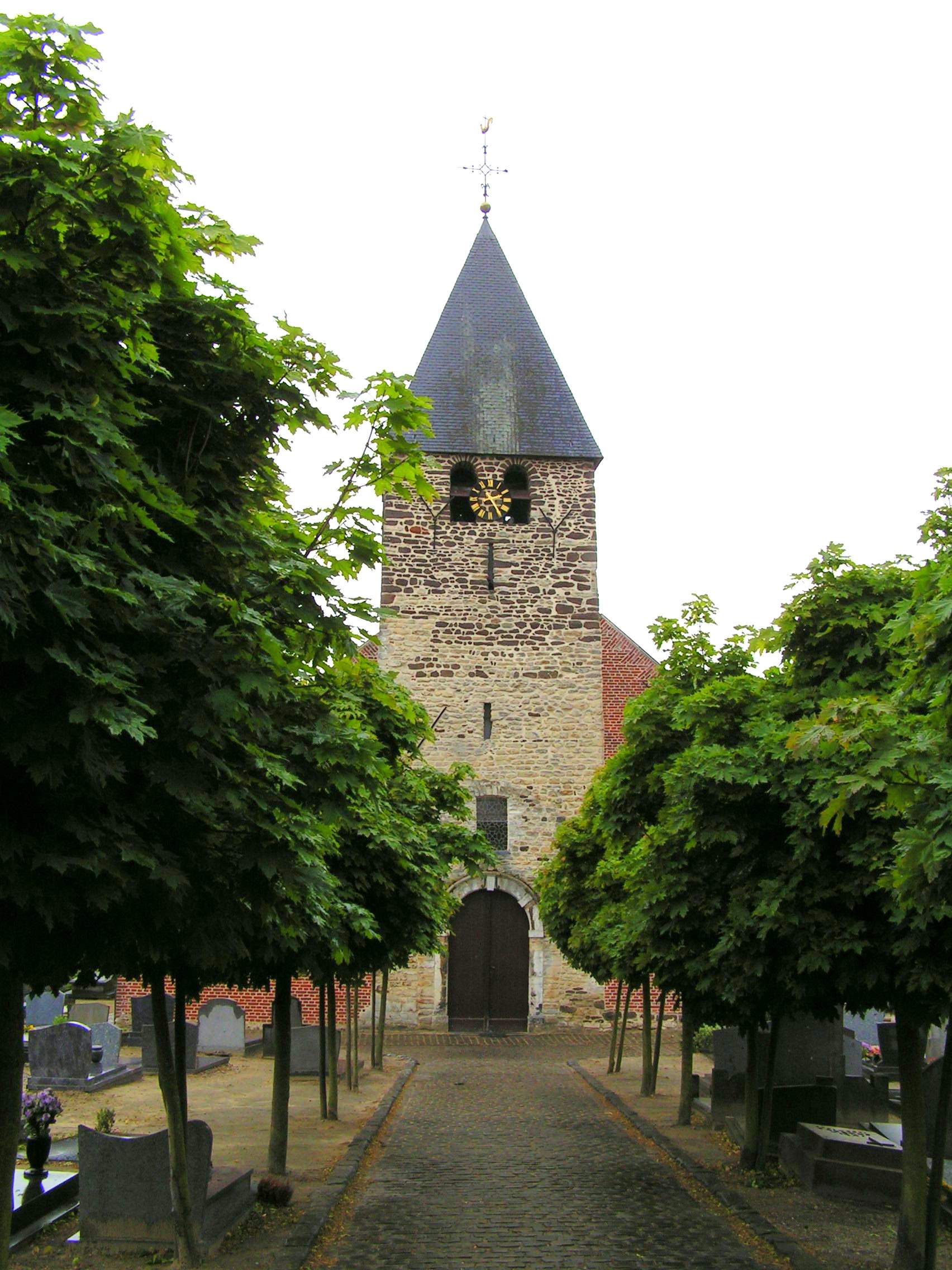
Sint-Lambertuskerk is the parish church of Leefdaal, a village belonging to the municipality of Bertem in Flemish Brabant, standing on Dorpstraat, the village's main street. The building layers nearly a thousand years of history, from medieval foundations to Baroque interior furnishings.
What are the origins of the church?
Local tradition holds that the first church on this site was consecrated at the end of the 7th century by Saint Hubert, the patron saint of hunters and one of the region's best-known saints. While this legend is difficult to verify historically, it is deeply embedded in local identity and helps explain later artistic choices made inside the church. Around 1100, the right of patronage over the church was granted to the Abbey of Affligem, one of the region's more prominent Benedictine monasteries, which from then on oversaw the parish.
What did the Romanesque building look like?
Around 1200, a Romanesque church with a basilical layout was built on the site. It consisted of a west tower, a three-aisled nave, and a choir closed off by a semicircular apse — a typical arrangement for rural churches of this period in Brabant. The building was constructed from locally quarried calcareous sandstone, a material characteristic of the region's architecture.
How did the structure change over the centuries?
The church underwent several rounds of remodeling. In 1524, the tower was heightened, giving it a more prominent presence in the village skyline. Around 1556, the choir was lengthened and the nave was fitted with new pillars, pointing to a significant structural renovation in the mid-16th century. In the 18th century, the west tower was partially built into the body of the church, integrating it more closely with the main structure. In the 19th century, a neo-Gothic portal was added to the tower — a common stylistic choice of the era, meant to modernize the entrance while preserving the building's historic character.
What can visitors see inside and outside the church?
The south facade still bears a stone sundial dated 1639, a modest but valuable witness to how time was once measured in the village, long before mechanical clocks became common in rural life. Inside, the church holds a painting by Gaspar de Crayer, one of the leading Baroque painters of the Southern Netherlands and a figure closely associated with the circle around Rubens. In 1662, he painted a scene depicting the conversion of Saint Hubert — a subject directly tied to the legend of the saint consecrating the original church, effectively closing the loop on the building's founding story. The church also has a Baroque high altar dating from the second half of the 17th century, stylistically in keeping with de Crayer's painting and reinforcing the Baroque character of the interior despite the building's medieval core.
Why is Sint-Lambertuskerk worth a visit?
The church in Leefdaal is a good example of a typical rural Brabant parish church where successive eras have left their mark — from Romanesque origins, through Renaissance and Baroque rebuilding, to 19th-century neo-Gothic additions. Visitors will find both the exterior, with its sundial, and the interior, featuring a work by a well-known Baroque painter rarely encountered in such a small rural parish, worth their attention.
Frequently asked questions
Where is Sint-Lambertuskerk located? On Dorpstraat in Leefdaal, a village in the municipality of Bertem in the province of Flemish Brabant.
How old is the church? The current structure dates mainly from around 1200, though legend traces the origins of worship at this site to the end of the 7th century.
What is worth seeing inside? A 1662 painting by Gaspar de Crayer depicting the conversion of Saint Hubert, along with a Baroque altar from the second half of the 17th century.
Nearby places

Earn badges for the places you visit
Download NextOnTrip, discover new places and check off your trails.