About this place
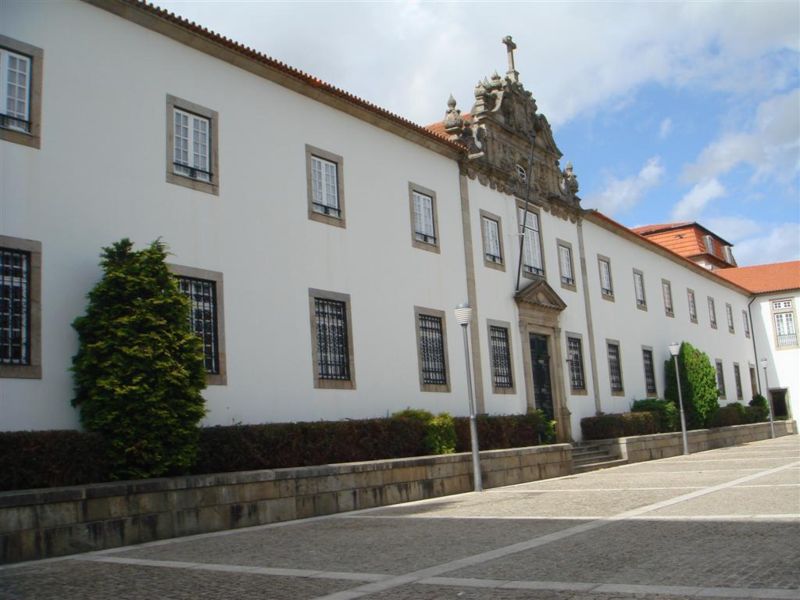
The Seminário Conciliar de São Pedro e São Paulo in Braga is one of the oldest priestly training institutions in Portugal. It stands in the city centre on Largo de Santiago, inside the former Jesuit college. The site combines church history, architecture from several eras and a modern sacred space that won an international design award.
How did Braga get a seminary?
The institution was founded by Archbishop Bartholomew of the Martyrs (Frei Bartolomeu dos Mártires), who came home from the Council of Trent determined to reform how clergy were trained in his diocese. Construction began in 1571 on ground known as Campo da Vinha, and the first students arrived in 1572. In 2022 the school marked its 450th anniversary with an international congress. Its founder was canonised in 2019, which brought fresh attention to his legacy.
Why the name Peter and Paul?
Originally the seminary was dedicated to Saint Peter alone. The present name dates from the nineteenth century, when it moved into the former Colégio de São Paulo. That building had belonged to the Society of Jesus until the Jesuits were expelled. The move took place on 14 October 1880, and the two patron saints were joined in the title. Because the main facade faces Largo de Santiago, locals also call it the Santiago Seminary.
How did the home of the seminary change?
Its fortunes followed the politics of the day. After the turbulent years of the First Republic, the seminary operated from 1934 in a new building on Rua de Santa Margarida. Around the turn of the millennium it returned to Largo de Santiago. The complex includes the Church of São Paulo, a survivor of the old Jesuit foundation.
A second, younger institution also exists: the Minor Seminary of Nossa Senhora da Conceição, built in 1923-1924 on Rua de São Domingos on the site of the former Recolhimento da Tamanca. It served younger boys who attended classes at the Colégio Dom Diogo de Sousa. By contrast, the seminary on Largo de Santiago is known as the Major Seminary.
What is worth seeing?
- Tree of Life Chapel (Capela da Árvore da Vida) – a contemporary work by Cerejeira Fontes Arquitectos, created with sculptor Asbjörn Andresen. It received the 2011 ArchDaily award for best architecture in a religious building.
- Pius XII Museum – housed in the eastern wing of the complex.
- Church of São Paulo – part of the former Jesuit college.
- The facade on Largo de Santiago – a good spot for photos and for grasping the scale of the old college.
Practical tips
The seminary is a working formation house of the Archdiocese of Braga, so not every area is always open to visitors. Before you go, check the archdiocese website or the local tourist office to see whether the chapel and museum are open and whether you need to book ahead. The site lies at roughly 41.548 N, 8.426 W, a short walk from the main landmarks of Braga's historic centre.
It pairs well with a stroll through the old town, the cathedral and the surrounding squares. Anyone interested in architecture should allow extra time for the chapel, one of the most discussed modern religious buildings in the region.
Frequently asked questions
Who founded the seminary in Braga? Archbishop Bartholomew of the Martyrs, after returning from the Council of Trent. Building work started in 1571.
When did it move into the former Jesuit college? On 14 October 1880.
Is there a museum inside? Yes, the Pius XII Museum is in the eastern wing.
What is the Tree of Life Chapel? A modern chapel inside the seminary, honoured with an ArchDaily award in 2011.
Why is it also called the Santiago Seminary? Because its main facade looks onto Largo de Santiago.
Nearby places

Earn badges for the places you visit
Download NextOnTrip, discover new places and check off your trails.