About this place
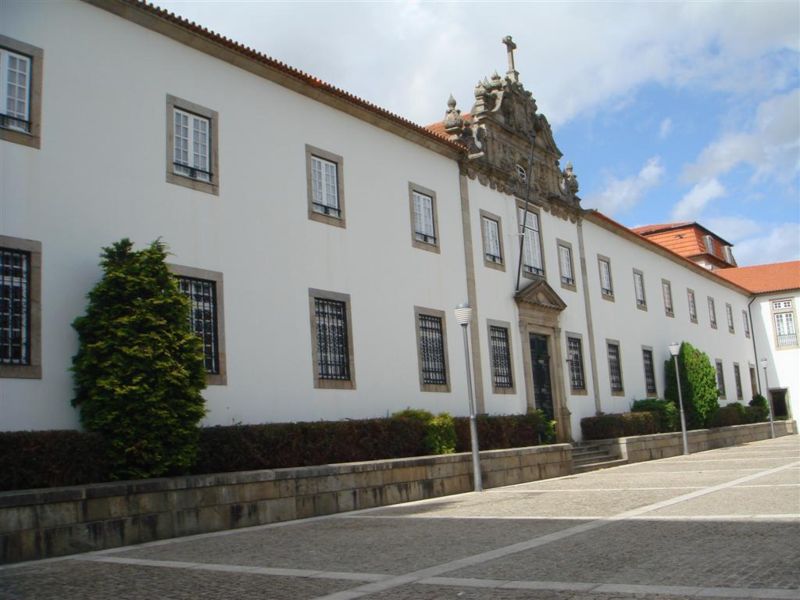
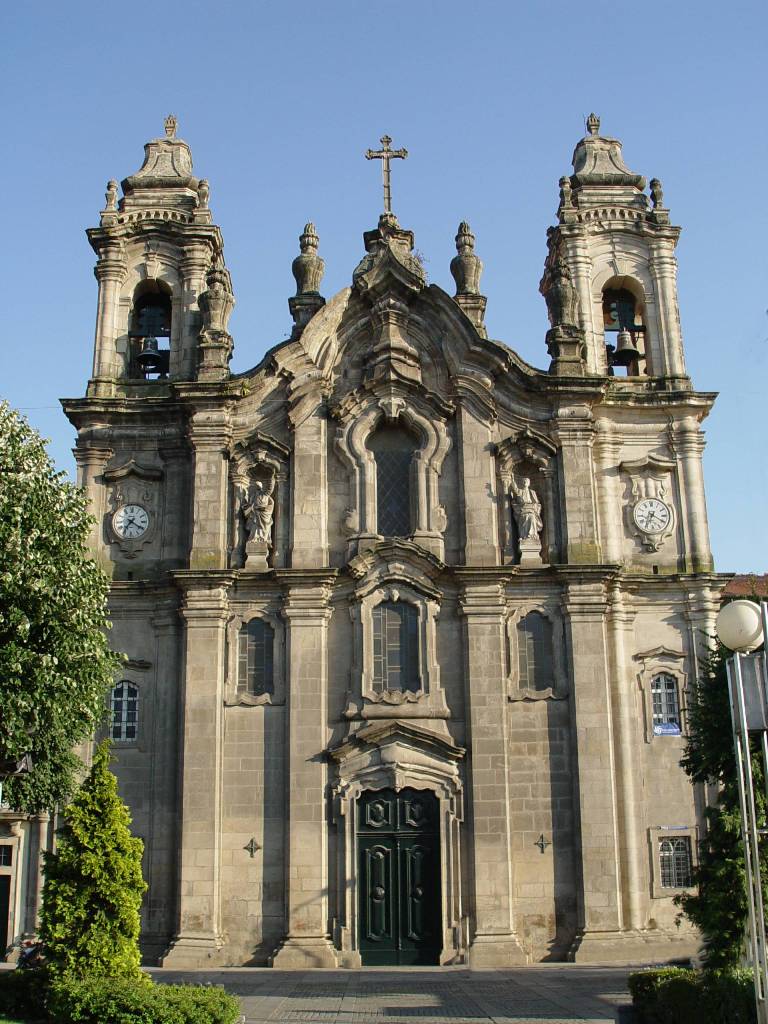
Igreja e Convento do Pópulo is a church and former convent in Braga, northern Portugal, combining a neoclassical façade with baroque details. Construction began in 1596 on the initiative of Archbishop Agostinho de Jesus e Castro, and today the convent buildings belong to the city.
Who founded the church, and why?
Work started in 1596 with the laying of the first stone. Archbishop Dom Frei Agostinho de Jesus wanted a dignified place for his own burial and set aside the main chapel for that purpose. The church was finished in 1609, the year he was buried there. The original design was reportedly inspired by the Church of the Gesù in Rome, a Jesuit work from the last quarter of the 16th century.
What does the building look like?
Over time the structure was at risk of collapse, so it was rebuilt in the 18th century to plans by the architect Carlos Amarante. The convent wing was added during that period. The façade is neoclassical, while baroque touches appear in the domes of the two towers flanking the church and in the tympanum. The side chapels and the main chapel are decorated with blue-and-white azulejos, the traditional Portuguese ceramic tiles, attributed to António de Oliveira Bernardes.
What happened to the convent later?
After male religious orders were dissolved in 1834, the complex passed to the State. From 1841 the convent buildings housed an infantry regiment. Since 1996 the convent buildings have been part of Braga's municipal administration (Câmara Municipal).
Where is it?
The site is in Braga, one of Portugal's oldest cities and an important religious centre of the Minho region. Coordinates: 41.552061, -8.428502. It belongs to the group of churches that reflect the history of the local archdiocese.
Who should visit?
It suits visitors interested in Portuguese architecture from the late 16th to the 18th century. You can see how a Roman Jesuit model was reworked in the 1700s into a building with a neoclassical façade and baroque accents. Azulejo enthusiasts will find a fine example of blue-and-white tile decoration in the chapels. It fits well into a walking day combining several of Braga's historic sights.
Frequently asked questions
When was Igreja e Convento do Pópulo built? The first stone was laid in 1596 and the church was complete by 1609. It was rebuilt in the 18th century.
Who designed it? The 18th-century reconstruction was designed by Carlos Amarante. The original plan drew on the Church of the Gesù in Rome.
Who is buried there? The founder, Archbishop Dom Frei Agostinho de Jesus, buried in the main chapel in 1609.
Who owns the convent today? Since 1996 the convent buildings have been part of Braga's city administration.
What decorates the interior? The side chapels and main chapel feature blue-and-white azulejos attributed to António de Oliveira Bernardes.
Nearby places

Earn badges for the places you visit
Download NextOnTrip, discover new places and check off your trails.