About this place
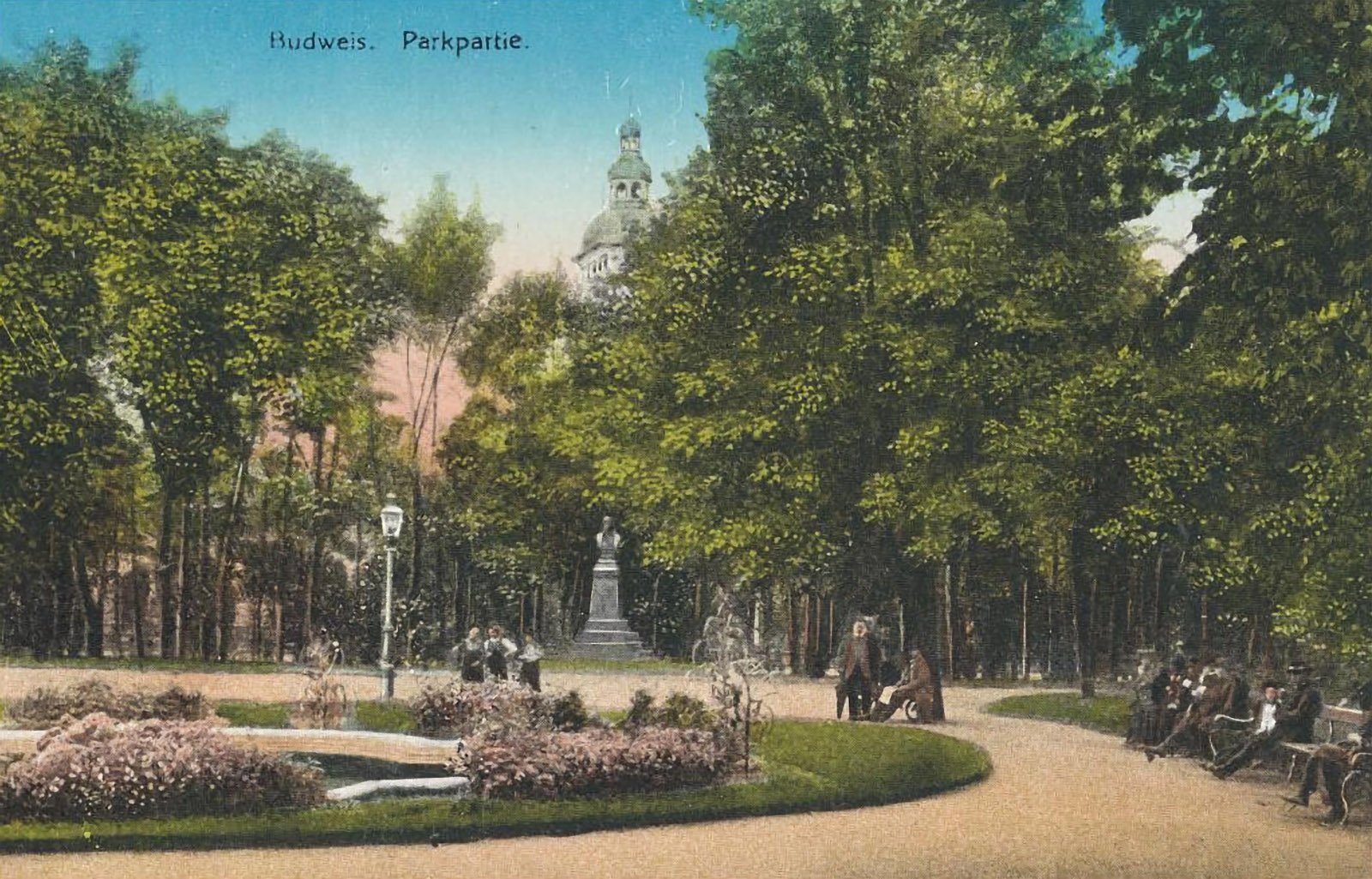
Sady is a municipal park in České Budějovice, stretching in a strip between the Mill Canal and Na Sadech street, on ground once occupied by the city's Baroque fortifications.
Where does the name come from and how was the park created?
The word "Sady" simply means "park" or "orchards" in Czech, and it's one of the most common names for green spaces across Czech towns — so it's worth being clear from the start that this entry refers to the specific park in České Budějovice, not a similarly named site elsewhere in the country. As late as the 19th century, the land now covered in greenery still served a defensive purpose, holding the remnants of the town's Baroque walls. Around 1870 the town authorities decided to demolish them, and between 1874 and 1880 a park was laid out on the cleared ground. The design was drawn up by Rudolf Vácha (1825–1899), a garden inspector in the service of the Schwarzenberg family, who is also known for designing the castle park at nearby Hluboká. Once finished, the park was enclosed with a wooden fence and its gates were locked at night, a common practice at the time meant to protect young plantings.
How large is the park and what can visitors do there?
Sady covers an area of roughly 3.5 hectares, making it one of the larger green spaces in the city centre. Its network of paths is well suited to unhurried walks, and the grounds also include sports infrastructure, including a cycling path running through the park, so visitors can combine a stroll with getting around the city. The nearby Mill Canal adds a waterside feel to the setting, making the park a pleasant spot to pause during a day of sightseeing.
What makes the park stand out from a wildlife perspective?
One detail worth knowing before a visit is that Sady is home to one of the largest urban jackdaw colonies in the region. The first three breeding pairs settled here in 1984, and by 1997 their numbers had grown to more than 300 pairs. Nesting in the crowns of the park's mature trees, the birds produce a distinctive, noisy chorus that's especially noticeable in the evenings as flocks return to roost — a phenomenon that draws attention from both locals and birdwatchers.
Who is this park best suited for?
The park suits anyone looking for a break from city noise, families with children making use of the walking paths, and cyclists passing through the city on a route that runs through the greenery. The site's history — former fortifications reshaped into a park in the spirit of 19th-century urban planning — adds context to a walk here, even though the old walls themselves are long gone.
Frequently asked questions
Where exactly is Sady park located? The park lies in the centre of České Budějovice, between the Mill Canal and Na Sadech street, on the site of the town's former Baroque fortifications.
When was the park created? It was laid out between 1874 and 1880, after the remaining Baroque defensive walls were demolished around 1870.
Who designed the park? The design was created by Rudolf Vácha, a garden inspector for the Schwarzenberg family, who also designed the castle park at Hluboká.
How big is the park? Sady covers an area of about 3.5 hectares.
What is there to see besides the greenery? A notable feature is the park's large jackdaw colony nesting in the treetops, one of the biggest of its kind in the city, which at its peak numbered more than 300 breeding pairs.
Nearby places

Earn badges for the places you visit
Download NextOnTrip, discover new places and check off your trails.