About this place
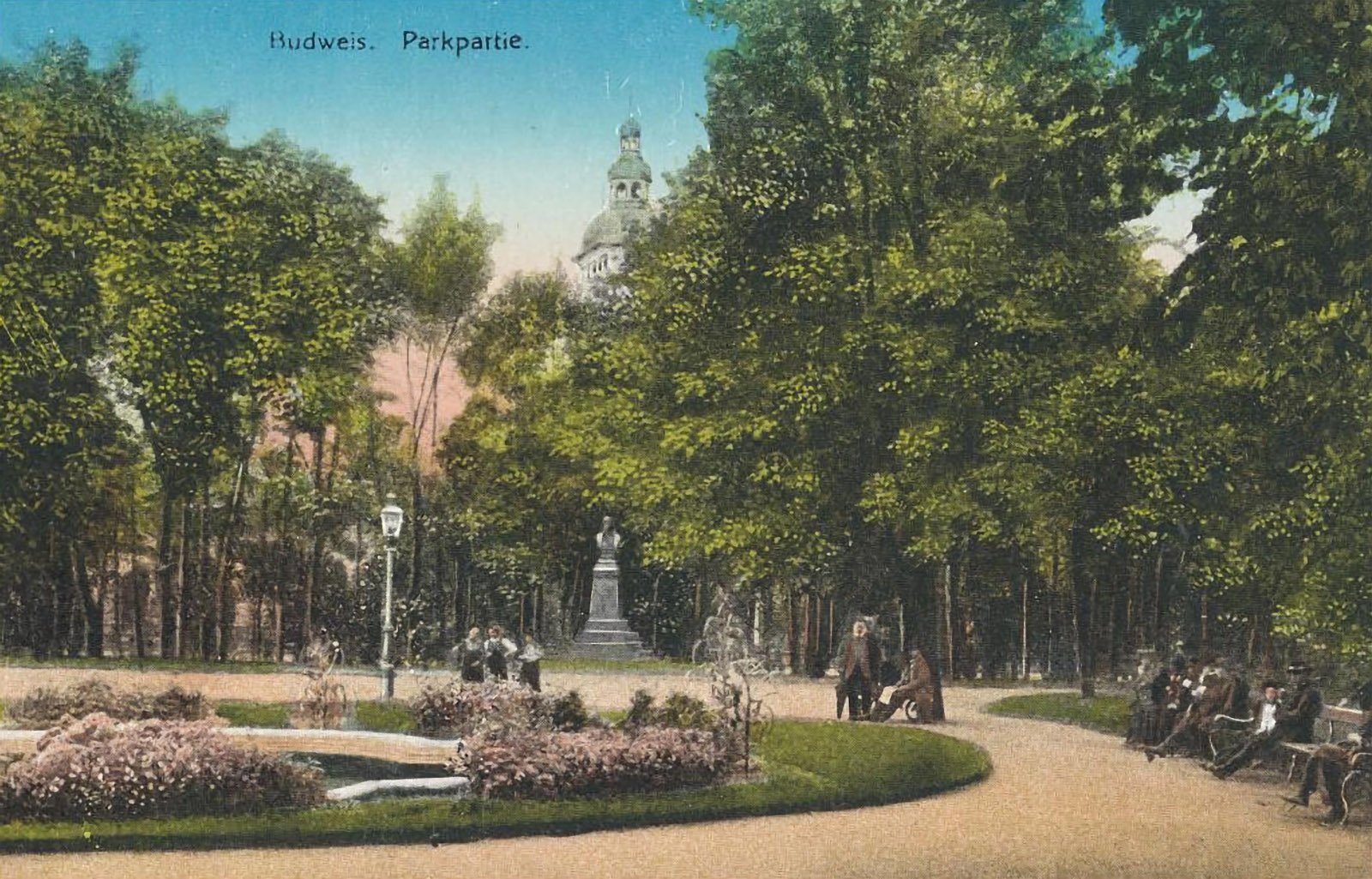
Biskupská zahrada (Bishop's Garden) is a small historic park in České Budějovice, tucked into the line of the city's former fortifications on the southwestern edge of the old town, close to where the Malše river meets the Vltava. Covering just 0.2 hectares, it is a compact space, yet it is listed as an immovable cultural monument of the Czech Republic and carries a history stretching back to the 18th century.
Where does the garden's history begin?
The garden was most likely laid out in 1769 on the site of an older Gothic fortification rampart, around the same time a Piarist college was being established on Biskupská Street nearby. Its transformation into something more elaborate came after 1785, when the diocese of České Budějovice was founded. The city's first bishop, Johann Prokop Schaaffgotsche, had the grounds converted into a representative rococo garden at his own expense — and it is from this bishopric that the garden takes its name.
What did the garden look like in its prime?
During its rococo period, the garden featured a summer house complete with an artificial cave, along with greenhouses and water fountains. Among these were circular basins fitted with exchangeable nozzle attachments, which allowed the shape and pattern of the jetting water to be varied. Together, these elements gave the garden a genuinely representative character, fitting for a bishop's residence rather than an ordinary municipal green space.
How did the garden change through the 20th century?
After 1948, the property passed into state ownership and was opened to the public. Art exhibitions were held there in the following decades, continuing right up until 1989. Through this period the garden operated as a publicly accessible park with set opening hours, a model that persisted into the early 1990s. At some point during this era it was also fitted out with a children's playground, including a carousel, climbing equipment, and benches, making it a spot for everyday recreation for people living nearby.
Where exactly is Biskupská zahrada located?
The garden sits within the footprint of the city's former fortifications, on the southwestern edge of České Budějovice's historic center, near a spot known as Slepé rameno and close to the confluence of the Malše and Vltava rivers. This position — wedged between old defensive walls and the rivers — gives the garden a distinctly self-contained, intimate feel despite its modest size.
Frequently asked questions
Is Biskupská zahrada open to visitors? Historically the park operated with public access during set opening hours, though given its small size and location it is worth checking current access arrangements locally, since these details may have changed over the years.
Where does the garden's name come from? The name refers to the bishopric of České Budějovice, established in 1785 — it was the city's first bishop who had the grounds turned into a representative rococo garden.
What is the garden's background? It was likely created in 1769 on the site of a former Gothic fortification rampart, and reached its most elaborate form after the bishopric was founded, when it was equipped with a summer house, an artificial cave, greenhouses, and fountains.
How large is the park? Biskupská zahrada covers roughly 0.2 hectares, making it one of the smaller historic gardens in České Budějovice.
Are there any attractions for children? During the second half of the 20th century the park included a playground with a carousel and climbing structures, though the current setup may differ from this historical description.
Nearby places

Earn badges for the places you visit
Download NextOnTrip, discover new places and check off your trails.