About this place
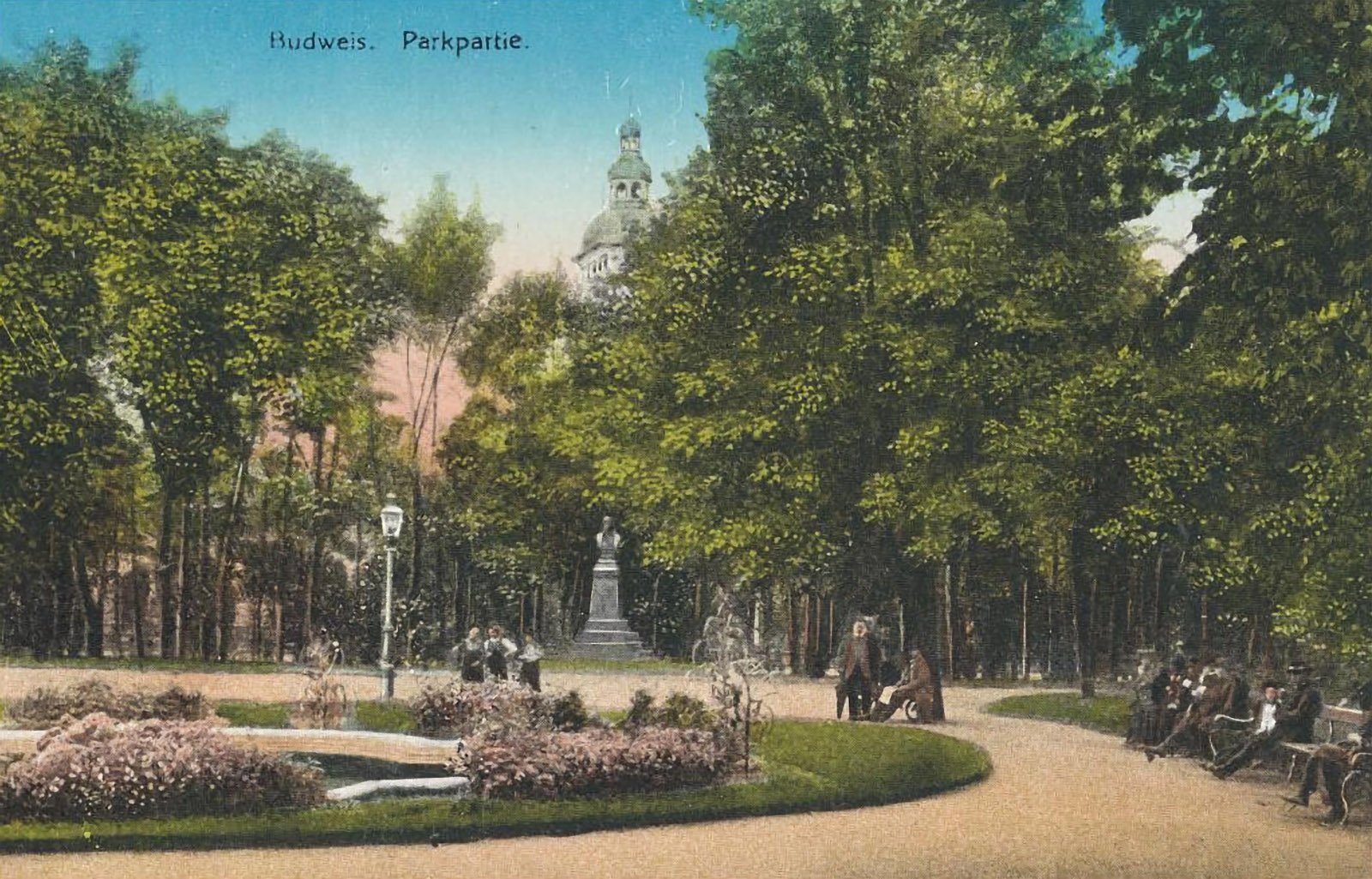
Háječek is a city park in České Budějovice, sitting right at the point where the Vltava and Malše rivers meet. It's a modest but historically loaded green space — laid out in the 1920s on land reclaimed from a drained pond, and it remains one of the city's main recreational areas to this day.
Where is the park and why is it there?
Háječek occupies the confluence of the Malše and the Vltava. For decades this exact spot was covered by the western part of the former Krumlov Pond, which the city began progressively draining in 1802. Only once the pond had fully disappeared did the freed-up land become available for a park.
When and how was the park built?
The idea of turning the site into a park had already surfaced by the end of the 19th century, but nothing happened until 1925, when a dedicated Commission for the Development of Háječek was set up. Construction ran from 1925 to 1927. During this period the park gained a fountain with a sculpture of a goat and four children, a veranda built for puppet theatre known as Kopecký's Cottage, a children's playground, and a small menagerie. A year after the park opened, the South Bohemian Astronomical Society was founded in České Budějovice and built an observatory right at the confluence of the two rivers.
What survived the war and the postwar decades?
World War II destroyed most of the park's original attractions. The postwar period reshaped Háječek even further: a winter stadium and an ice-making plant were built where the tennis courts used to be, and a summer cinema was placed at the center of the park — it's still running today.
What can visitors see in Háječek now?
From the historic layout, the observatory with its planetarium, the gazebo, and the fountain have all survived. The restored, nearly century-old gazebo — originally a music pavilion — has been turned into a café operating as Café Háječek 1925, now one of the park's more popular spots, combining historic architecture with a working coffee shop.
What changes are planned for the park?
The city of České Budějovice, working with the South Bohemian Region, is preparing a broader redevelopment of Háječek. Plans include a planetary park, a gravel walking trail, a viewing platform at the confluence of the Vltava and Malše, and a wooden heart-shaped photo point that's already become popular with visitors. The goal is to turn the existing summer cinema into a year-round open-air stage, so the park can serve as a cultural and leisure space in every season, not just summer.
Frequently asked questions
Where exactly is Háječek park located? At the confluence of the Malše and the Vltava in České Budějovice, on land that used to be part of the Krumlov Pond.
When was the park built? Construction started in 1925 under the Commission for the Development of Háječek and was completed in 1927.
What can you see in the park today? The historic observatory with a planetarium, a restored gazebo now housing the Café Háječek 1925, and a summer cinema that has operated there for decades.
Is the park going to be redeveloped? Yes — plans include a planetary park, a walking trail, a viewing platform at the river confluence, and converting the summer cinema into a year-round cultural stage.
Nearby places

Earn badges for the places you visit
Download NextOnTrip, discover new places and check off your trails.