About this place
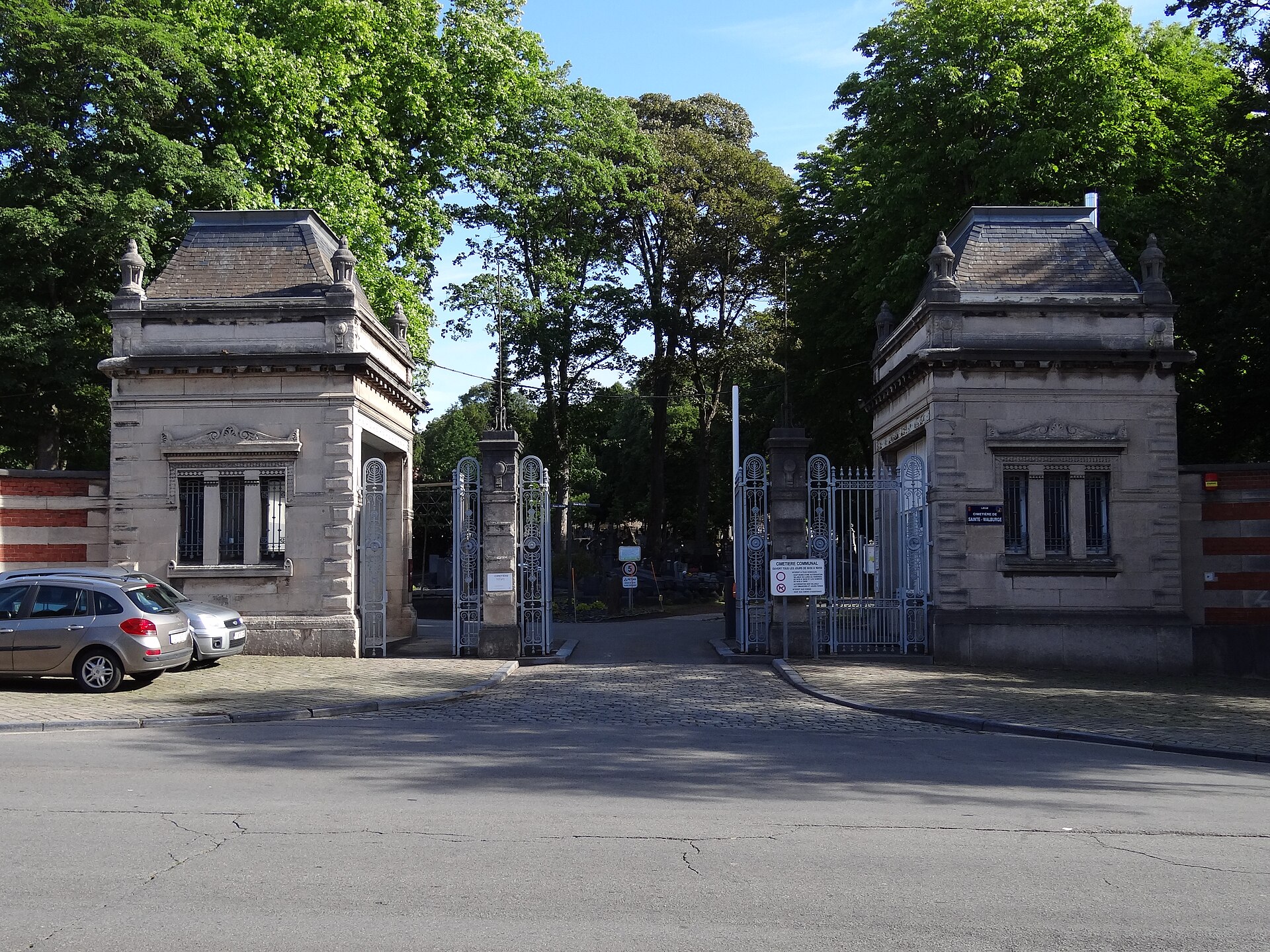
Robermont Cemetery is the largest municipal cemetery in Liège, established on 21 May 1805 by decision of the city council on the grounds of the former Robermont Abbey gardens. The cemetery was created outside the crowded city center for public health reasons, following a common practice across Europe at the turn of the 19th century, when burials within densely built urban areas were increasingly seen as a sanitary risk.
How has the cemetery developed over time?
Over more than two centuries, Robermont grew alongside the city itself, becoming the final resting place for numerous figures who shaped the cultural, political, and scientific life of Liège. The grounds today hold an array of elaborate tombs and funerary monuments, many notable for their architectural detail and symbolic design, reflecting the burial traditions of Wallonia's bourgeois and aristocratic families through the 19th and early 20th centuries.
What role did the cemetery play during wartime?
Robermont carries visible marks of Europe's major conflicts. The grounds include both a French and a German memorial commemorating the Franco-Prussian War of 1870–1871, along with roughly a dozen graves belonging to officers and soldiers of Napoleon's army.
The cemetery's most significant wartime chapter dates to the First World War. Liège came under German attack on 4 August 1914; the city itself fell on the 7th, and its last defensive forts held out until the 16th, after which the city remained under German occupation until the end of the war. During this period, the municipal cemetery at Robermont was used to bury Allied prisoners of war. It now contains French, Belgian, Italian, Russian, and Commonwealth war graves plots, making it one of the important sites of First World War remembrance in the Liège region.
What else can visitors find on the grounds?
Beyond its military sections, the cemetery includes extensive civilian areas with family tombs and individual funerary monuments. Many visitors take particular interest in the architectural and historical value of these markers, ranging from simple crosses to elaborate burial chapels characteristic of Belgian funerary art of the period.
Frequently asked questions
When was Robermont Cemetery established? The cemetery was founded on 21 May 1805 on the grounds of the former Robermont Abbey gardens.
Why was the cemetery built outside the city center? The main reason was public health: burials within Liège's built-up center were increasingly viewed as a sanitary hazard.
What wartime traces can be found at the cemetery? Visitors can find memorials to the Franco-Prussian War (1870–1871), graves of soldiers from Napoleon's army, and First World War military plots for French, Belgian, Italian, Russian, and Commonwealth forces.
Is Robermont the largest cemetery in Liège? Yes, it is Liège's largest municipal cemetery.
Who is buried at Robermont Cemetery? The cemetery holds the graves of figures connected to Liège's cultural, political, and scientific history, alongside soldiers who died in the armed conflicts of the 19th and 20th centuries.
Nearby places

Earn badges for the places you visit
Download NextOnTrip, discover new places and check off your trails.