About this place
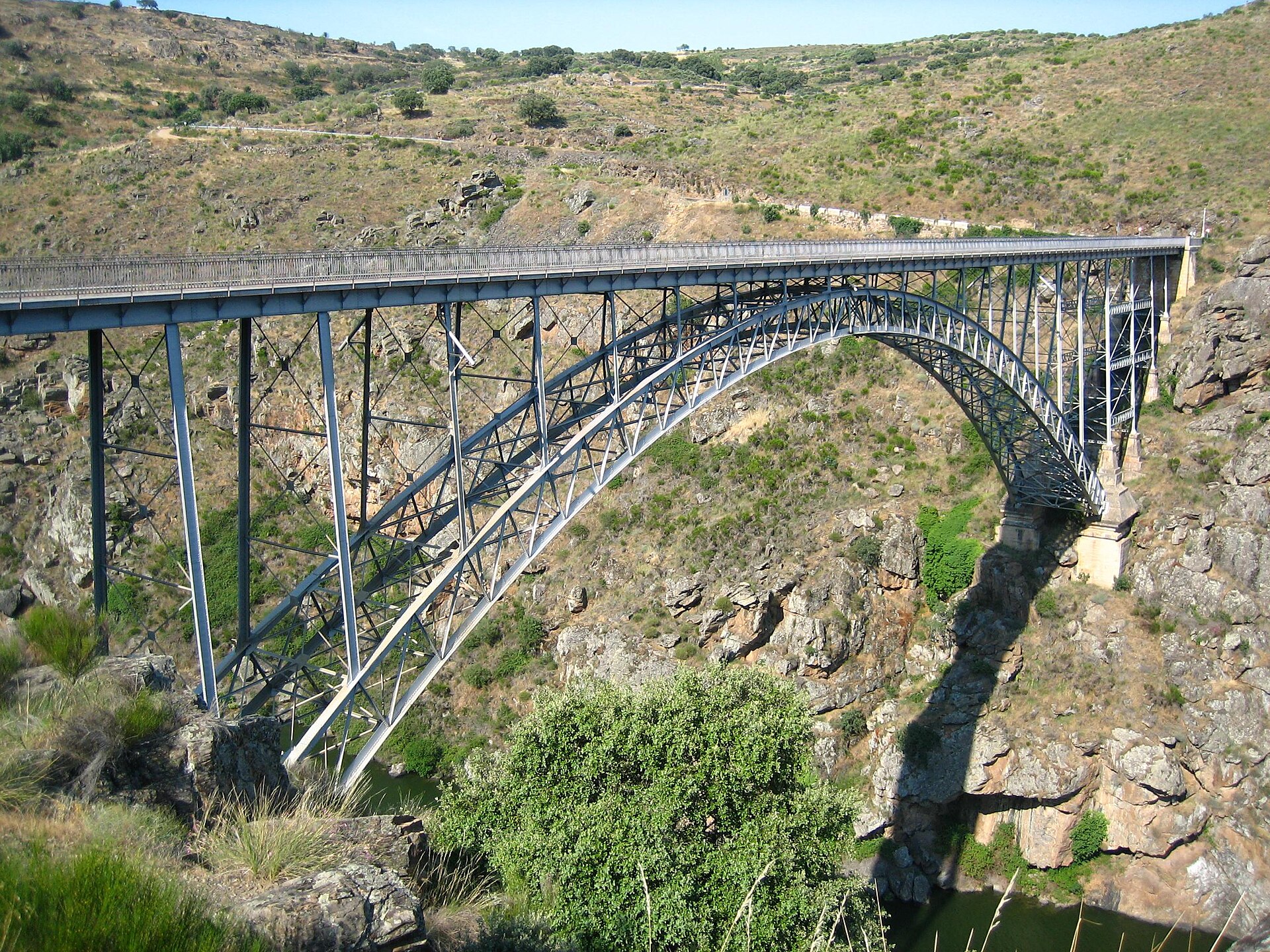
Requejo Bridge is a steel bridge spanning the Duero River between the municipalities of Pino del Oro and Villadepera, in the province of Zamora, Castile and León. Also known locally as Puente Pino, it has stood for over a century as one of the most striking pieces of engineering in the Arribes del Duero region.
Where exactly is the bridge located?
The structure crosses a deep canyon carved by the Duero River, right where the river forms the natural boundary between the Sayago and Aliste districts. The surrounding area belongs to Arribes del Duero, a stretch of rugged, steep-walled gorges along the Spanish-Portuguese border prized for its wild scenery and dramatic drops toward the water. The bridge is one of the recognizable landmarks for visitors exploring this stretch of the canyon.
Why was the bridge built in the first place?
Before the crossing existed, the only way to get across the Duero between Pino del Oro and Villadepera was a passenger barge that ferried people between the two banks. That arrangement made travel and trade between the two districts slow and weather-dependent. A permanent bridge promised a direct road link where journeys had previously relied on the availability of the ferryman and the state of the river.
Who designed and built Requejo Bridge?
The project was driven by Federico Requejo Avedillo, then director general of public works, whose name the bridge still carries. The design itself was drawn up in 1897 by engineer José Eugenio Ribera, one of the leading figures in Spanish bridge engineering at the turn of the twentieth century. The actual construction, complicated by the canyon's steep, rocky terrain, was carried out by the Asturian company Duro Felguera, which also employed local workers on site. The bridge was formally inaugurated on 15 September 1914, in a ceremony presided over by Abilio Calderón, the director general of public works at the time.
What made this bridge stand out?
When it was completed, Requejo Bridge held two national records: the longest span (120 meters) and the greatest height above a river (90 meters) of any bridge in Spain. It was precisely the scale of the engineering challenge — the steep, rocky canyon walls and the considerable height above the water — that made its construction one of the more talked-about technical feats of the era in this part of the country.
Who should plan to visit?
The bridge appeals both to people interested in engineering history and to those drawn to the Arribes del Duero landscape. It makes a good stop for landscape photography, scenic walks, and routes linking the Sayago and Aliste districts, both known for their stone rural architecture and quiet, low-key style of tourism. The nearby village of Pino del Oro serves as a convenient base for exploring the surrounding area.
Frequently Asked Questions
Is Requejo Bridge known by any other name? Yes, it is also commonly called Puente Pino in the region.
When was the bridge officially opened? It was inaugurated on 15 September 1914.
Which two municipalities does the bridge connect? It links Pino del Oro and Villadepera, on opposite sides of the Duero canyon in Zamora province.
What made the bridge exceptional at the time it was built? In 1914 it had the longest span and the greatest height above a river of any bridge in Spain.
Nearby places

Earn badges for the places you visit
Download NextOnTrip, discover new places and check off your trails.