About this place
Rat (also known as Gora or Crna Gora) is a small, history-layered headland right next to Molunat, the southernmost settlement on Croatia's coast, in the Konavle municipality.
Where is it and how do you get there?
The headland is tied to the mainland by Metale, a narrow isthmus roughly 300 metres wide, and it separates Molunat's two harbours - the Small Harbour to the southeast and the Large Harbour to the southwest. Molunat itself sits about 40 km southeast of Dubrovnik and 20 km from Cavtat and Čilipi airport. A bus runs three times a day, and by sea it's 12 nautical miles from Cavtat and 18 from Dubrovnik.
What will you actually see there?
On the flat Metale plateau you can still spot the remains of a Roman-era cistern, uncovered during a 1973 excavation. Archaeologists recovered amphora and plate fragments, a piece of a black glass bracelet and a bronze ring carved with a serpent's head. The same dig exposed a rectangular building with an apse, a red-and-white mosaic floor and traces of a hypocaust (the Roman underfloor heating system) - coins of Marcus Aurelius dated it to the 2nd century AD. A short walk away, at a site called Mirine, ancient wall fragments are still visible, though that spot has never been formally excavated.
The second chapter of Rat's history is medieval. The Republic of Dubrovnik bought this stretch of Konavle in 1419, and from 1468 onward - fearing Ottoman raids - it fortified the headland with gates on the east and west sides flanked by semicircular towers, gun ports built into the walls, and lime kilns to supply the construction. As early as 1451, Molunat was already recorded as a refuge for people fleeing the eastern part of Konavle, a place where the sick were quarantined and ships arriving from plague-stricken ports were watched.
When should you visit, and what else is there to do?
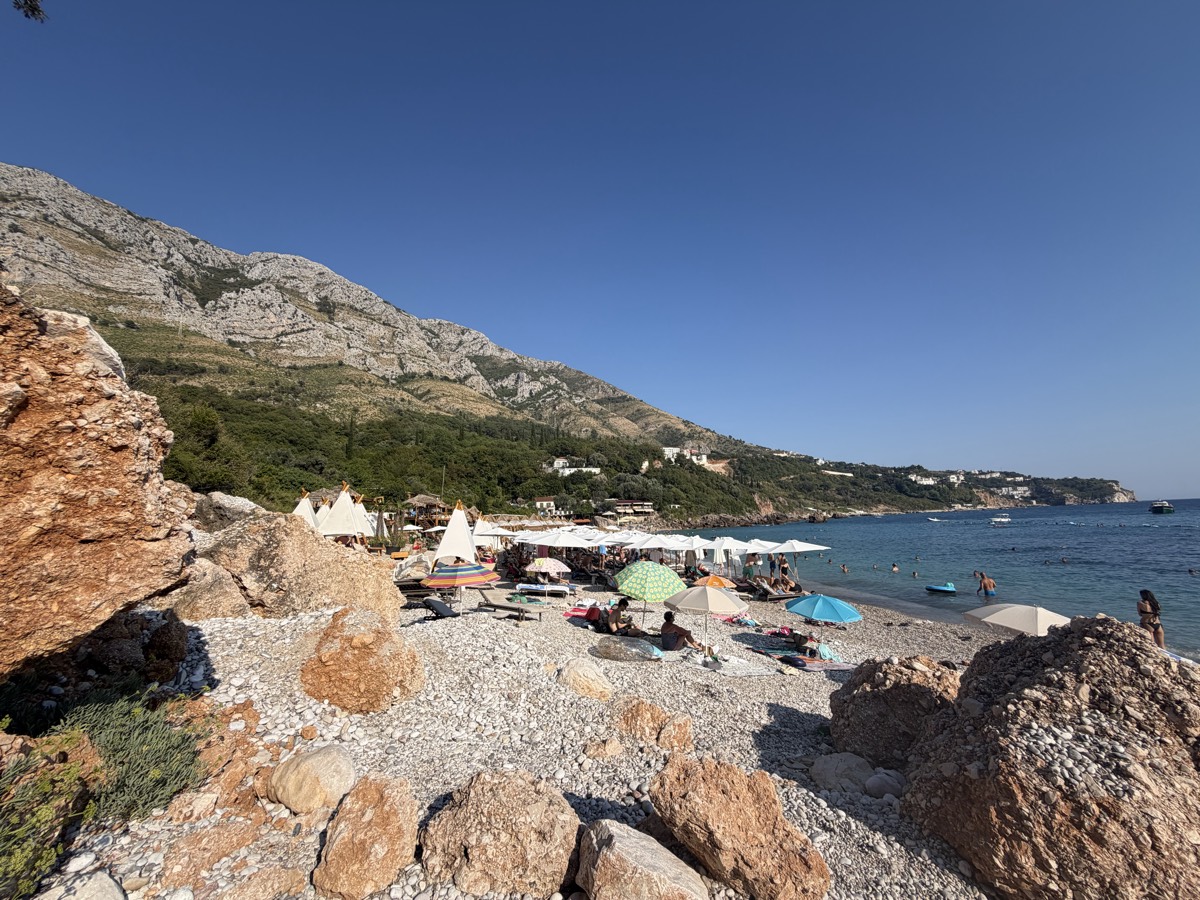
The climate is mild and Mediterranean, with warm summers cooled by the afternoon maestral wind - May to September is the best window. Around the headland, sheltered coves and two small islets offer clear, shallow water favoured by divers and anglers; Molunat has its own fishing cooperative and a diving club. Vegetation is classic Mediterranean maquis, with holm oak, cypress and umbrella pine. Molunat village itself (234 residents at the 2021 census, spread across 5.7 km²) has private apartments, a small pension, a campsite, a shop, a restaurant, two cafés and a slipway with mooring space.
Frequently Asked Questions
What exactly is Rat? It's a small headland beside Molunat, also known as Gora or Crna Gora, connected to the mainland by the narrow Metale isthmus and carrying traces of both Roman settlement and medieval Republic-of-Dubrovnik fortifications.
Can you actually see the ruins? Yes - the remains of the Roman cistern are visible on the Metale plateau, and nearby at Mirine you can still see fragments of ancient walls, although that site hasn't been excavated yet.
How do you get to Molunat? Easiest by car from Cavtat or Dubrovnik (about 20 km and 40 km away respectively); there's also a bus three times a day, or you can arrive by boat - it's 12 nautical miles from Cavtat.
What can you do in Molunat besides history? Diving, fishing and swimming in the sheltered coves around the two nearby islets - the water is shallow and clear, and the area is served by a local fishing cooperative.
Nearby places

Earn badges for the places you visit
Download NextOnTrip, discover new places and check off your trails.