About this place
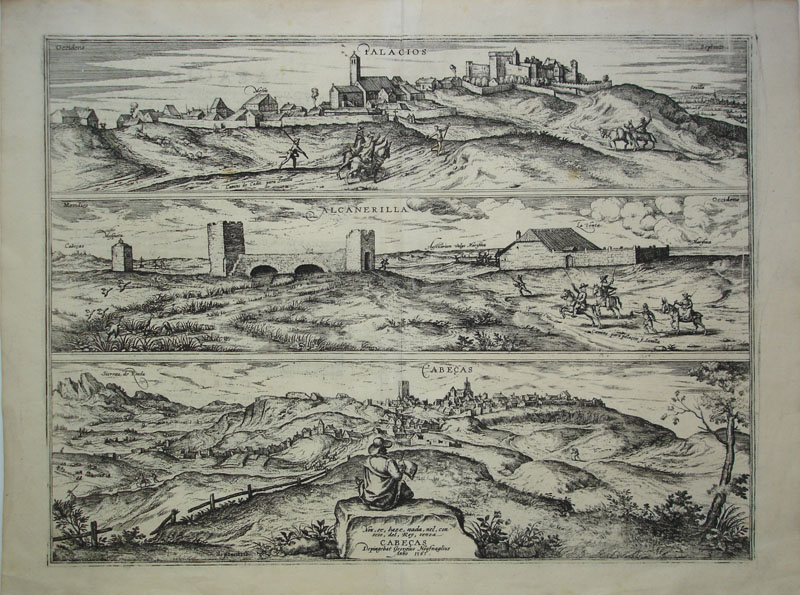
Puente Romano de las Alcantarillas is a Roman bridge on the outskirts of Utrera, in the province of Seville, and one of the most recognizable surviving pieces of ancient road engineering in this part of Andalusia. It spans the former Salado stream next to the Castillo de Alcantarilla tower, and for centuries has served as a landmark for travelers heading southwest out of town.
What is this bridge, and where does its name come from?
The name "de las Alcantarillas" (also found as "de la Alcantarilla") derives from an Arabic word for bridge or culvert, itself a hint at how continuously this crossing was used across successive eras — Roman, Visigothic, Islamic, and Christian. The structure rests on two stone arches, though the bridge originally likely had two levels; the upper section has not survived to the present day.
Why is it dated to Roman times?
The bridge's dating to the reign of Augustus rests on an epigraphic inscription set between its two arches, with a surviving fragment read as "AUGUSTUS PONTEM...". This inscription is what allows historians to place the structure firmly within the context of Roman infrastructure policy in the early decades of the Common Era, a period when the road network across Hispania was being aggressively expanded.
What role did it play in the Roman road network?
The bridge formed part of the Via Augusta, the longest Roman road on the Iberian Peninsula, linking Cádiz with the Pyrenees and, beyond them, the rest of the empire. Specifically, it sat on the stretch between the former settlements of Orippo (today a depopulated site near the Guadalquivir and Guadaíra rivers, in the municipality of Dos Hermanas) and Ugia, which some researchers identify with the nearby Torre Alocaz. For travelers and merchants moving from southern Spain toward the interior, this crossing of the Salado was a critical point along the route.
What can visitors see on site?
The bridge forms an ensemble with the adjacent tower, the Castillo de Alcantarilla, which in later centuries took over guard duty for the crossing, controlling traffic along this stretch of road. Despite losing its upper level and bearing the marks of several restorations, the two-arch structure still clearly displays its Roman origins — the proportions of the arches and the stonework technique remain characteristic of engineering from that period. The silhouette of the bridge with the tower behind it has become one of the recognizable promotional images of Utrera.
What does the surrounding area look like?
It's worth knowing that the bridge's immediate surroundings were heavily reshaped by modern infrastructure over the 20th century: to the south run the Bajo Guadalquivir canal and the Seville–Cádiz railway line; to the west, the N-IV highway runs parallel to the old Roman road; and the Cañada Real de las Cabezas de San Juan — a historic cattle-droving route — together with the SE-427 road, passes directly over the bridge itself. This layering of an ancient structure with modern transport lines is a clear illustration of how the same natural corridor has been used for travel continuously since Roman times.
Who is this destination for?
Puente Romano de las Alcantarillas suits travelers interested in ancient history and traces of the Roman presence in Andalusia, as well as anyone planning a route through the historic sites of Seville province beyond the provincial capital itself. It pairs naturally with a visit to Utrera and the surrounding archaeological remains connected to the Via Augusta.
Frequently Asked Questions
What period does the bridge date from? The bridge is dated to the reign of Emperor Augustus, based on an inscription placed between its two arches.
What was its function in antiquity? It formed part of the Via Augusta, the main Roman road linking Cádiz with the Pyrenees, on the stretch between Orippo and Ugia.
Has the bridge survived in its original form? Partly — the two stone arches remain, but the bridge's upper level has not survived, and the structure has undergone several restorations over time.
What else is located near the bridge? The Castillo de Alcantarilla tower stands beside it, which in later centuries guarded the crossing over the Salado river.
Nearby places

Earn badges for the places you visit
Download NextOnTrip, discover new places and check off your trails.