About this place
The Protestant Cemetery in Hodslavice is a small, historic burial ground on the northwestern edge of this village in the Nový Jičín district of the Moravian-Silesian Region, Czech Republic. It belongs to the local congregation of the Evangelical Church of Czech Brethren and has served the village's Protestant community for well over a century, its plain, restrained layout reflecting the austere tradition of the faith that built it.
Where did this cemetery come from?
The cemetery was established in 1857 and enlarged in 1913, a sign that the original plot quickly became too small for a growing congregation. Its roots, though, reach back much further, to the Patent of Toleration issued by Emperor Joseph II in 1781. The patent allowed previously hidden Protestants to practice their faith openly, and Hodslavice's community used the opportunity to form one of the very first Augsburg Confession congregations in Moravia. At the time, more than half the village — over 900 people — identified as evangelical, a remarkable figure that shows how deeply rooted Protestant tradition already was here before it could be practiced legally.
The evangelical community and its historical footprint
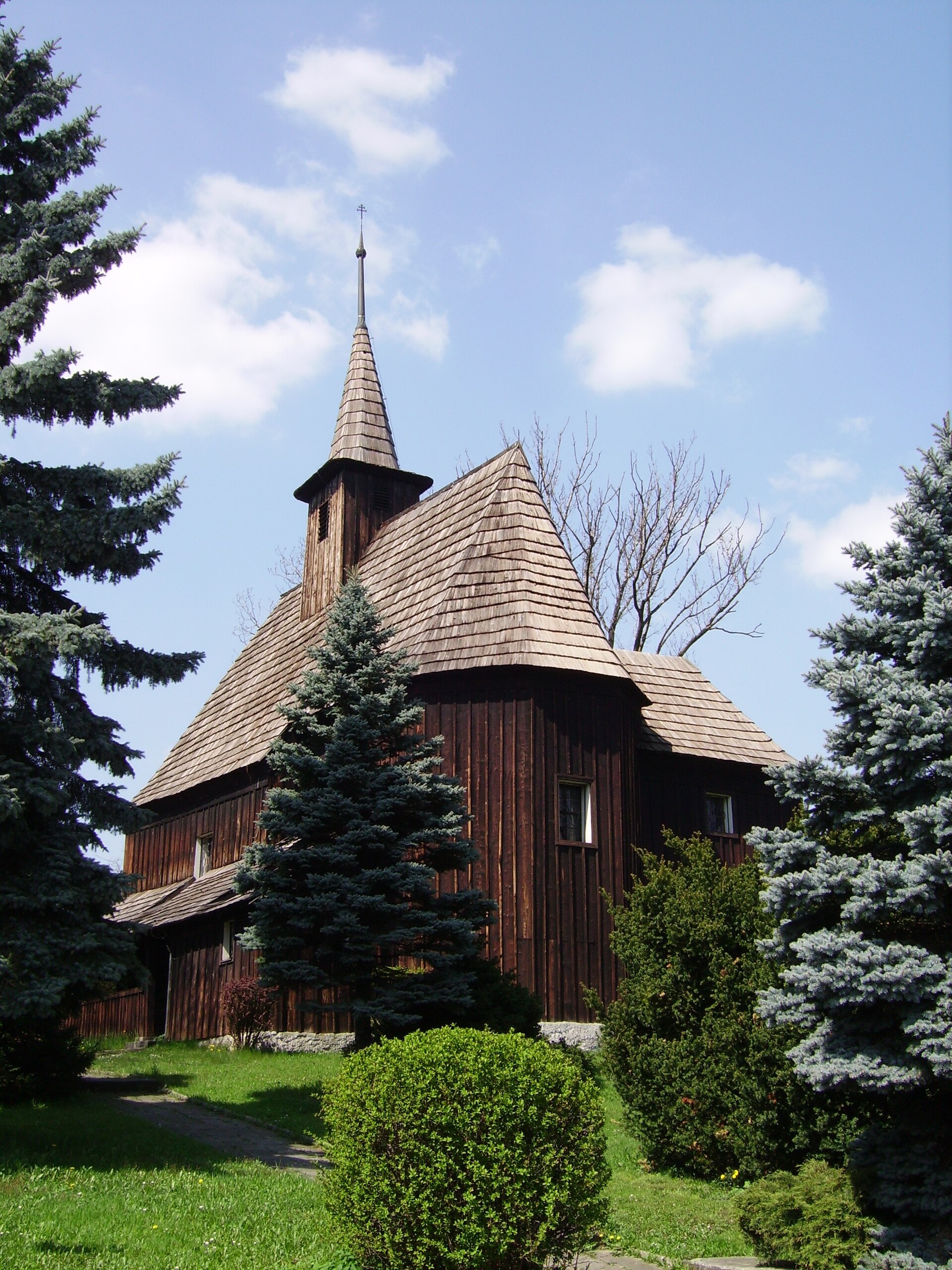
Before a stone church existed, the congregation worshipped in a wooden "tolerance church" built in 1783, which was later destroyed by a storm in the early 19th century. The cornerstone of its classicist stone successor was laid on 29 June 1813, and construction, slowed by the congregation's limited funds, wasn't finished until 1819. The result was Moravia's first evangelical church with a tower — a single-nave building with a polygonal presbytery. Shortly after it opened, František Palacký, Hodslavice's most famous son and one of the central figures of the Czech national revival, delivered a sermon there at his mother's request, fresh from finishing his studies at an evangelical seminary in Bratislava. It was the only sermon he ever gave. The cemetery, while physically separate from the church, belongs to the same congregation and shares that same local history.
What is there to see?
The burial ground occupies an elongated, rectangular plot, with graves arranged in irregular rows rather than a strict geometric grid typical of larger municipal cemeteries. Visitors enter through a northern gate flanked by masonry pillars, and the whole site is enclosed by a rendered brick wall. In the southwestern corner stands a small, unassuming mortuary building. The graves themselves share a fairly uniform treatment — bordered in stone or simply covered in grass, with none of the monumental tombs found in larger cemeteries. Because of these qualities, the site is protected as a cultural monument under the Czech heritage register.
Practical tips for visitors
Hodslavice is a small village most easily reached by car from Nový Jičín, a short drive away. The village also has a separate municipal cemetery, so it's worth knowing that this is a distinct site — it sits closer to the village center, next to the evangelical church. The cemetery is open to visitors, but since it still serves an active congregation, it's best approached quietly and respectfully. Pairing a visit with the nearby evangelical church and the birthplace of František Palacký makes for a compact but meaningful route through the history of Moravian Protestantism.
Frequently asked questions
When was the Protestant cemetery in Hodslavice founded? It was established in 1857 and later enlarged in 1913.
Which denomination does the cemetery belong to? It belongs to the Evangelical Church of Czech Brethren congregation in Hodslavice, whose roots trace back to the 1781 Patent of Toleration.
What can visitors see on site? A rectangular plot with graves in irregular rows, a northern gate framed by masonry pillars, a brick perimeter wall, and a small mortuary building in the southwestern corner.
Is this the same as the municipal cemetery in Hodslavice? No — it is a separate burial ground belonging to the evangelical community, distinct from the general municipal cemetery located elsewhere in the village.
Nearby places

Earn badges for the places you visit
Download NextOnTrip, discover new places and check off your trails.