About this place
Hřbitov Hodslavice is the cemetery of Hodslavice, a village in the Nový Jičín district of northeastern Moravia best known as the birthplace of František Palacký. Right next to the village's wooden church stands one of the region's most symbolic graves — the resting place of the parents of the man remembered as the "Father of the Nation."
Where is Hodslavice?
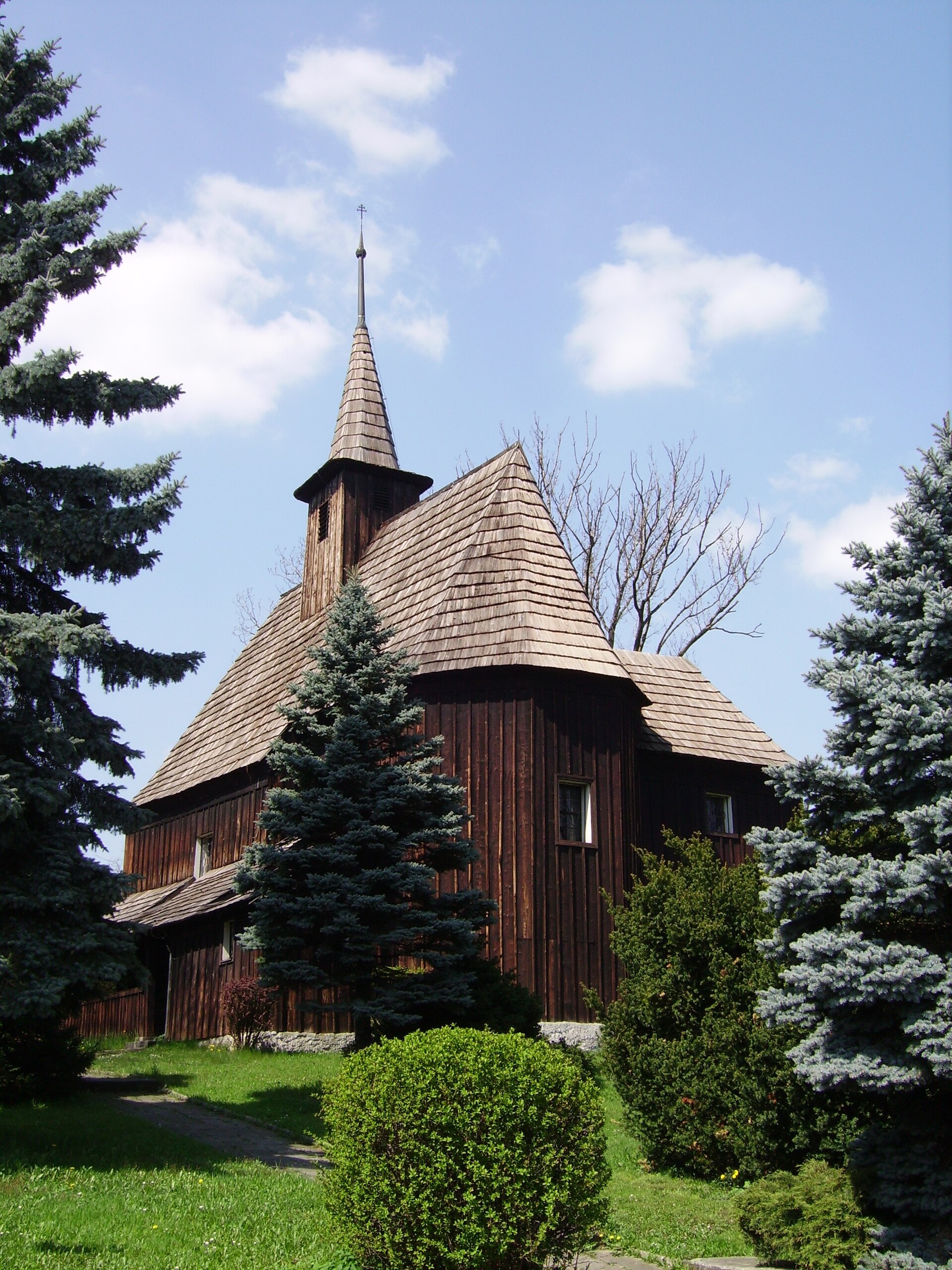
The village lies south of Nový Jičín, along the road connecting that town with Valašské Meziříčí, in the gentle landscape at the foot of the Beskids. Visitors come mainly because of the village's ties to Palacký, the most influential Czech historian and statesman of the 19th century. In the village center, close to the house where he was born, stands the small wooden Church of St. Andrew — and it is here, right beside it, that the oldest traces of local burial can still be found.
The grave of Palacký's parents
The wooden Church of St. Andrew was originally surrounded by its own churchyard cemetery, where villagers had been buried since medieval times. Over the centuries that old cemetery gradually disappeared, and the ground around the church lost its original function. One single grave survived: the resting place of Jiří and Anna Palacký, the parents of František Palacký. Jiří worked as an Evangelical schoolteacher, and the gravestone carries an inscription to the effect of: "Here rest the parents of the illustrious Czech, the Father of the Nation, Dr. František Palacký." It is the only physical remnant of the former churchyard cemetery, and one of the main reasons visitors come to Hodslavice as a site of national memory.
Who was František Palacký?
František Palacký (1798–1876) was born in Hodslavice and became one of the central figures of the 19th-century Czech National Revival. As a historian, he wrote the multi-volume "History of the Czech Nation," and as a political figure he played a decisive role in shaping Czech national identity within the Habsburg monarchy. He still carries the title "Father of the Nation," and his home village treats this legacy as the centerpiece of its identity for visitors.
The current parish cemetery
Beyond the old, largely vanished cemetery by the Church of St. Andrew, Hodslavice also has its present-day, functioning cemetery, laid out around the Church of the Divine Heart of Jesus (Kostel Božského srdce Páně), built between 1905 and 1906 in the Neo-Romanesque style. The building measures 44 meters in length and 23 meters in width, stands 17 meters tall, and its tower reaches 50 meters. The church was consecrated on 21 October 1906 by František Saleský Bauer. It stands along road II/483 near the village center, and the cemetery surrounding it remains in active use by local residents today. The church has been listed as a cultural monument of the Czech Republic since 1999.
What to see on a visit
A visit to Hodslavice works well as a short walk combining the wooden Church of St. Andrew and the single preserved grave of the Palacký family beside it, followed by a stop at the Neo-Romanesque Church of the Divine Heart of Jesus with its tall tower and the working cemetery that surrounds it. Following this short route shows how centuries of religious history and the memory of one of the most important figures in Czech history come together in a single village.
Frequently asked questions
Where in Hodslavice is the grave of František Palacký's parents? Right beside the wooden Church of St. Andrew, on the site of what was once the church's own cemetery — today only this single grave remains there.
Does Hodslavice have another, active cemetery? Yes, the current parish cemetery surrounds the Church of the Divine Heart of Jesus, built between 1905 and 1906.
Why is Hodslavice important in Czech history? It is the birthplace of František Palacký, the historian and statesman known as the Father of the Nation and a leading figure of the 19th-century Czech National Revival.
Is the Church of the Divine Heart of Jesus a protected monument? Yes, it has been listed as a cultural monument of the Czech Republic since 1999.
Nearby places

Earn badges for the places you visit
Download NextOnTrip, discover new places and check off your trails.