About this place
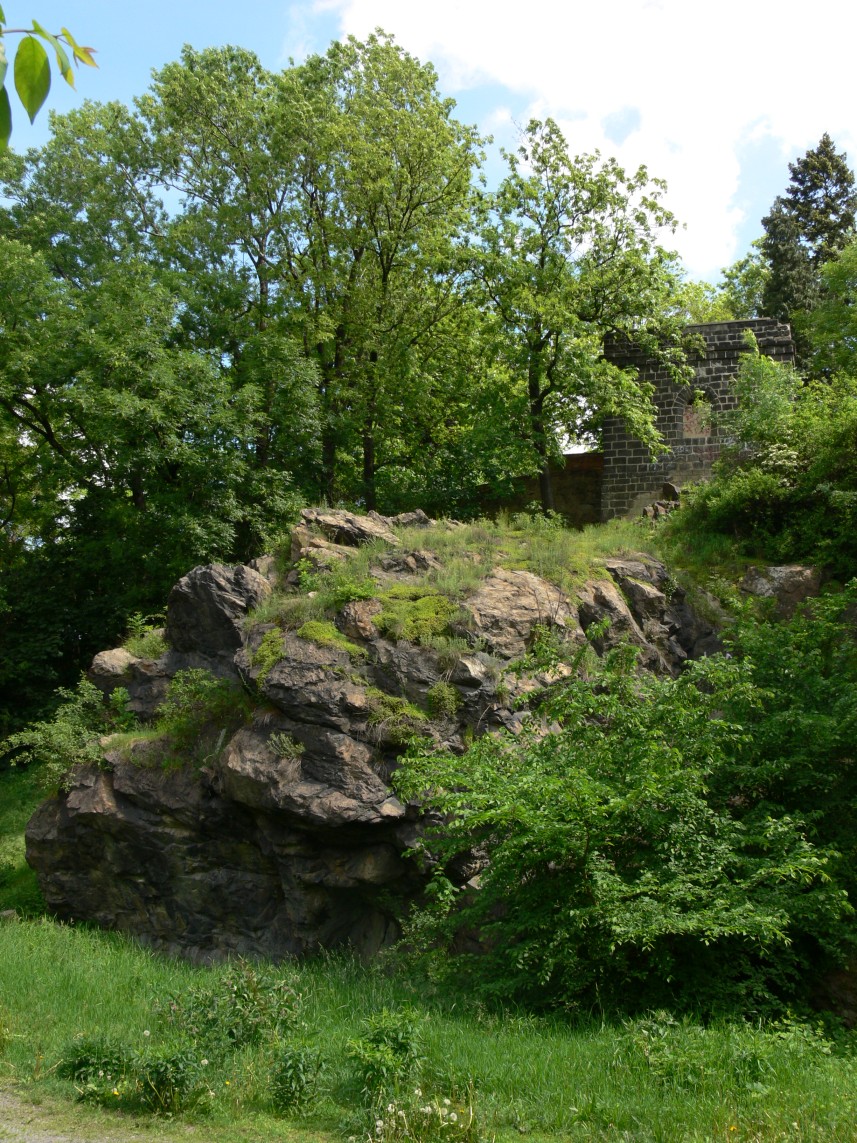
Pražský zlom (the Prague Fault) is a small but geologically remarkable nature reserve in Prague's Hloubětín district, protecting the only easily accessible outcrop of the famous Prague Fault. Covering just 0.31 hectares, the site punches well above its size in scientific value, offering a rare close-up look at the tectonic forces that shaped the entire Prague Basin.
Where is it and how do you get there?
The reserve lies within the cadastral area of Hloubětín, in Prague 14, close to the site of the former Hloubětín castle. It's an easy addition to a visit of Prague's eastern districts, set in a residential, semi-suburban area where small patches of protected nature sit alongside housing. Public transport from the city center typically takes somewhere between fifteen and forty minutes, and given the reserve's modest size, seeing it takes little more than a short walk.
What exactly is the Prague Fault?
The Prague Fault is the most significant crustal disturbance in the Prague Basin, traceable over roughly 60 kilometers, from Beroun all the way to Prague's Kyje district. It formed through tectonic activity during the Ordovician and Silurian periods — hundreds of millions of years ago — and played a defining role in shaping the basin in which Prague now sits. The maximum vertical displacement along the fault reaches as much as 1,700 meters, most notably recorded near Prague's Žižkov district.
What can you actually see on site?
The reserve preserves an isolated outcrop of sandstone, separated by the fault's dislocation zone from clay shales found further to the north. Ordovician-age sandstones and shales are exposed here — rock formations hundreds of millions of years old that bear witness to the region's turbulent geological past. It's this direct visibility of two distinct rock formations meeting at the fault line that gives the site its educational and scientific value, despite its small footprint.
Beyond geology, the reserve also carries ecological interest. Its rocky habitat supports characteristic xerothermic vegetation, including Carthusian pink (Dianthus carthusianorum) and biting stonecrop (Sedum acre) — plants adapted to dry, sun-exposed, thin-soil rocky ground.
Who looks after the reserve?
The site is managed by the Prague City Hall, which oversees the protection of both the geological outcrop and the vegetation growing around it. As a designated natural monument (přírodní památka), it follows the conservation rules typical of small urban reserves: visiting is allowed, but disturbing the rock surface or plant life is not.
Who is this place for?
Pražský zlom is a niche attraction, aimed mainly at geology enthusiasts, earth-science students, and travelers looking for the less obvious corners of Prague. It isn't a conventional tourist site with visitor infrastructure or an entrance fee — it's a stop for anyone who wants to see a physical trace of the processes that shaped the region millions of years ago, quite literally the line along which the earth's crust shifted.
Frequently asked questions
What is Pražský zlom? It's a Prague nature reserve protecting the only easily accessible outcrop of the Prague Fault, the most significant tectonic disturbance in the Prague Basin.
How big is the reserve? It covers just 0.31 hectares, making it one of Prague's smallest protected areas.
Where exactly is it located? In the Hloubětín district, Prague 14, near the site of the former Hloubětín castle.
How long is the Prague Fault? It can be traced for around 60 kilometers, from Beroun to Prague's Kyje district.
What plants grow at the site? The site supports xerothermic species such as Carthusian pink and biting stonecrop, adapted to dry, rocky habitats.
Nearby places

Earn badges for the places you visit
Download NextOnTrip, discover new places and check off your trails.