About this place
Cihelna v Bažantnici is a small but geologically remarkable nature reserve in Prague's Hloubětín district, set on a slope descending toward Kbely, north of the Prague–Turnov railway line and south of the Vysočanská radiála arterial road. Surrounded by allotment garden colonies, the protected area covers just 4.38 hectares at an elevation of 235–270 meters above sea level. It was declared a nature monument (přírodní památka) in 1988 and is administered by the City of Prague.
Why is this place protected?
The reserve protects one of Prague's most significant exposures of Cretaceous-age sediments — specifically Cenomanian-stage strata of the so-called Peruc and Korycany formations, which contain rich imprints of fossilized flora. The name itself, "Cihelna" (brickyard), points to its origin: former clay extraction here uncovered a geological profile that today serves as valuable research material for geologists and paleobotanists studying plant life from tens of millions of years ago.
What can you see there?
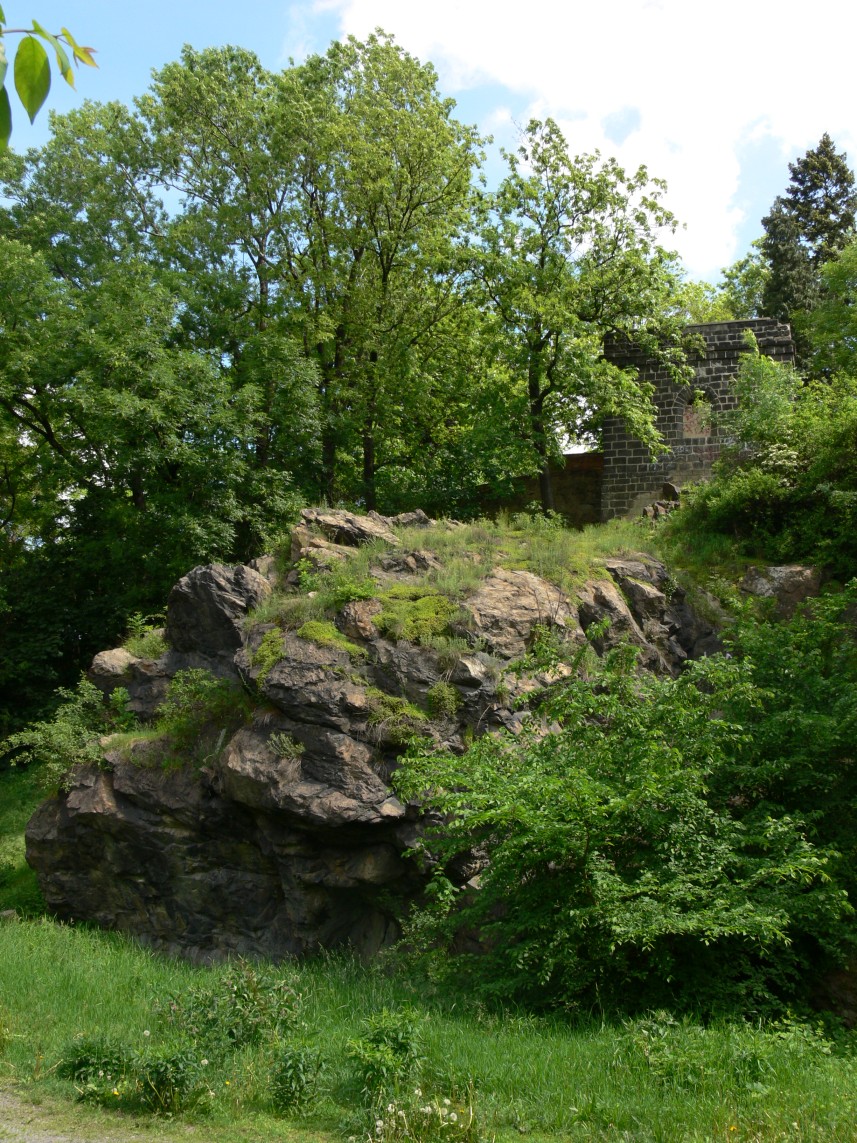
The site's defining feature is a rock formation shaped like a small table mountain — bare in places and significantly eroded, sloping toward the south and southwest. It is within these exposed Cenomanian clay layers that imprints of leaves and other plant fragments from the Cretaceous period have been found, making the site an important point on the geological map of the Czech Republic.
The vegetation within the reserve is largely ruderal, dominated by species adapted to disturbed, human-altered ground: white sweet clover, yellow sweet clover, and mugwort. It's a clear example of how nature reclaims a landscape once shaped by industrial activity.
Who is this place for?
Cihelna v Bažantnici appeals primarily to enthusiasts of geology, paleontology, and Prague's natural history rather than to casual sightseers looking for polished infrastructure and information panels. It's a quiet, low-key site where visitors can trace an exposed cross-section of millions of years of Earth's history — without crowds and without an entrance fee.
How to get there?
The reserve lies in an easily accessible part of Prague, in the Hloubětín district, next to allotment garden settlements. The best approach is on foot from nearby public transport stops connecting the city center with Prague's northeastern districts.
Frequently asked questions
What is the Cihelna v Bažantnici nature monument? It's a small protected natural area in Prague that safeguards an exposure of Cretaceous-period sedimentary rock along with imprints of fossilized flora.
When was the reserve established? The area was granted protected status in 1988.
How large is the protected area? The reserve covers 4.38 hectares, at an elevation between 235 and 270 meters above sea level.
What is worth seeing here? A distinctive, partly bare rock formation resembling a small table mountain, along with clay layers showing traces of ancient vegetation.
Is this site suitable for visitors without a geology background? Yes, though it's most appreciated by those interested in geology and nature — it's a quieter, more niche spot than a typical tourist attraction.
Nearby places

Earn badges for the places you visit
Download NextOnTrip, discover new places and check off your trails.