About this place
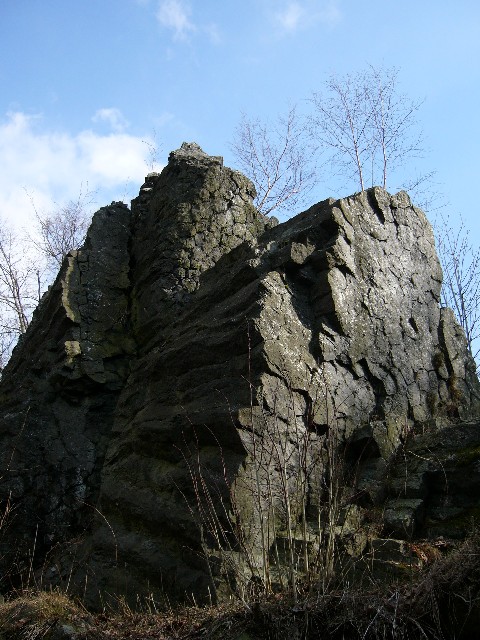
PP Stříbrník is a small but geologically remarkable nature reserve in the municipality of Žibřidice, in the Liberec district of the Czech Republic. It protects the summit of a basalt hill rising to roughly 510 metres above sea level — the eroded remnant of an ancient volcanic plug, now wooded and popular with hikers passing through the area.
Where is it and how do you get there?
Stříbrník lies within the cadastral territory of Žibřidice, west of the municipality of Křižany, in the Liberec Region of northern Czechia. The summit sits at approximately 50.7322 N, 14.8489 E. A green-marked hiking trail runs along the eastern foot of the hill, connecting Žibřidice with Útěchovice, and a short branch trail climbs to the top from a junction known as Pod Stříbrníkem. The surrounding countryside belongs to the wider Bohemian Paradise (Český ráj) region and its neighbouring areas, where rocky, volcanic-origin hills of this kind are a recurring feature of the landscape.
Why is this hill protected?
Stříbrník is an exposed basalt plug — the hardened remnant of a volcanic conduit formed during Tertiary volcanic activity that shaped much of the surrounding region millions of years ago. The hill is unusual in consisting of three morphologically distinct peaks, each formed independently and displaced relative to one another, a configuration rarely seen this clearly in Czech volcanic outcrops. The basalt itself displays well-developed columnar jointing, the regular, often hexagonal pillars produced as thick lava slowly cooled and contracted.
Alongside the basalt, the reserve also safeguards other traces of Tertiary volcanism: tuffaceous agglomerates, rock formed from consolidated pyroclastic material ejected during eruptions, and evidence of contact metamorphism in the surrounding sandstones and siltstones, where the heat of nearby magma altered the original sedimentary rock. Together these features make Stříbrník a valuable reference point for geologists studying the volcanic history of the region.
The summit has held continuous protected status since 1968, making it one of the longer-standing small-scale protected areas in the Liberec Region.
What can you see and encounter on site?
Beyond its geological interest, the hill also serves as a nesting site for birds of prey and corvids — its summit and rocky outcrops are used by the eagle owl and the raven. Visitors exploring the top should keep a respectful distance and avoid disturbing the area during the nesting season.
The walk to the summit itself is short, but the rocky, occasionally steep terrain calls for sturdy footwear. Views from the top, though partly screened by tree cover, still reveal the hill's characteristic domed silhouette, typical of the extinct volcanic necks scattered across this part of the country.
When is the best time to visit?
Spring and autumn are the most rewarding seasons for a visit, offering comfortable hiking temperatures and, with less foliage on the trees, better views of the rock formations and surrounding countryside. In summer, an early start is advisable — both to avoid the midday heat and to minimise disturbance to nesting birds.
Frequently asked questions
What is PP Stříbrník? It is a nature reserve (přírodní památka) protecting the basalt summit of a roughly 510-metre hill in the municipality of Žibřidice, in the Liberec Region of the Czech Republic.
Why is the site protected? For its unusual geology — three independently formed peaks of a volcanic basalt plug with well-developed columnar jointing, together with associated tuffaceous agglomerates and traces of contact metamorphism in the surrounding sedimentary rock.
Since when has it been protected? The hill has held continuous protected status since 1968.
How do you reach the summit? A green-marked trail runs along the eastern foot of the hill between Žibřidice and Útěchovice, with a short branch climbing to the summit from the junction called Pod Stříbrníkem.
What wildlife can be found here? The summit is a nesting site for the eagle owl and the raven, so visitors should keep their distance and stay quiet during the breeding season.
Nearby places

Earn badges for the places you visit
Download NextOnTrip, discover new places and check off your trails.