About this place
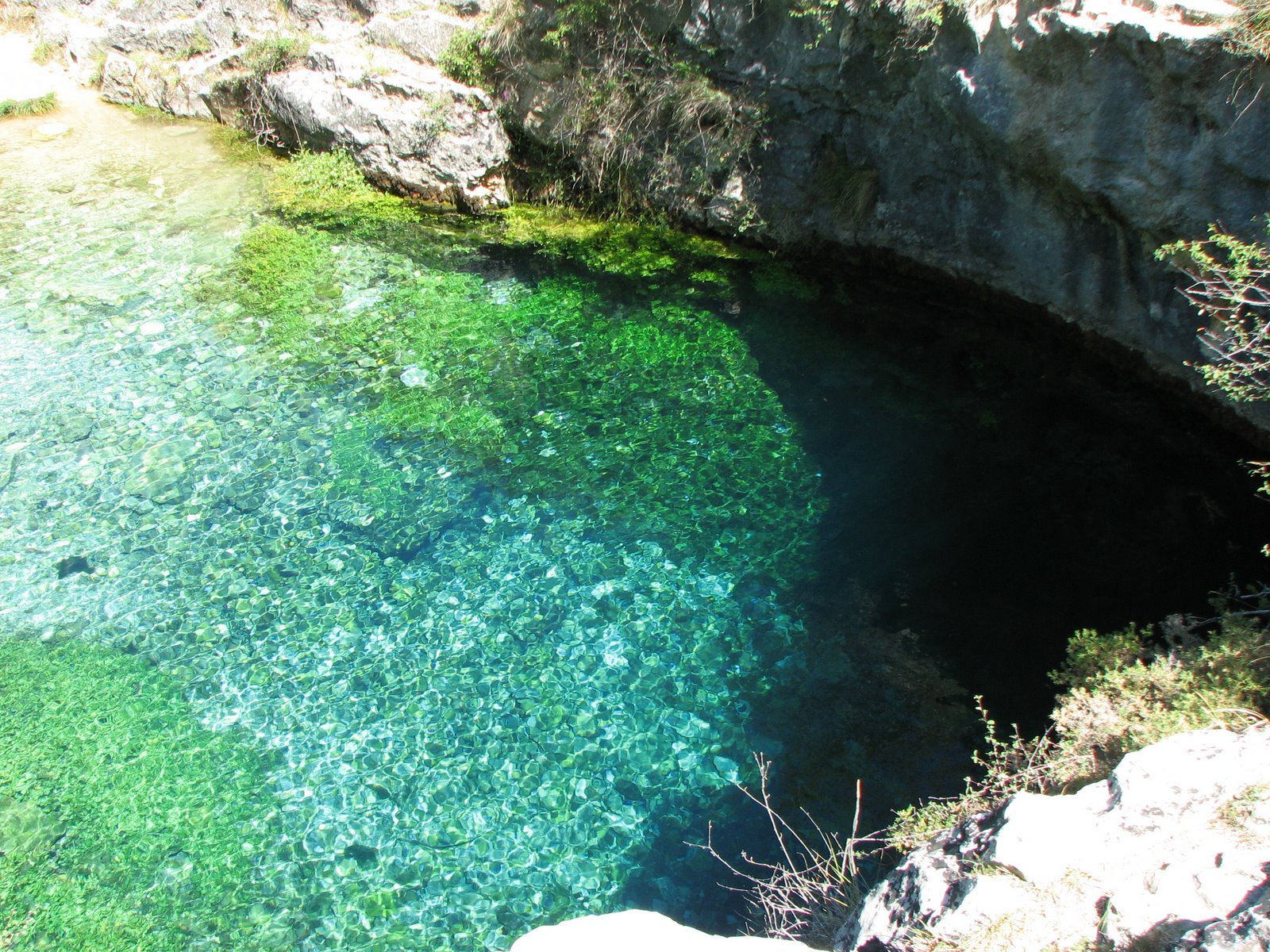
Pozo Azul is a vividly blue karst spring in Covanera, a small village within the municipality of Tubilla del Agua, in the northern part of Burgos province, Castile and León. It sits inside the Hoces del Alto Ebro y Rudrón Natural Park, surrounded by limestone canyons and woodland, well off the usual tourist trail — which is exactly part of its appeal.
What will you actually see?
From the surface, Pozo Azul looks like a calm, ordinary pool. In reality, it's the entrance to a flooded cave system that stretches for kilometers underground. The water has a striking turquoise-blue tint, produced by sunlight filtering through the clear, limestone-rich spring water. Temperature stays a constant 9–11°C year-round, and during the rainy season the spring can discharge up to 4,500 liters per second — an impressive sight even if you never plan to get in the water.
Why is this place significant?
Pozo Azul hides the longest explored underwater cave in the world. Divers have been mapping it since the 1960s, when Joaquín Plana of the G.E. Edelweiss speleology group first entered the flooded passages. To date, more than 13 kilometers of galleries have been surveyed, and recent expeditions (including one in 2025) still haven't found the end. Among cave divers, it's known as "the Everest of cave diving" because of the extreme difficulty and risk involved. The cave has also yielded endemic species, verified by Spain's National Museum of Natural Sciences.
How do you get there?
Covanera lies a few kilometers from Tubilla del Agua, reached via local roads through the Hoces del Ebro y Rudrón Natural Park. A car is the most practical option — the nearest major city is Burgos, about an hour's drive away. From the village parking area, a short, marked footpath leads to the spring itself, manageable for most visitors without special preparation.
Can you dive there?
Diving into Pozo Azul is reserved strictly for experienced cave divers with the proper certifications — it's one of the most demanding and dangerous forms of diving in the world, requiring specialized equipment and years of training. Regular visitors don't enter the water, but they can admire the spring from the shore and photograph its distinctive blue color.
When is the best time to visit?
Spring and early summer are ideal, when the canyon vegetation is green and water levels are high after winter rains, making the spring's outflow at its most dramatic. Summer tends to be drier, but access is easier and temperatures are comfortable for hiking through the natural park.
Frequently asked questions
Is Pozo Azul open to regular tourists, or only to divers? The shoreline and the short approach trail are open to anyone. Entering the flooded cave itself requires cave diving certification and isn't suitable for those without experience.
How long does it take to walk to Pozo Azul from the parking area? The trail from the Covanera parking area to the spring is short, usually taking somewhere between fifteen and twenty minutes on foot.
Why is the water in Pozo Azul so blue? The color comes from sunlight passing through the clear, limestone-rich spring water — an optical effect similar to that seen at other karst springs.
Are there other attractions worth visiting nearby? Yes — Pozo Azul lies within the Hoces del Alto Ebro y Rudrón Natural Park, known for its scenic river canyons and hiking trails, so it's worth planning a longer stay in the area.
Nearby places

Earn badges for the places you visit
Download NextOnTrip, discover new places and check off your trails.