About this place
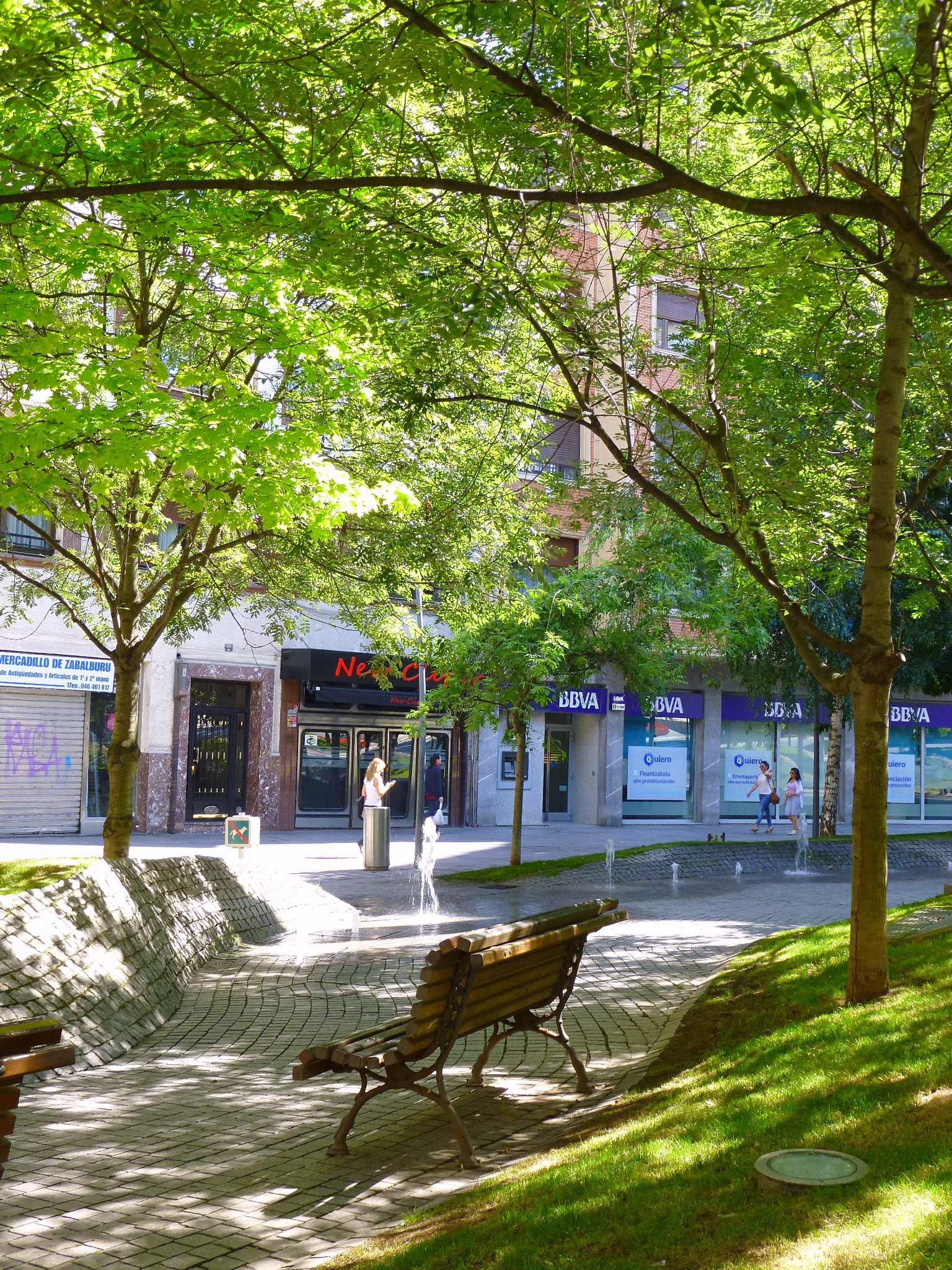
Plaza Zabalburu is one of Bilbao's more unexpected squares — a place where an aristocratic family estate gave way to an urban "forest" filled with illuminated sculptures. It sits at the junction of Calle Autonomía and Calle Hurtado de Amézaga, right in the city center, next to Abando metro station.
Where does the square's name come from?
The land the square now occupies once belonged to the Zabálburu family, Basque industrialists and patrons whose estate, Villa Mena, originally stood on this exact spot. As Bilbao expanded through the 19th and 20th centuries, the private residence gradually gave way to public space. It was here, on the grounds of today's square, that the ceremony formally annexing the municipality of Abando to the city of Bilbao took place on 1 July 1890 — an event that permanently redrew the city's administrative map.
How has the square changed over time?
Back in the 1960s, Plaza Zabalburu still had a circular layout. In 1977, an illuminated fountain was installed at its center, becoming a defining feature of the square for decades. It was dismantled in 2004, however, when work began on an underground car park beneath the plaza — a common solution for tight urban centers.
The real transformation came in 2008, when the square underwent a full redesign. Instead of the old circular layout with its fountain, a completely new concept emerged: an urban forest meant to shield pedestrians from the noise and traffic of the surrounding streets.
What can you see there today?
Today's Plaza Zabalburu covers nearly 3,000 square meters of reclaimed recreational space. Its defining feature is a collection of 77 trees of varying sizes, forming a natural green barrier between the square and the busy streets around it. The ground itself has been shaped into rolling "dune"-like waves, an architectural detail that adds visual interest on its own.
Families will find two children's playgrounds, while those looking for a quiet moment can rest by two ground-level fountains set flush with the pavement.
The square's real signature, though, is a set of eight illuminated sculptures by Italian artist Mario Nanni. These slender, obelisk-shaped structures rise 15 meters and project beams of light that shift color depending on weather conditions. The effect is especially striking after dark, making an evening visit well worth planning for.
How do you get to Plaza Zabalburu?
The easiest way to reach the square is by metro — Abando station sits right next to it. Thanks to its central location, the square pairs easily with a stroll through other parts of downtown Bilbao, including the adjoining Calle Autonomía and Calle Hurtado de Amézaga.
When is the best time to visit?
The square can be visited year-round, but keep in mind that Mario Nanni's illuminated sculptures reveal their full effect only after nightfall. In summer, the trees provide welcome shade on hot days, and the playgrounds draw local families, keeping the square lively for much of the day.
Frequently asked questions
What is Plaza Zabalburu? A modern urban square in downtown Bilbao, designed as an "urban forest" with 77 trees, two fountains, and eight illuminated sculptures.
Where does the square's name come from? From the Zabálburu family, Basque industrialists and patrons whose Villa Mena estate once stood on this site.
How do you get to the square? The nearest metro station is Abando, located right next to the plaza.
What is the square's biggest attraction? Eight 15-meter illuminated sculptures by Mario Nanni that change color with the weather — best seen after dark.
Nearby places

Earn badges for the places you visit
Download NextOnTrip, discover new places and check off your trails.