About this place
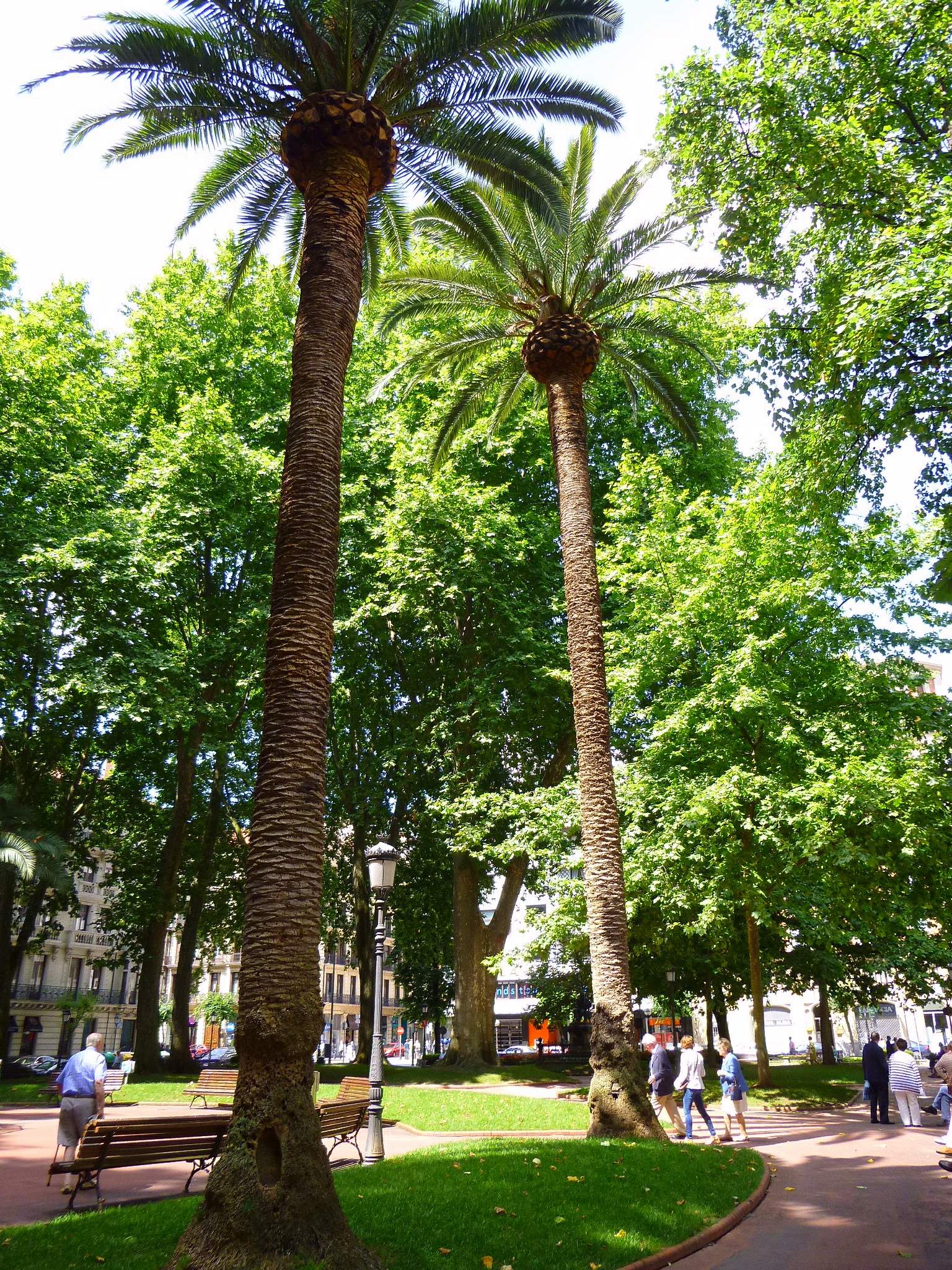
Jardines de Albia is one of the most recognizable green squares in the heart of Bilbao, sitting right beside the city's grand Gran Vía avenue. Located in the Abando district, the garden has served for more than a century as a kind of open-air living room — a meeting point, a resting spot, and a shortcut between the city's most important landmarks.
Where exactly is the garden located?
The garden covers roughly 6,000 square meters and is split into two sections by Ibáñez de Bilbao street: the larger Jardines de Albia proper (about 4,500 m²) and the smaller Plaza de San Vicente (about 1,500 m²). Because of this layout, the space feels more like a linked pair of squares than one continuous park, which makes it easy to cut straight through on foot from one side of downtown to the other.
Where does the name "Albia" come from?
The name has nothing to do with the square itself when it was first built — it comes from a much older tradition. It originally referred to a small plateau atop Larraskitu hill, where residents of Abando once held Sunday pilgrimages into the mountains among beech forests. According to the interpretation of Ceferino de Jemein, "Albia" derives from "ari-be-a," meaning "on the slope, beneath the peak of Pagasarri." The name was later carried over to the city square, even though the square itself has no topographical connection to its mountain namesake.
What is the history behind this square?
The Jardines de Albia took shape in the late 19th century, during the first phase of Bilbao's Ensanche (Expansion) — the period when the city gained a set of new representative public spaces built in the spirit of the romantic urban garden, with broad lawns and dense tree cover. In 1889, the city council decided to name the square Plaza de Trueba. For decades afterward, until 1983, it was known instead as Jardines de Berástegui, after the nearby Berástegui school that gave its name to the whole area.
What can visitors see there today?
The garden's defining feature is its collection of enormous plane trees, planted more than a hundred years ago and now taller than the surrounding apartment buildings — they give the square its shaded, cool microclimate, especially welcome in summer. Two historically significant monuments also stand within the gardens: a statue of Sabino Arana Goiri, positioned near the Palace of Justice, and a monument to the writer Antonio Trueba, whose name the square carried for most of the 19th century.
Who is this spot suited for?
Jardines de Albia is a natural stop for anyone exploring downtown Bilbao on foot — the garden sits directly on the route between Gran Vía and the old town, so it fits naturally into a walking itinerary rather than requiring a special detour. It also doubles as a resting place for locals: benches under the plane trees draw retirees reading the newspaper alongside office workers on a coffee break. It isn't a destination to seek out on its own, but rather a pleasant pause on the way to other parts of the city.
Frequently asked questions
Is Jardines de Albia a large park? No, it's a compact urban square of around 6,000 m², split into two sections by Ibáñez de Bilbao street — closer to a green plaza than a sprawling park.
How much time should I set aside? Walking through the whole area takes about 15–20 minutes — it works best as a stop along the way between other central landmarks rather than a standalone destination.
What does the name "Albia" mean? It comes from a former mountain plateau atop Larraskitu hill and, by traditional interpretation, means "on the slope, beneath the peak of Pagasarri."
What monuments are in the garden? The garden holds statues of Sabino Arana Goiri and the writer Antonio Trueba, after whom the square was named Plaza de Trueba for many years.
Nearby places

Earn badges for the places you visit
Download NextOnTrip, discover new places and check off your trails.