About this place
Plaza de las Batallas is a quiet neighborhood square in Valladolid, in Spain's Castile and León region, tucked into a residential area that runs on everyday local life rather than tour-bus schedules. You won't find a cathedral or a headline museum here — this is Valladolid seen from its more ordinary, lived-in side.
Where does the name come from?
The name isn't arbitrary. The streets surrounding the square are named after famous battles in Spanish history — Covadonga, Lepanto, Clavijo, and Pavia — which gave the plaza itself the name "de las Batallas," the square of the battles. The wider area is often called Barrio de las Batallas, and it was built on what used to be the Prado de la Magdalena, open meadowland that once stretched along the edge of the city. The neighborhood's buildings went up between 1964 and 1967, and the square took its current shape around 1969.
How do you get to Plaza de las Batallas?
The square sits in the west-central part of Valladolid, in an easily walkable residential district. Nearby reference points include Calle San Quintín and Calle Sanz y Forós, and a short walk from the plaza brings you to the Iglesia de la Magdalena church and the Convento de Corpus Christi. Two notable late-19th-century public buildings also stand close by: the former Diocesan Seminary from 1885 and the former Provincial Hospital from 1889 — both signs that this part of the city was developing long before the square itself existed.
What will you see there?
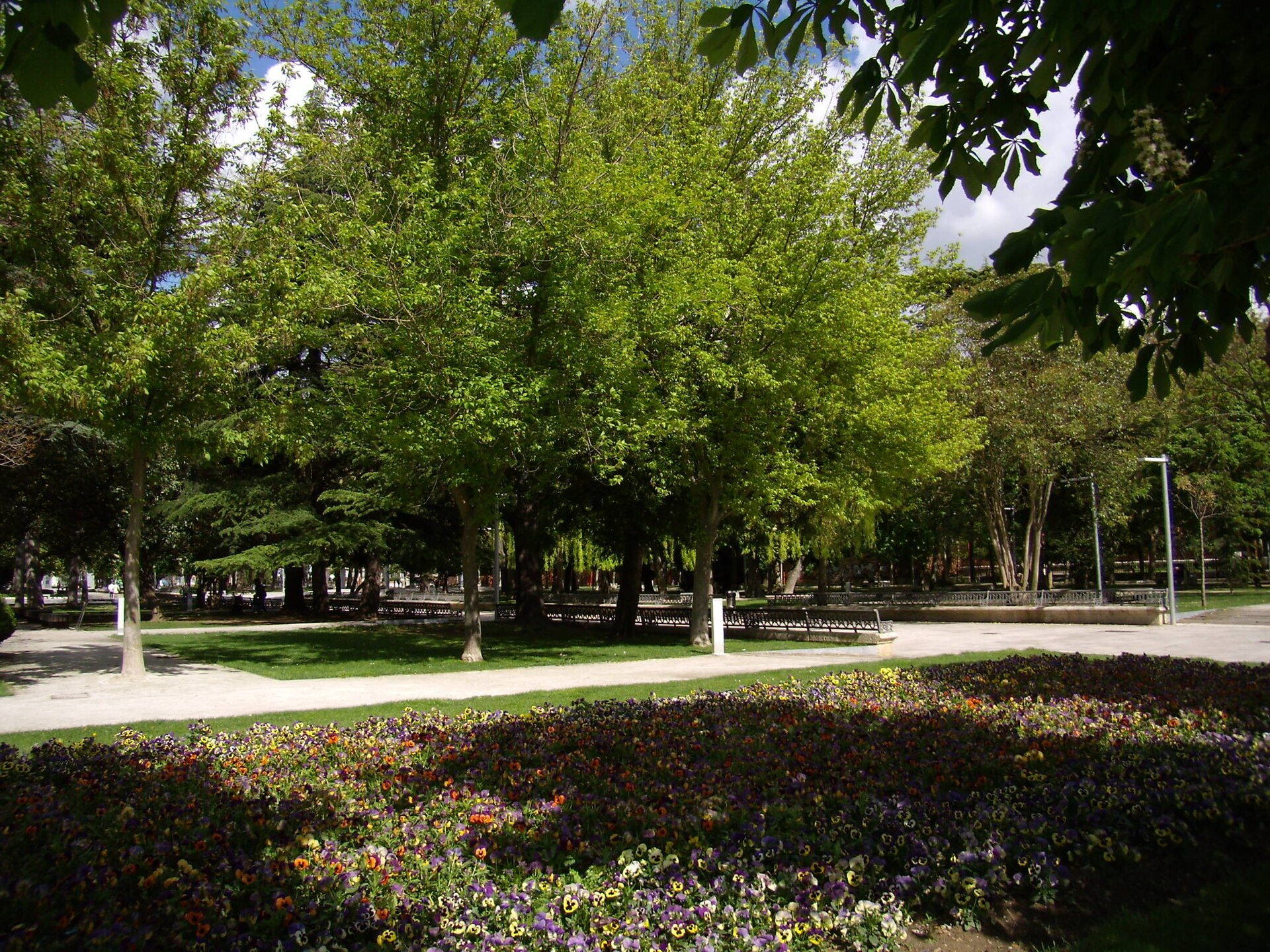
Plaza de las Batallas is understated and practical rather than monumental. It has small landscaped gardens, benches for sitting, and a playground for the neighborhood's children. Shopping arcades line the square, packed with small local shops and services — this is where residents of Barrio de las Batallas do their everyday errands and stop for a quick chat.
Look out for the sculpture "Chica leyendo" (Girl Reading) by Belén González, unveiled on the square in 2002. It's a modest artistic touch that gives this functional space a bit of character and a natural spot to pause for a moment.
When should you visit?
Plaza de las Batallas is best experienced during the day, when it's at its liveliest — mornings and early afternoons bring residents shopping in the surrounding arcades, while afternoons see children gathering at the playground with their families. Spring and autumn, with their milder temperatures, are good seasons for a longer walk through the streets named after historic battles. This isn't a headline stop on a tight sightseeing itinerary, but it's a rewarding detour for travelers who want to see Valladolid beyond its historic core and get a feel for an ordinary residential neighborhood.
Frequently asked questions
Why is the square called de las Batallas? Because the streets around it are named after famous battles in Spanish history, such as Covadonga, Lepanto, Clavijo, and Pavia — which is where the square and the surrounding neighborhood get their name.
What's near the square? Nearby you'll find the Iglesia de la Magdalena church, the Convento de Corpus Christi, the former Diocesan Seminary (1885), and the former Provincial Hospital (1889).
Is there anything for children at the square? Yes, Plaza de las Batallas has a playground for younger visitors, along with small gardens and benches where parents can rest while children play.
When did the square take its current form? The neighborhood's buildings were constructed between 1964 and 1967, and the square itself took shape around 1969. In 2002, the sculpture "Chica leyendo" by Belén González was added.
Nearby places

Earn badges for the places you visit
Download NextOnTrip, discover new places and check off your trails.