About this place
Plataforma del resbaladero de maderas de Lunada, in the municipality of Soba, is an 18th-century industrial structure tucked into the mountains of eastern Cantabria, Spain, on the right bank of the Miera river roughly 10 kilometres from San Roque de Riomiera, on the approach to the Lunada mountain pass.
What was the Lunada timber slide?
Work on the structure began on 8 August 1791, commissioned to Austrian engineer Wolfgang Mücha. His solution was a giant wooden chute, U-shaped in cross-section and set on a solid stone base, that let felled beech trunks slide down the steep slopes below the Lunada pass rather than being hauled by hand or cart. The full run stretched roughly 1.7 kilometres, negotiating whatever obstacles the terrain threw up along the way. Building it consumed timber from an estimated 10,000 felled beech trees. The logs that made the descent were bound for the royal artillery works at La Cavada and Liérganes, where they were cast into cannon for the Spanish navy — making this remote mountain structure a working link in the crown's arms-supply chain.
How to get there
The site sits deep in the Cantabrian mountains, within the municipality of Soba. Most visitors set out from the village of San Roque de Riomiera, following the route up the Miera river valley toward the Lunada pass. Expect a genuine mountain walk on a steep, historic haulage track rather than a stroll from a car park — sturdy boots and reasonable fitness are worth having before setting off.
What can you see today
Little of the original 1.7-kilometre wooden chute has survived intact; what remains is mostly the stone foundation that once carried it, though the line it traces up the mountainside still conveys the scale of the 18th-century project. Close by are the ruins of the so-called Casa del Rey, a shelter and store where workers overseeing the slide kept track of how much timber passed through. Also nearby stands the old Pila farmstead, a single-storey building built in traditional Pasiego style, distinguished by its arcades and a carved coat of arms alluding to the reign of King Charles III, when the slide was constructed. Since July 2003 the whole ensemble has been listed as an Inventoried Heritage Asset by the Cantabrian regional government, and in recent years the Fundación Naturaleza y Hombre has carried out conservation work on the site.
When to visit
Given the altitude of the Lunada pass, the best walking season runs roughly from late spring to early autumn, when the track is driest and Cantabria's mountain weather is most forgiving for a longer hike. In winter and early spring, snow and mud higher up can make reaching the platform itself considerably harder.
Frequently asked questions
What is the Resbaladero de Lunada? It is an 18th-century wood-and-stone chute built to slide felled beech logs down the slopes of the Lunada pass to onward transport points serving the royal cannon foundries.
Who built it and when? Construction began in 1791, designed by Austrian engineer Wolfgang Mücha during the reign of King Charles III.
Are any original parts still standing? Only in part — mostly fragments of the stone base survive, while the timber chute itself has largely disappeared. Nearby stand the ruins of the Casa del Rey and the old Pila farmstead.
Is the walk to the site difficult? It's a mountain route, climbing steep ground from San Roque de Riomiera toward the Lunada pass — demanding in terrain, though it requires no special equipment beyond good hiking gear.
Nearby places
-

Ayuntamiento de San Roque de Riomiera
La Pedrosa
-
Palacio de los Cuevas Velasco
Espinosa de los Monteros
-
San Pedro del Romeral town hall
San Pedro del Romeral
-
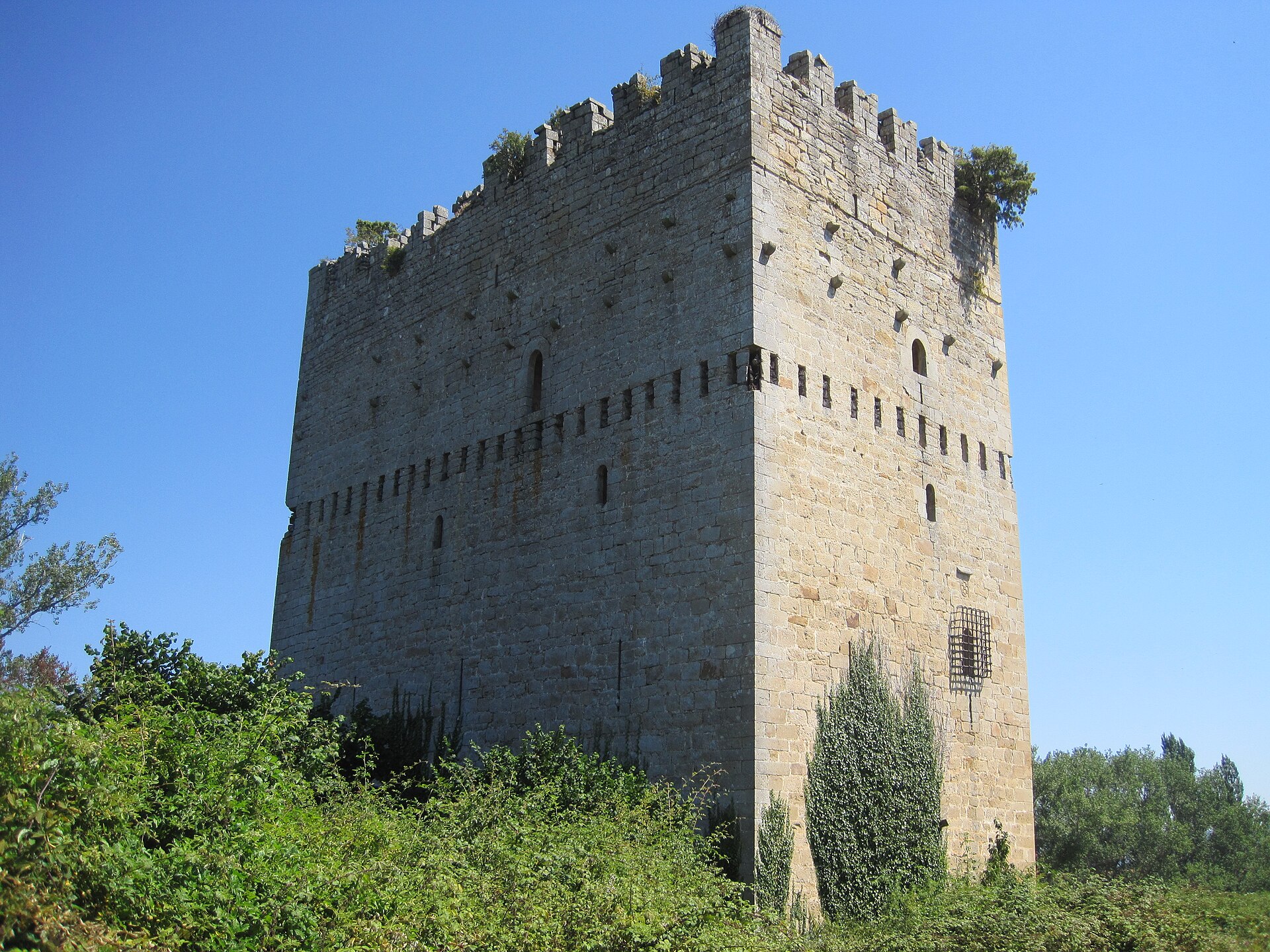
Velasco's Tower
Espinosa de los Monteros
-
Espinosa de los Monteros town hall
Espinosa de los Monteros
-
Chiloeches Palace, Espinosa de los Monteros
Espinosa de los Monteros
Earn badges for the places you visit
Download NextOnTrip, discover new places and check off your trails.