About this place
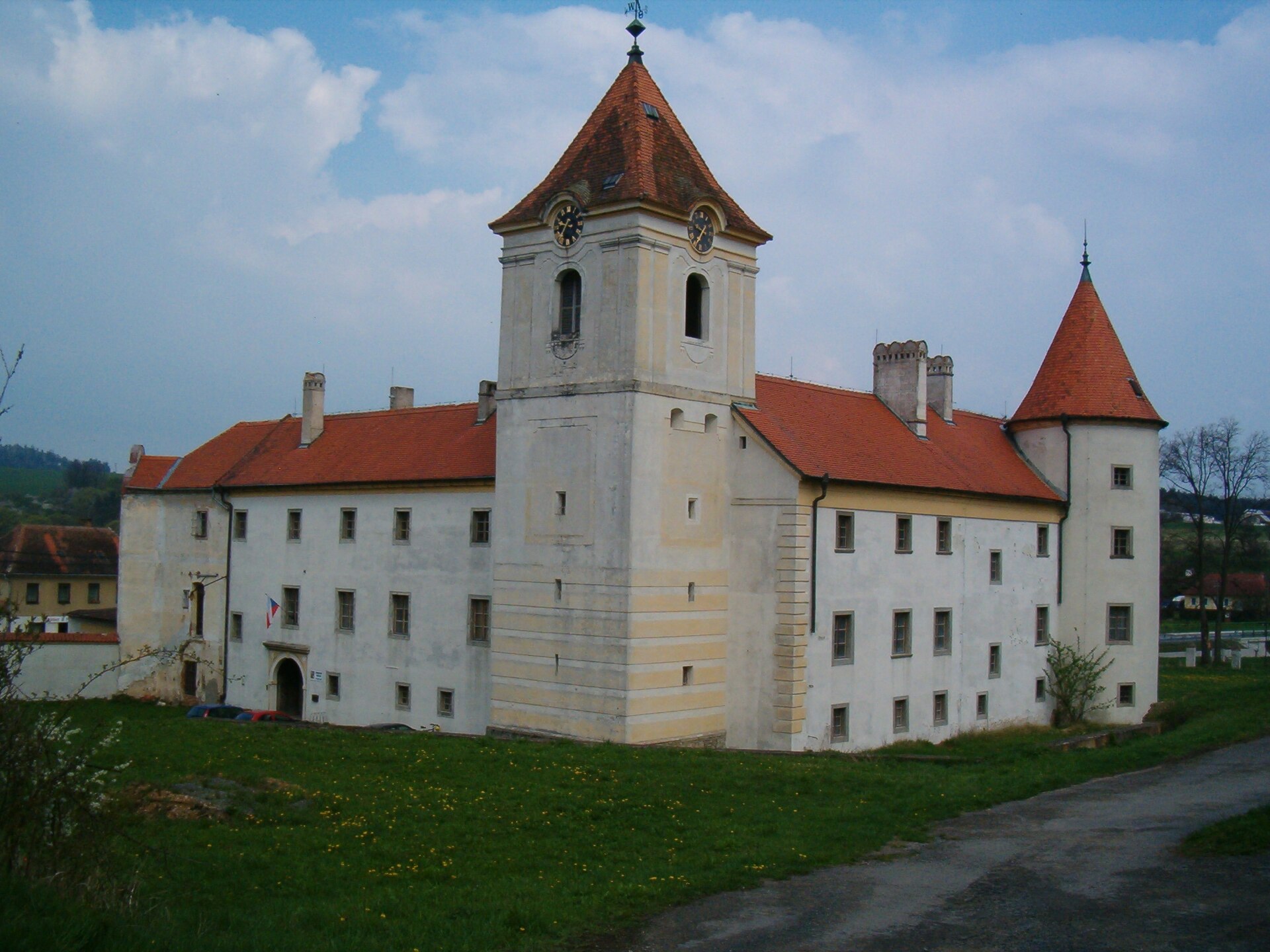
Písečné Castle is a Renaissance manor house in the small village of Písečné, in the Jindřichův Hradec district of South Bohemia, Czech Republic. What stands today grew out of a medieval fortified manor and passed through the hands of several noble families over five centuries before returning to private ownership after the fall of communism.
How old is the building?
The earliest structure on the site was a fortified manor house, built no later than the first half of the 15th century. Such a fortified house was a step below a full castle — smaller in scale, but sturdy enough to shelter its owner and secure the surrounding estate. In the Middle Ages, Písečné formed part of the domain controlled by the Lords of Hradec, one of the most powerful noble families in South Bohemia.
When did it become a Renaissance castle?
The turning point came in the second half of the 16th century, when the older fortified house was rebuilt as a Renaissance castle. The building largely kept that appearance ever since — later centuries did little to change its Renaissance character, which is still what visitors see today.
Who owned the castle over the centuries?
The chain of ownership after the estate confiscations of the early 17th century is well documented. In 1626, Colonel Hannibal von Schaumburg acquired the confiscated estate of Hanuš Ludvík. Ten years later, in 1636, Schaumburg's brothers sold the inherited property — the villages of Písečné and Slavětín together with the fortified manor, the hamlet of Krokwitz, two mills on the Dyje river, the village of Nové Sady, and the associated patronage rights — to Eucharist Horst of Beranov.
Ownership changed again in 1693, when Jiří Vilém von Moschlitz sold Písečné and Slavětín to Donatus Heisler of Heitersheim. Heisler later bequeathed the estates of Uherčice, Písečné and Slavětín to his underage son, František Josef. The last significant owner on record is Vinciguerra Tomáš Collalto, mentioned in 1768, who also held the neighboring estate of Slavětín.
What happened to the castle in the 20th century?
After decades under state control during the communist era, the castle was returned to private hands in 1995 through post-1989 property restitution. Its return to the descendants of earlier owners opened a new chapter in the building's history, though its formal ownership has shifted more than once in the years since.
Where exactly is the castle located?
Písečné lies in the South Bohemian Region, in the Jindřichův Hradec district, close to the Austrian border. The castle's coordinates are 48.9639 N, 15.4624 E. The surrounding countryside is quiet and rural, typical of the Jihlava Uplands, with small villages scattered among fields and forest.
Can visitors tour the castle?
The building remains privately owned, so public access can be limited and may change over time — it is worth checking the current situation locally or with the municipal authorities before planning a visit. Given its character as a compact Renaissance manor rather than a large tourist attraction, the castle works better as an interesting stop while exploring the Jindřichův Hradec region than as a standalone destination.
Frequently asked questions
When was Písečné Castle built? The original fortified manor dates to no later than the first half of the 15th century, and it was rebuilt into the Renaissance castle seen today in the second half of the 16th century.
Who owned Písečné Castle? Owners over the centuries included the Lords of Hradec, Colonel Hannibal von Schaumburg, Eucharist Horst of Beranov, Donatus Heisler of Heitersheim, and the Collalto family.
Where is Písečné located? In the eastern part of the Jindřichův Hradec district, in the South Bohemian Region, near the Austrian border.
Is the castle open to the public today? It remains privately owned, so visiting depends on the current arrangements of the owners rather than a regular tourist schedule like the larger state-run castles.
Nearby places

Earn badges for the places you visit
Download NextOnTrip, discover new places and check off your trails.