About this place
Maříž Castle is a picturesque baroque-and-neo-gothic ruin in Maříž, a village that today forms part of Slavonice near the Austrian border. Of the once-grand manor house, only a fragment of the western wing's outer wall survives, together with its vaulted cellar, standing inside a historic park that local residents have spent recent years bringing back to life.
Where did this ruin come from?
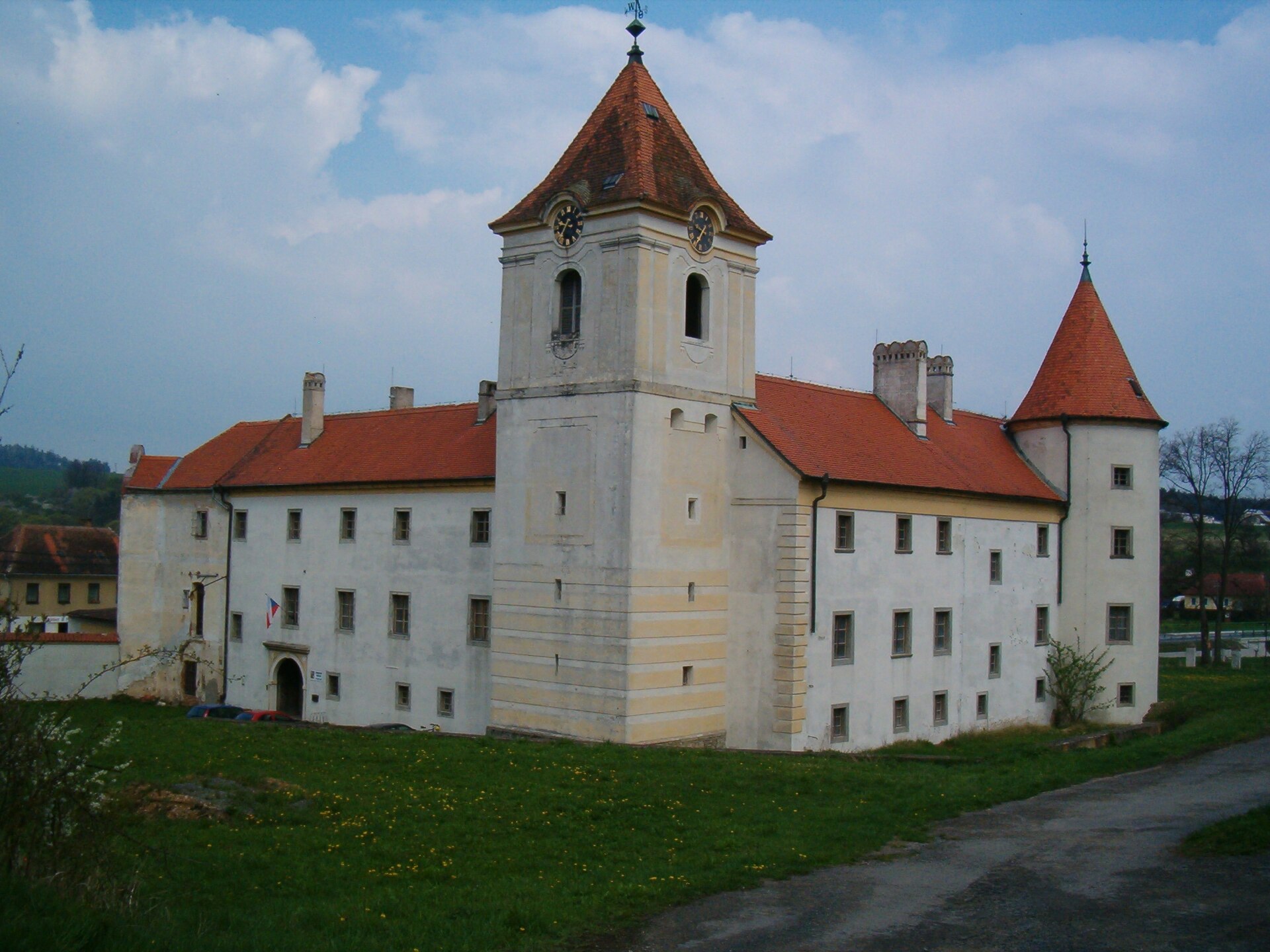
The fortress at Maříž is first mentioned in writing on 22 January 1372, when the Moravian margrave John granted it as a fief to the brothers Oldřich and Ješek of Olešná. In 1713 the estate was bought for 16,000 guilders by Matyáš Jindřich Butz of Rolsperk, who in 1717 had the old stronghold rebuilt as a baroque château. In the second half of the 19th century the residence underwent a further transformation in neo-gothic style, giving it the romantic silhouette still visible in pre-war photographs.
By the turn of the 20th century, Maříž had grown into a large, largely self-sufficient landed estate. Around 1900 the property comprised the château, a farmstead, a starch mill, a mill and a sawmill, spread across nearly 230 hectares — the economic hub of the surrounding countryside, not just a noble residence.
Why did the château fall into ruin?
The turning point came after the Second World War. The Red Army was garrisoned at the château, leaving in September 1945. The estate was then confiscated as German property and handed to the Ministry of Agriculture, which passed it to the local national committee for cultural use. That hope faded quickly: after February 1948, when the JZD Slavonice collective farm was founded, followed by a separate JZD Maříž, the residence began a slow but relentless decline.
The collective farm turned the château's former chapel into a garage for machinery and a fertilizer store, stripping off its roof in the process. Decades without maintenance, combined with this makeshift industrial use, gradually destroyed the rest of the complex. Today only a small stretch of the western wing's outer wall, with a vaulted cellar, remains standing — everything else has disappeared for good.
What is there to see today?
Although the château itself has all but vanished, the surrounding English-style landscape park has become the site's real draw. Neglected for half a century, it has been revived through a grassroots initiative launched in 2007, when residents of Slavonice founded an association to save both the park and the remnants of the castle. Restoration proceeded through public consultation, aiming to preserve the park's historic layout while respecting its present-day natural value.
The park forms a green island bounded by four ponds, two streams and a patch of wetland. Among its most striking features are an impressive avenue of larches and a group of oaks more than 300 years old. Mature tree stands and rich undergrowth make it an important local habitat today, valuable for both history and ecology.
Getting there and when to visit
Maříž sits right next to Slavonice, a town known for its Renaissance square, so the two combine easily on foot or by bike. The park is freely accessible year-round, with updates published by the local Association for the Park in Maříž. Spring and summer are best, when the greenery is fullest, though autumn has its own appeal, with the old oaks and larch avenue turning striking shades of color.
Frequently asked questions
Can you go inside the château at Maříž? No — only a fragment of the outer wall of one wing survives, together with a vaulted cellar, so there are no interiors left to visit.
Why did the château fall into ruin? After 1948 the site was taken over by a local collective farm, which devastated the building, among other things tearing off the chapel roof to convert the space into garages and storage.
What can visitors see at Maříž today? The main attraction is the restored landscape park, with centuries-old oaks and a larch avenue, surrounded by ponds and streams, alongside the ruin itself as a reminder of the estate's former grandeur.
Is entry to the park free? Yes, the park is open to everyone free of charge, and its upkeep is managed by a local residents' association.
Nearby places

Earn badges for the places you visit
Download NextOnTrip, discover new places and check off your trails.