About this place
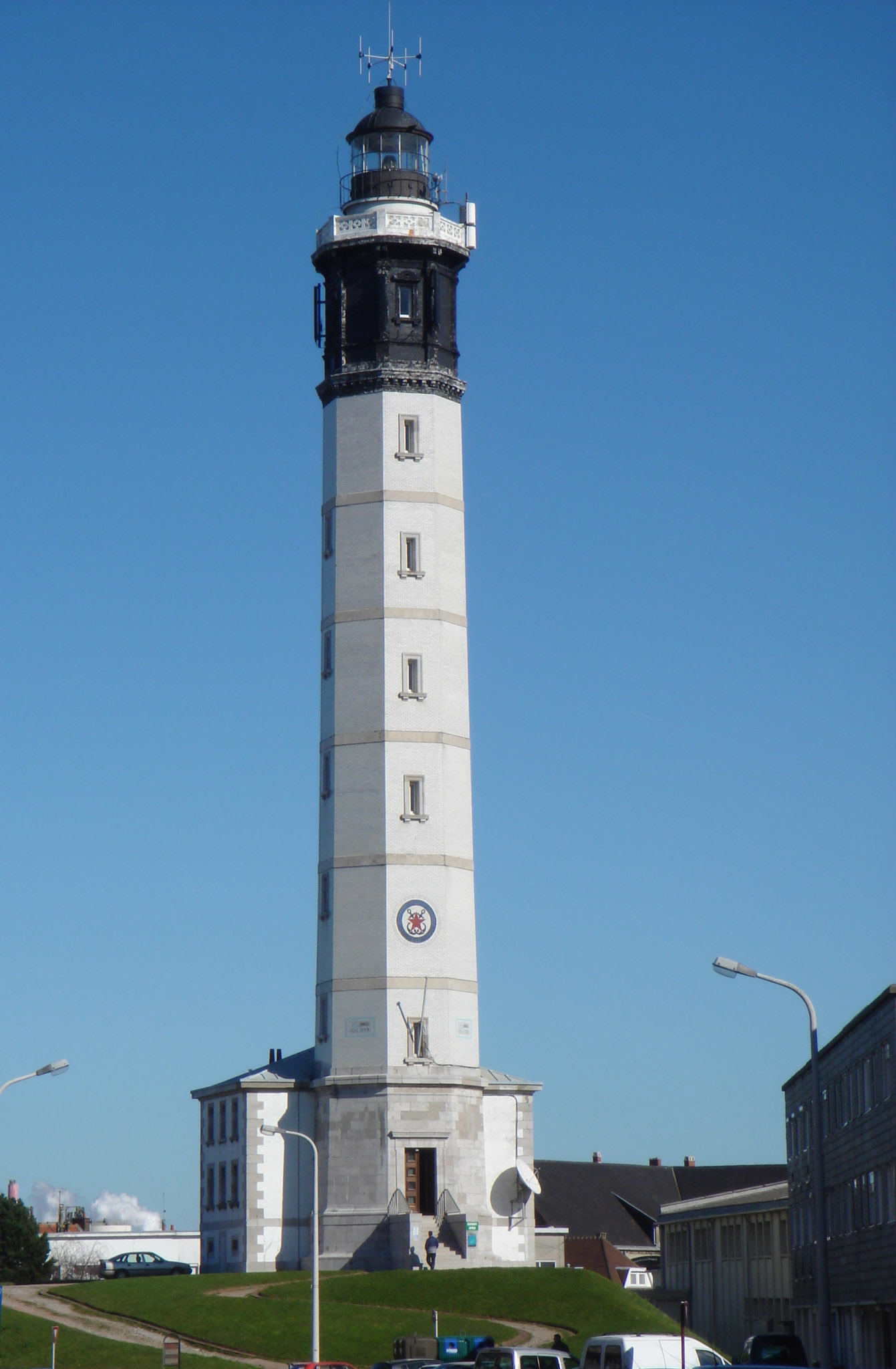
Phare du cap Gris-Nez is a lighthouse standing on Cap Gris-Nez in the commune of Audinghen, on the Côte d'Opale in the Pas-de-Calais department of northern France. This headland is the closest point on the continent to England — at the narrowest stretch of the Strait of Dover, the English coast lies only a short distance away, and on clear days the white cliffs of Dover are visible from here.
Where exactly does the lighthouse stand?
The tower rises on a high, rocky spur that juts into the Channel, surrounded by grassy clifftop paths. The present structure is a cylindrical stone tower, and its light sits at roughly 70 metres above sea level — a figure that combines the height of the tower itself with the tall cliff it stands on.
How do you get to Phare du Cap Gris-Nez?
Audinghen sits close to Boulogne-sur-Mer and Calais, so the easiest approach is by car along the coastal D940 road, which runs the length of the Côte d'Opale and passes both of the region's famous headlands, Gris-Nez and Blanc-Nez. There is a car park right by the lighthouse, with signposted paths leading out onto the point. It's a popular stop for travellers coming from Calais or the Channel Tunnel, though visitors should be ready for strong wind — the cape is notorious for gusty weather at any time of year.
What's the history behind this landmark?
Before the lighthouse existed, a semaphore station linked to a cross-Channel telegraph line was built here in 1805. Frequent shipwrecks along this stretch of the Channel eventually led authorities to build a proper lighthouse in the 1830s: the first tower, a 14-metre brick structure, was lit in 1837 and raised to 24 metres in 1861. The site also has a place in the history of technology — on 15 February 1869 it became one of the first lighthouses in France to be fitted with an arc lamp, a cutting-edge light source at the time.
During the Second World War, in 1944, retreating German forces destroyed the lighthouse. It was rebuilt between 1952 and 1957 as the stone tower still standing today, with its new light switched on in 1958.
What will you see on site?
The lighthouse itself functions mainly as a landmark and viewpoint rather than a conventional visitor attraction — its interior isn't freely open the way a museum would be, though during the season (April to October) there are sometimes organised climbs to the top for a modest fee, while outside those months access can be limited and may require booking ahead. Whether or not you make it up the tower, the clifftop paths around the headland are worth the walk on their own: this is one of the best vantage points over the Channel, and the surrounding nature reserve is home to seabird colonies, with the English coastline sometimes visible on the horizon when conditions are clear.
When is the best time to visit?
April through October is the most reliable window, when the lighthouse is more likely to be open to visitors with extended hours and the clifftop trails are dry and easier to walk. Bring a warm, windproof jacket regardless of season — even in summer the headland gets battered by strong Channel winds.
Frequently Asked Questions
Can you climb to the top of the lighthouse? During the season (April–October) there are sometimes organised visits to the top for a small fee; outside these months access can be restricted and may require advance booking.
Why is this headland so significant for shipping? Cap Gris-Nez sits at the narrowest point of the Strait of Dover, one of the busiest shipping lanes in the world — the lighthouse has warned vessels away from the rocky coast since the 19th century.
Can you actually see England from here? Yes — on clear days the white cliffs of Dover on the English coast are visible from the clifftops around the lighthouse.
What happened to the original lighthouse? The 19th-century lighthouse was destroyed by retreating German forces in 1944; the current stone tower was built between 1952 and 1957.
Nearby places

Earn badges for the places you visit
Download NextOnTrip, discover new places and check off your trails.