About this place
The Perthuis-au-Loup bridge crosses one of the branches of the upper Seine right in the heart of Châtillon-sur-Seine, a historic town in Côte-d'Or, Burgundy. It's a modest stone structure, but its story runs deeper than its size suggests — and its name carries an old, slightly dark legend.
What does the Perthuis-au-Loup bridge look like?
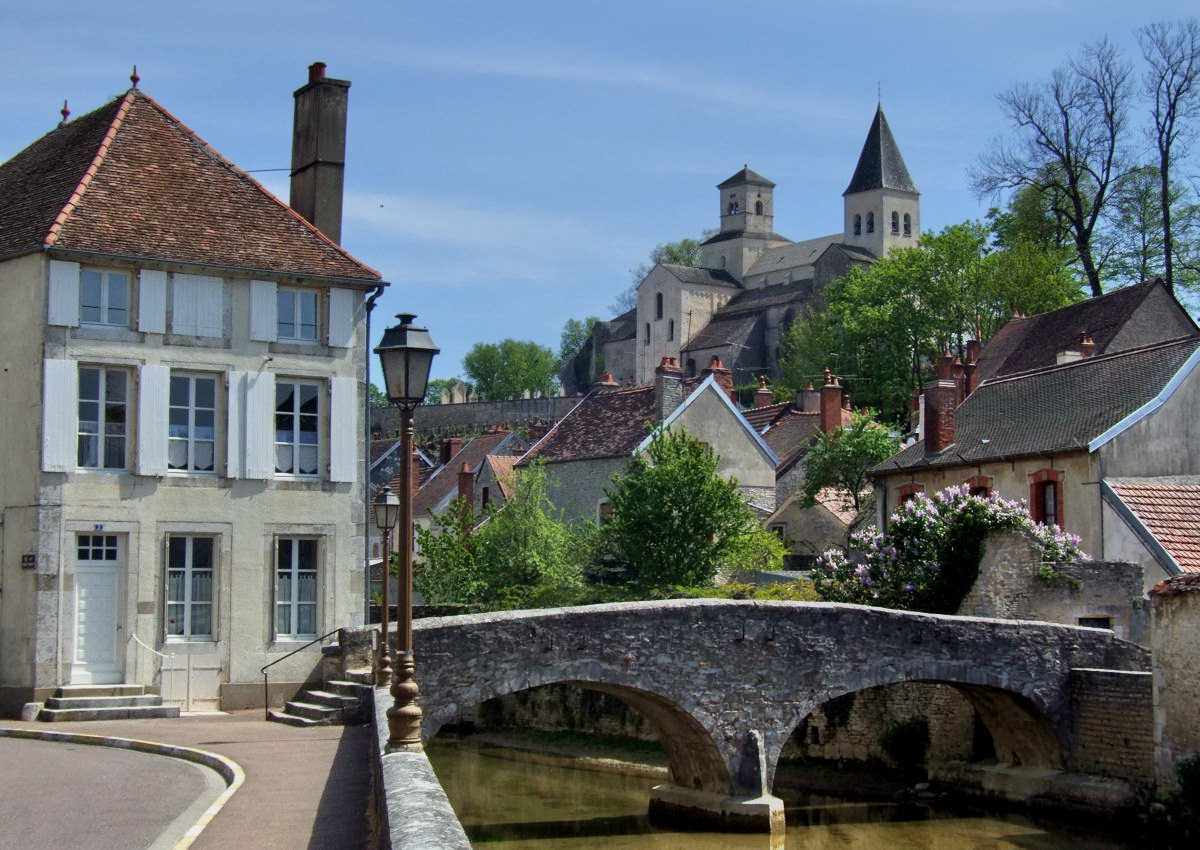
The bridge standing today is a stone masonry structure with two arches, built in a style typical of the region. It connects both banks of the Seine at a point where the river splits into several smaller channels running through the old town. The bridge isn't monumental — it's a quiet, functional part of the townscape, sitting alongside old houses and riverside quays.
When was the current bridge built?
The bridge visible today dates from 1713. The construction contract was signed on 3 June of that year with Claude Bourdot, a master mason from Châtillon-sur-Seine. It replaced an earlier bridge known as Pont Michel, built in 1658, which had itself replaced a wooden footbridge called Trou-au-Loup. In other words, some form of crossing has stood at this exact spot in town for far longer than the current structure has existed.
Where does the name Perthuis-au-Loup come from?
The name comes from local oral tradition. According to it, wild animals once roamed the dense, dark forests surrounding the town, and one of them, driven by hunger, is said to have ventured all the way to this riverside spot — hence "loup", wolf, in the bridge's name. "Perthuis" is an old term for a passage or opening, so the name literally translates to something like "the wolf's passage". It's the kind of detail that gives small Burgundian bridges an extra layer of story.
Is the bridge a protected heritage site?
Yes. The Perthuis-au-Loup bridge has been listed as a monument historique, France's official heritage register, since 16 June 1928. That listing recognizes its architectural and historical value and protects it from alterations that would erase its original character.
Why stop at the bridge while visiting Châtillon-sur-Seine?
Châtillon-sur-Seine rewards travelers who linger for more than a quick photo stop. It sits on the upper Seine, at a point where the river is still gathering strength, and its several branches cut through the old town — the Perthuis-au-Loup bridge is one of a handful that stitch this water network together. The town is internationally known for the discovery, in a nearby burial mound at Vix, of the famous Vix Krater, a monumental 6th-century BC bronze vessel and one of the most important Celtic finds in Europe, now displayed in the town's museum. A walk along the Seine, with a stop at the Perthuis-au-Loup bridge, is a natural complement to a visit that brings together prehistory, medieval heritage, and centuries-old river architecture in one compact town.
Frequently Asked Questions
When was the Perthuis-au-Loup bridge built? The current structure dates from 1713. It replaced an earlier bridge, Pont Michel, from 1658, which in turn replaced a wooden footbridge from an even earlier period.
Is the bridge a listed heritage monument? Yes, it has been registered as a French monument historique since 1928.
Where does the bridge's name come from? Local legend says the name refers to a wolf that ventured to this spot from the surrounding forests, driven by hunger.
What else is worth seeing in Châtillon-sur-Seine nearby? The town's museum houses the Vix Krater, and a walk along the upper Seine takes in several of the historic bridges crossing the town center, including this one.
Nearby places

Earn badges for the places you visit
Download NextOnTrip, discover new places and check off your trails.