About this place
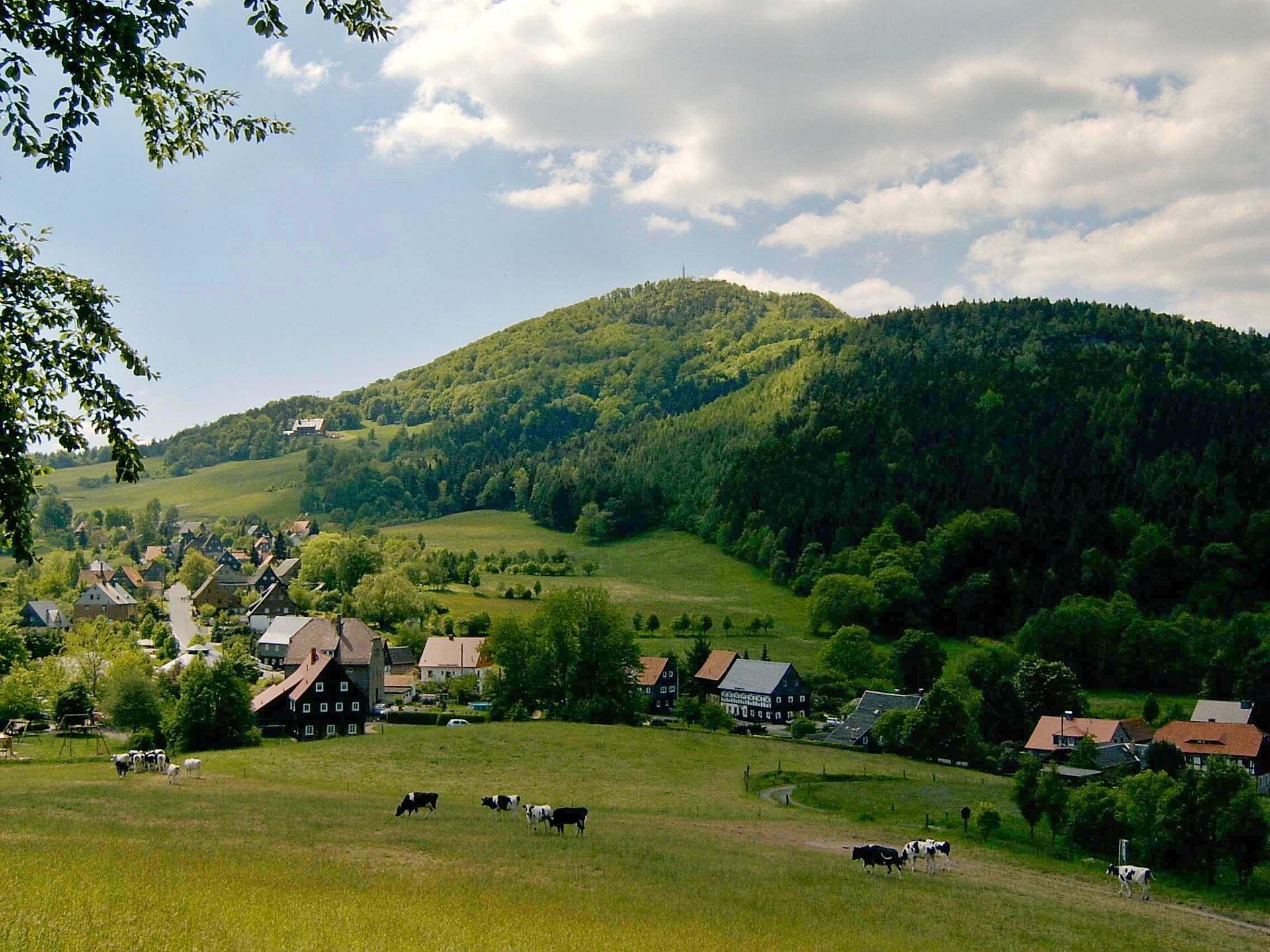
Pěnkavčí vrch is a hill in the Lusatian Mountains, sitting within the municipality of Dolní Podluží on the Czech side of the Western Sudetes. It won't be the headline attraction of any guidebook, but for travellers who enjoy quiet border-country hiking where Czech, German and Polish influences overlap, it's a worthwhile stop on the map.
Where exactly is it?
The hill rises within the Lusatian Mountains massif, part of the Western Sudetes range in the northern Czech Republic. The nearest reference point is the village of Dolní Podluží, whose municipal territory the hill belongs to. Its coordinates (50.848244 N, 14.610889 E) place it right in the heart of this border range, a landscape that has for centuries sat at the crossroads of Czech, German and Polish influence.
What does the name tell you?
The hill's naming is a small history lesson in itself. Its Czech name is Pěnkavčí vrch, but it also carries a Polish name, Pienkawczy Wierzch, and a German one, Finkenkoppe. All three trace back to the same root: the chaffinch (Czech pěnkava, German Fink), a bird that likely populated the surrounding forests in numbers worth naming a hill after. This kind of trilingual identity is far from unusual in the Lusatian Mountains — a range that was historically part of the German-speaking Sudetenland while bordering areas with Polish naming traditions, which is why so many summits here carry double or triple names.
What are the Lusatian Mountains?
Pěnkavčí vrch belongs to the Lusatian Mountains, a modest but distinctive range within the Western Sudetes that stretches across both sides of the Czech-German border. It's a landscape typical of this part of central Europe: rolling, densely forested hill country with numerous moderate-height summits better suited to day hikes than multi-day mountain expeditions.
How do you get there?
The village of Dolní Podluží, in the Czech Ústí nad Labem Region right by the German border, is the natural starting point for exploring the area around Pěnkavčí vrch. From there, the hill is best reached on foot or by bike — the usual way of getting around the Lusatian Mountains, where tourist infrastructure tends to cluster in exactly these small villages at the foot of the range.
When is the best time to visit?
The Czech-German borderland of the Lusatian Mountains is at its best from late spring through early autumn, when hiking paths are fully accessible and the forest — the dominant feature of this landscape — is at its most impressive. That's also the season when a low, unassuming hill like this one makes the most sense as the goal of an easy, undemanding walk.
Frequently asked questions
What is Pěnkavčí vrch? A hill in the Lusatian Mountains, part of the Western Sudetes, within the municipality of Dolní Podluží in the northern Czech Republic.
What is the hill called in Polish and German? Pienkawczy Wierzch in Polish and Finkenkoppe in German — both, like the Czech Pěnkavčí vrch, refer to the chaffinch.
What's the nearest village? Dolní Podluží, the municipality the hill belongs to and the natural starting point for visiting it.
Is it part of a larger mountain range? Yes — Pěnkavčí vrch is part of the Lusatian Mountains, themselves a section of the Western Sudetes straddling the Czech-German border.
Nearby places

Earn badges for the places you visit
Download NextOnTrip, discover new places and check off your trails.