About this place
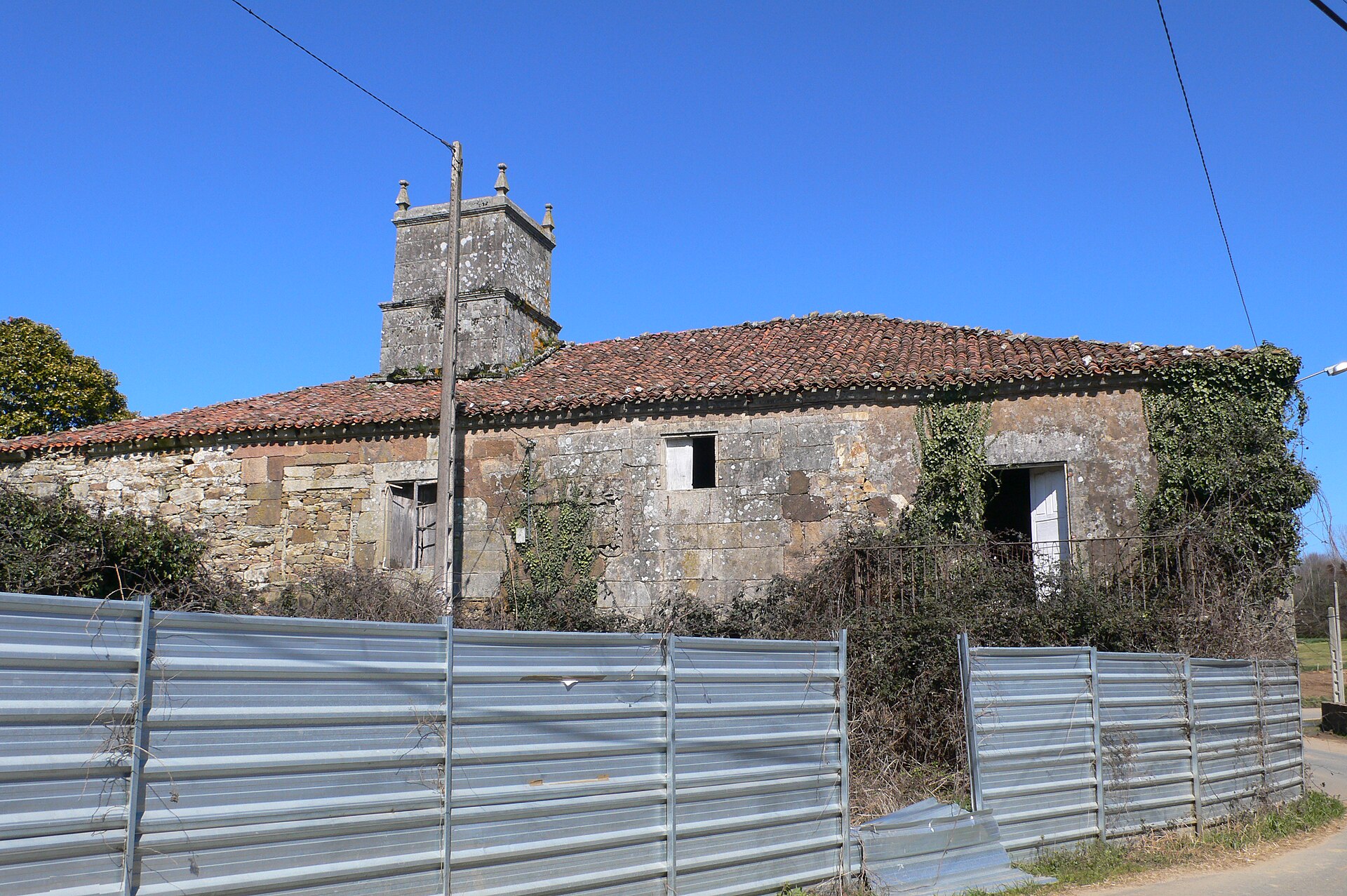
Pazo de Sestelo is a Baroque manor house dating from the 16th and 17th centuries, standing in the village of Sestelo, in the parish of Siador, in the municipality of Silleda (province of Pontevedra, Galicia). Also known as Casa de Sestelo, it belonged to the Rivas family for generations and remains one of the more notable pazos of the Deza area.
What does the building look like?
The house is marked by a four-story tower, from which stone balconies with balustrades project onto the facade — a feature typical of Galician manorial architecture of the period. The estate also includes a chapel built in the Compostelan style, forming an integral part of the pazo complex. The stone coat of arms displays the emblems of the Baamonde and Ocampo families, while an inscription inside the chapel references the Pimentel name, a trace of the family ties that have long connected Galician pazos of this kind. The forest surrounding the house, which also belongs to the estate, is treated as a protected natural area.
Who owned the pazo?
The estate belonged to the Rivas family. One figure especially tied to the house is Francisco María Rivas Taboada, born in Siador on 17 October 1802, who lived at Pazo de Sestelo for many years. He was the driving force and benefactor behind the Sanctuary of the Virgin of Saleta in Siador, whose parish became one of the earliest centers of Saletin devotion in Spain thanks to his involvement.
What is the pazo used for today?
Today the property operates as self-catering tourist accommodation, according to the official Galician tourism portal (Xunta de Galicia) and the official Camino de Santiago website for Galicia. At the same time, the estate is at the center of a broader project led by the Roberto Rivas Foundation, aimed at turning the pazo into a hub for social innovation, rural entrepreneurship and sustainable development of the surrounding territory.
How do you get there?
Pazo de Sestelo sits directly on the Camino de Santiago route, at Loureiro de Sestelo 9, in the municipality of Silleda. Its position on the pilgrimage path makes it a recognizable landmark for people walking or cycling this stretch of Galicia.
Frequently Asked Questions
How old is Pazo de Sestelo? The building dates from the Baroque period, in the 16th–17th centuries, a fact reflected in its architecture — particularly the four-story tower and stone balconies.
Can visitors stay at Pazo de Sestelo? The property functions as self-catering accommodation; details on availability and booking are listed by the official Galician tourism portal (turismo.gal) and the Camino de Santiago website.
What is the connection between the pazo and the Rivas family? The Rivas family owned the estate for generations. Francisco María Rivas Taboada, born in Siador in 1802, lived at the pazo and was the benefactor of the Sanctuary of the Virgin of Saleta in the same parish.
Is Pazo de Sestelo on the Camino de Santiago? Yes, the house stands directly on the Way of St James in the municipality of Silleda, making it a well-known point of reference for pilgrims crossing this section of Galicia.
Nearby places

Earn badges for the places you visit
Download NextOnTrip, discover new places and check off your trails.