About this place
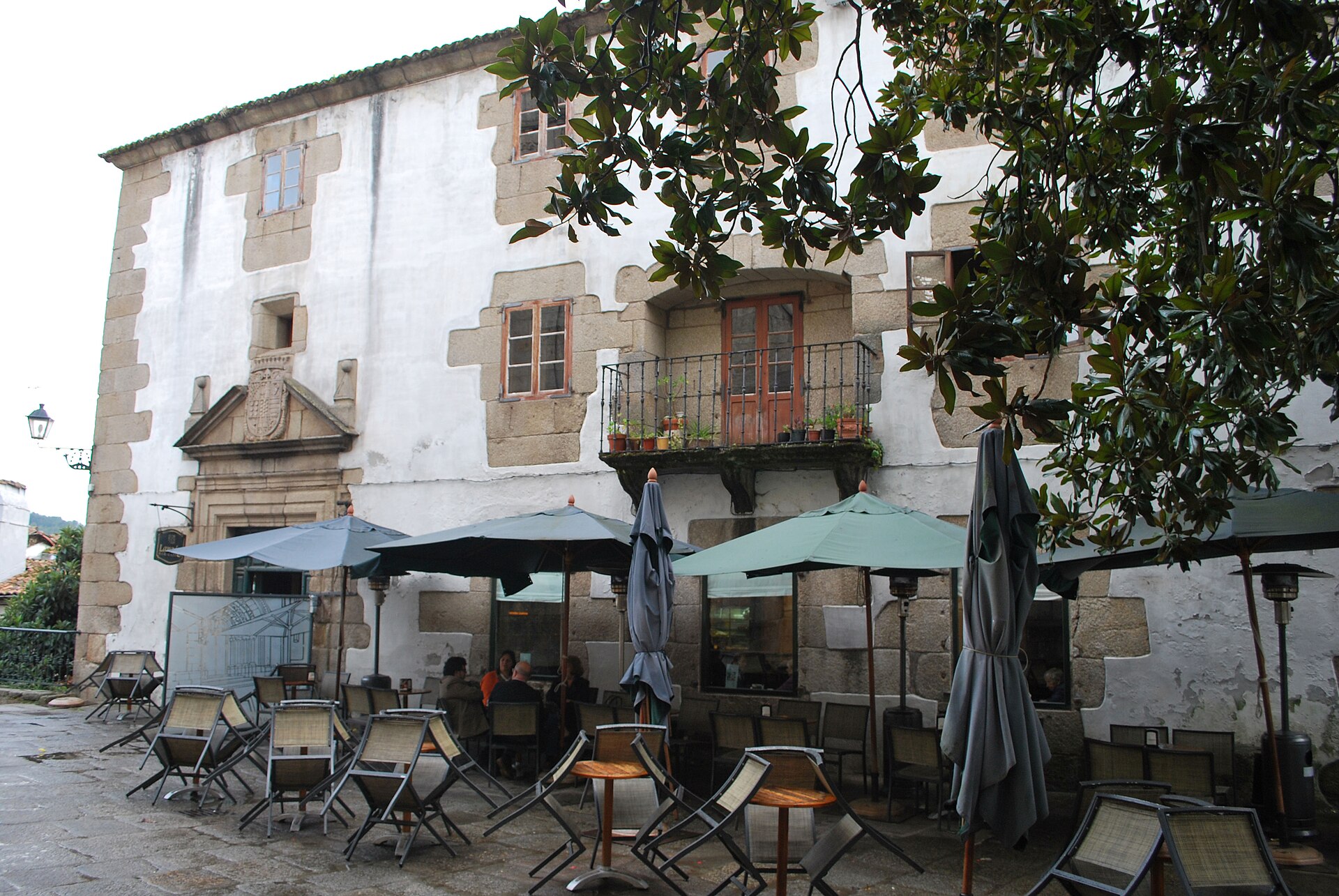
Pazo de Lanzós is a 17th-century Galician manor house standing on Calle Lanzós in Betanzos, directly facing the Church of Santiago. Built between 1620 and 1625, its oldest and most valuable feature is a medieval defensive tower that witnessed some of the most turbulent episodes in Galician history.
How do you get there?
Betanzos sits in the province of A Coruña, close to the provincial capital and to the route of the Camino Inglés (the English Way) to Santiago de Compostela. The town has good road and bus connections to both A Coruña and Ferrol. Pazo de Lanzós stands right in the heart of the old town, only a few minutes' walk from the main square and the church of Santa María do Azougue, making it an easy stop on a walking tour of the historic centre.
What will you see?
The façade draws the eye with a projecting balcony resting on three stone corbels, and a straight, rectilinear main doorway crowned by a broken pediment bearing the coat of arms of the first Count of Maceda. That heraldic shield points to the noble lineage of the family who raised the house in the early 17th century.
The most fascinating part of the whole ensemble, however, is the tower, known as the Torre de Lanzós. Its origins predate the manor house itself and are tied to the Irmandiño revolts — 15th-century uprisings of Galician peasants and lesser nobility against powerful feudal lords, upheavals that shook the region and led to the destruction of many fortified residences. Originally the tower served a defensive purpose, complete with battlements and arrow slits. Later, mainly during the 18th century, it underwent significant changes: the battlements were replaced by an ordinary roof, the arrow slits were blocked up, and new, larger window openings were cut into the walls, adapting what had once been a stark fortification into a more residential structure. The stonework was also covered with a layer of cement at that time.
Today the building operates as a hospitality establishment, so visits are largely limited to admiring the architecture from the outside — the façade, the tower, and the distinctive balcony. Even so, a stroll around the pazo gives a strong sense of the atmosphere of Betanzos' historic centre, a town nicknamed "Ciudad de los Caballeros" (City of Knights) for its rich noble past.
When should you visit?
Betanzos can be visited year-round, but spring and early autumn are especially pleasant, when Galicia's temperatures are mild and the town sees fewer visitors than in peak summer. It's worth pairing a visit to Pazo de Lanzós with a walk through the rest of the old town's landmarks — its Gothic churches, medieval streets, and the famous Parque do Pasatempo. For those walking the Camino Inglés, Betanzos is a natural stop, and its historic pazos, Lanzós among them, form an important part of the town's character.
Frequently Asked Questions
Can you visit the inside of Pazo de Lanzós? The building currently functions as a hospitality establishment, so interior access is essentially reserved for guests. Visitors admire the manor mainly from the outside, walking along Calle Lanzós.
What is the building's most valuable feature? Without a doubt, the tower known as the Torre de Lanzós, thanks to its connection to the 15th-century Irmandiño revolts — one of the pivotal episodes in Galician history.
When was the pazo built? The manor house itself was built between 1620 and 1625, although the tower has older, medieval origins.
Is it worth combining with the rest of Betanzos? Yes — Pazo de Lanzós sits right in the historic centre, so it's easy to include on the same walk as the Church of Santiago, the main square, and the town's other landmarks.
Nearby places

Earn badges for the places you visit
Download NextOnTrip, discover new places and check off your trails.