About this place
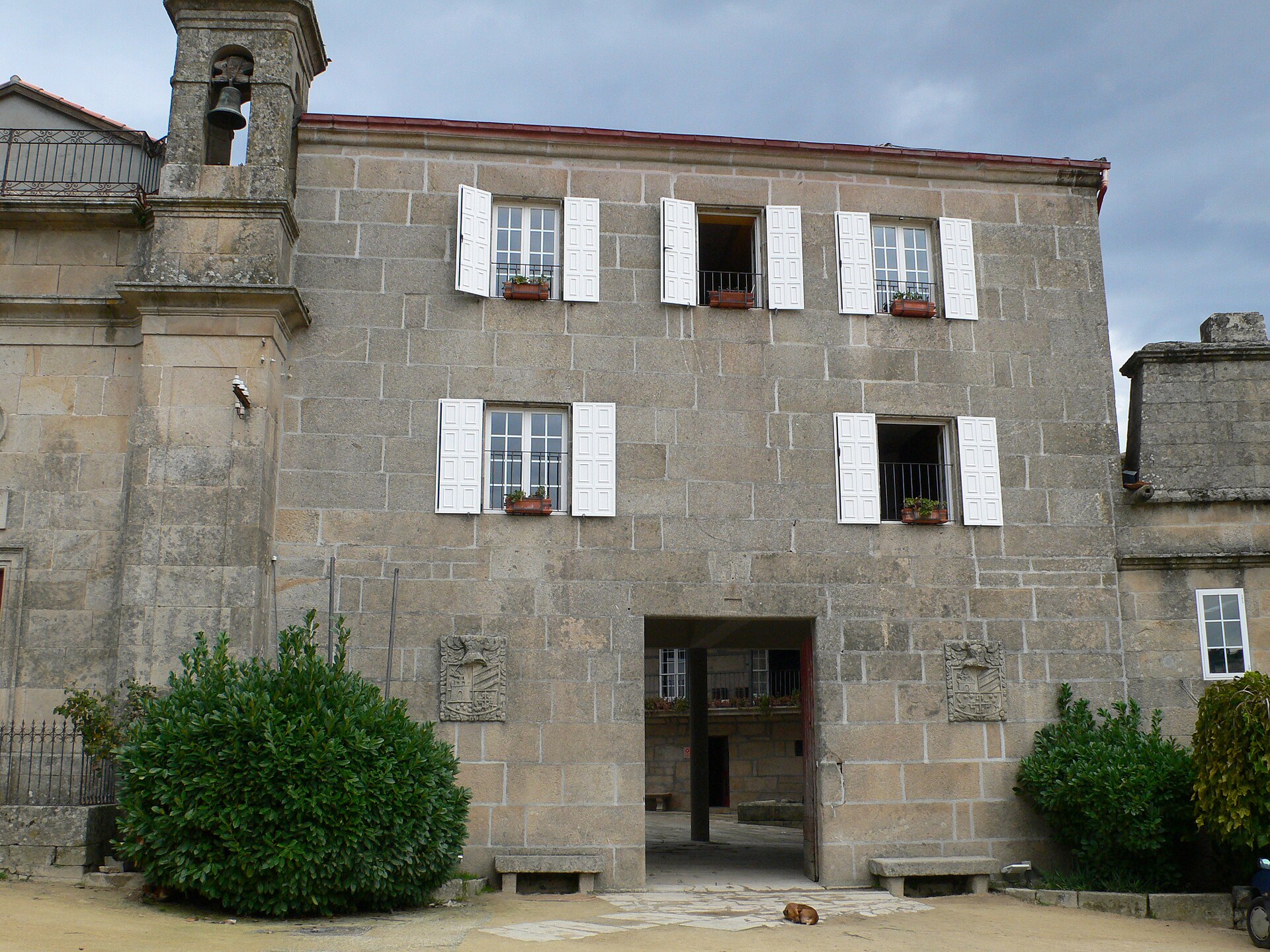
Pazo de Cornoces is an 18th-century Galician manor house in the parish of Cornoces (San Martiño), within the municipality of Amoeiro, in the province of Ourense. The estate sits on a broad, fertile plain long farmed for corn, rye and wheat, ringed by oak woodland and hillside pastures once grazed by cattle, sheep and goats.
How did the pazo get its name, and what's its history?
The house was founded in 1779 by Juan de Porras. It was originally known as Pousa de Cornoces or Pousa dos Viandantes — roughly "the travelers' inn" — because it stood right beside an old Roman road, where passing wayfarers would stop to rest. Through successive inheritances the property passed to the Reinoso family, owners of the nearby Pazo de Canedo.
The estate took its current name, Pazo Santa Catalina de Cornoces, in 1882. That year its last private owner, Ramona Villar Taboada, dedicated the house to Saint Catherine, a change that coincided with the founding of an Asilo-Escuela — an asylum-school — for local children on the grounds.
What will you actually see there?
The building is built in solid, finely cut ashlar stone, in the sober but stately style typical of Galician pazos. Its floor plan is irregular and polygonal, arranged around a rectangular courtyard, with a chapel and two towers attached to the main residence. Surrounding the manor house, a full set of outbuildings survives — barns, byres and processing sheds — once essential to running the estate's farming and livestock operations.
What is the social history behind the walls?
Over the years Pazo de Cornoces served purposes well beyond a family residence. The Sisters of Charity of Saint Vincent de Paul ran classes here for local boys and girls, continuing the school-asylum tradition established in the 19th century. In the 1970s the estate took on a very different role: it became a kind of "laboratory" for the social reintegration of young offenders sent here from various parts of Spain. It's a lesser-known chapter that shows just how many functions a Galician pazo could accumulate across two centuries.
How do you get there, and when should you go?
Cornoces lies within the municipality of Amoeiro, a short drive from the city of Ourense, in the Ribeiro-Carballiño area. A car is the most practical option — the route runs through classic Galician countryside of cultivated fields and oak groves. Visitors can pair a stop here with the "Andaina dos Pazos de Amoeiro" walking route, which links several of the municipality's historic manor houses. Spring and early autumn are the best seasons: the surrounding fields and woodland look their finest, and temperatures are ideal for walking.
Can you go inside Pazo de Cornoces?
No — the pazo remains private property and its interior is closed to visitors. You can, however, view the building's exterior, its towers and its rural setting by walking around the Cornoces area.
Frequently asked questions
When was Pazo de Cornoces built? It was founded in 1779 by Juan de Porras; before that, the site was known as an inn on the old Roman road.
Where does the name Santa Catalina de Cornoces come from? From 1882, when the last owner, Ramona Villar Taboada, dedicated the estate to Saint Catherine as an asylum-school was founded there.
Can visitors go inside the pazo? No, it's private property and not open to the public — you can only view it from outside.
What's the best way to reach Cornoces? By car from Ourense, a short drive through the Amoeiro countryside; a local walking trail linking the area's pazos is also an option.
Nearby places

Earn badges for the places you visit
Download NextOnTrip, discover new places and check off your trails.