About this place
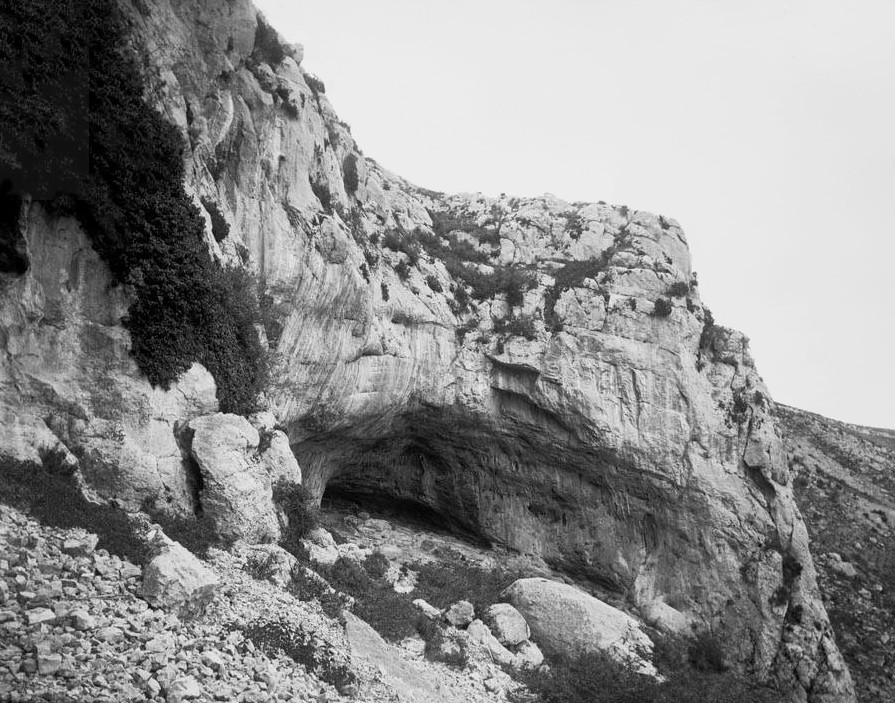
Pas dels Lladres is a rock passage with natural stone arches and a cave above the village of Abella de la Conca, in the Pallars Jussà region of Lleida province, Catalonia. It remains a relatively obscure spot, known mainly to climbers and hikers who seek out unusual rock formations in this corner of the Pyrenees.
What exactly is Pas dels Lladres?
The formation is made up of two chained natural stone arches followed by a cave at the end of the sequence. The first arch spans roughly 31 meters and looks more like a small cave than a classic stone bridge. Beyond it opens a second, much larger entrance — a surviving fragment of an ancient gallery shaped by erosion. The whole system is a remnant of an old underground drainage network that once carried water eastward; as the erosion base level dropped over time, external weathering carved out the arches visible today. The gallery runs from west-northwest to east-southeast, roughly parallel to rock strata that dip at about 60 degrees.
How do you get there?
The approach starts in the village of Abella de la Conca, with the trail first leading past the church of Sant Esteve, then continuing beside a water reservoir toward Torre Xica. From there the route turns into a scramble: iron steps and handholds have been fixed into the rock face, allowing climbers to gain several dozen meters of height without rope, provided they're comfortable moving on exposed terrain. This is not a formal via ferrata with a safety cable — it suits people with some climbing experience, or at least good fitness and confidence on rock. The way down follows the same route; rappelling is discouraged, since vegetation on the wall tends to snag the rope.
What should you know before entering the cave?
No headlamp is needed inside — daylight reaches deep into the cave through its large openings. The passage climbs gently until it's blocked by solid rock further in. Traces of guano can be found inside, left by bats and possibly by vultures that use the formation as shelter. Interestingly, despite its popularity among local climbers, a proper speleological survey of the cave only came about relatively recently — for a long time it lacked any formal documentation.
Does the site have any historical significance?
Pas dels Lladres carries a piece of local history too: during the Spanish Civil War, residents of Abella de la Conca used this hard-to-reach rock formation as a hiding place. The very inaccessibility that today draws climbers looking for a challenge once made the site a natural refuge.
Frequently Asked Questions
Do you need climbing experience to visit Pas dels Lladres? Some comfort scrambling on rock is recommended, or at least good fitness and a head for exposure — iron steps and handholds are fixed to the rock face, but there's no safety cable like on a standard via ferrata.
Do you need a flashlight to explore the cave? No — the large entrance openings let daylight reach well into the cave, so it can be explored without artificial light.
Where does the name "Pas dels Lladres" come from? The name translates to "the thieves' passage." Its exact origin isn't documented, but the site has long been associated with a hidden, hard-to-reach route that may once have served as a hideout.
How long does it take to reach the cave? Counting the walk from the village and the climbing section with the iron steps, reaching the cave floor takes around 35 minutes.
Nearby places

Earn badges for the places you visit
Download NextOnTrip, discover new places and check off your trails.