About this place
Papenkasteel is a 17th-century castle located in Uccle (Ukkel), one of the municipalities of the Brussels-Capital Region. The property sits within an area protected under the Natura 2000 network, and the building itself is listed as protected cultural heritage. It remains privately owned today, which means the interior is not open to the public, though the castle's silhouette and surrounding parkland are easily visible from nearby walking paths.
Where does the name come from and how did the site's history begin?
The name "Papenkasteel" (literally "castle of the clergy" or "priests' castle") refers to the site's earliest owners. Before 1600, the land on which the castle would later be built belonged to clergy connected to the Sint-Jacob-op-Koudenberg collegiate church in Brussels. In 1616, the provost of that time sold the estate to Guillaume le Mire, a cloth merchant. The property stayed within the le Mire family for nearly seventy years before passing to new owners.
When was the current castle building constructed?
The building known today as Papenkasteel was constructed between 1685 and 1688. The project was commissioned by Philippe-Vincent Franckheim, a city councillor, who had the residence built on the site of the earlier estate. After his death, ownership passed to Guillaume van Hamme, a member of one of the so-called Seven Families of Brussels (Zeven Geslachten) — patrician lineages that had held municipal offices in Brussels since the Middle Ages. This detail underscores that Papenkasteel was, from the outset, a residence tied to the city's governing elite rather than a purely rural country estate.
What does the castle's architecture look like?
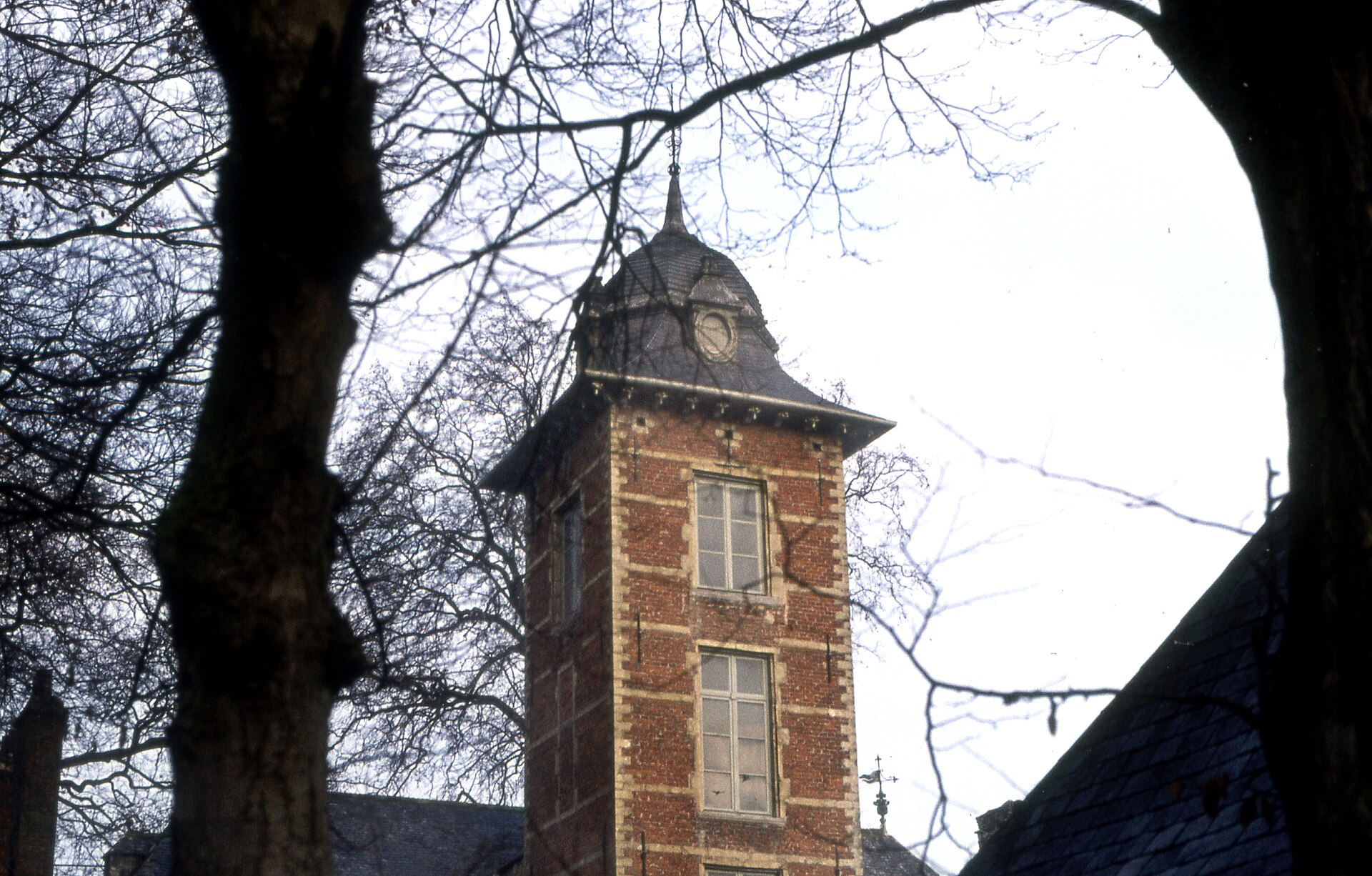
Papenkasteel reflects a style drawing on Renaissance traditions, with the classical proportions typical of noble and patrician residences from the late 17th century. The building is distinguished by a tower that offers views over the adjoining gardens. Architectural details — window framing, cornices, and the layout of the façade — reflect the representative character sought by wealthy burghers and city officials commissioning residences of this kind at the time.
What should visitors know before exploring the area?
The castle grounds fall within the Natura 2000 protected area, meaning the surrounding green spaces — meadows, tree stands, and watercourses — carry ecological value alongside the building's historical significance. Uccle, where Papenkasteel is located, is home to several similar residences from the same period, making this part of the municipality an interesting destination for a walk tracing the region's former suburban castles around Brussels. Because the property is privately owned, visiting the interior is generally not possible — the main draw remains the architecture as seen from outside and the surrounding landscape.
Frequently asked questions
Can Papenkasteel be visited inside? No — the castle is privately owned and is not generally open to visitors in the way a museum would be.
Where does the castle's name come from? It refers to the site's earlier owners, clergy connected to the Sint-Jacob-op-Koudenberg collegiate church, before the estate was sold in 1616.
Who built the current building? It was built between 1685 and 1688 at the initiative of Philippe-Vincent Franckheim, a city councillor.
Why is the land around the castle protected? The surrounding area is part of the Natura 2000 network due to the ecological value of its greenery and watercourses.
Nearby places

Earn badges for the places you visit
Download NextOnTrip, discover new places and check off your trails.