About this place
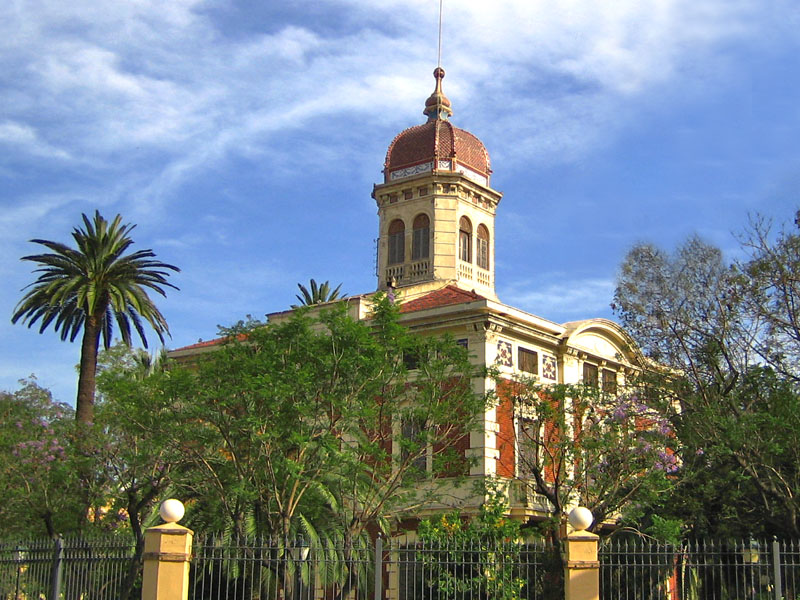
Palauet d'Aiora is a historic mansion in Valencia, tucked away in greenery in the Camins al Grau district, between the streets of Santos Justo y Pastor, Industria and Guillem de Anglesola. Today it houses a cultural and community centre run by Valencia's Universitat Popular, and the garden surrounding the building is one of the largest green enclaves in this part of the city.
How do you get there?
Palauet d'Aiora sits east of Valencia's old town, along the route of the historic Algirós path that once connected the city centre with the seaside neighbourhood of Cabanyal. It's within walking distance of the City of Arts and Sciences area and served by the tram and bus lines running through Camins al Grau — the mansion blends into the dense residential fabric of the district, so the easiest way to reach it is by public transport or bicycle.
What's the story behind the building?
The mansion was built between 1899 and 1900 for José Ayora Olcina, a Valencian merchant, to a design by architect Peregrín Mustieles Cano. It was conceived as a summer villa — a suburban retreat set among orchards and fields that once lined the Algirós road, away from the noise of the city centre. The building was deliberately raised on a plinth to protect it from ground moisture.
Over the following decades the mansion changed hands and functions several times: it served as a private residence, later as a nightclub, and later still as a nursery school. Valencia City Council acquired it in 1976, and for a while the building faced the threat of demolition. It was saved by heritage protection — on 30 December 1982, Palauet d'Aiora was declared a Historic-Artistic Monument and a Property of Local Relevance. After years of closure and restoration work, it reopened in 2017 as the seat of the Universitat Popular and a sociocultural space open to the neighbourhood.
What will you see?
The architecture blends an eclectic style with elements of Valencian modernism. Its most recognisable feature is a polygonal tower crowned by a dome clad in copper-coloured metal tiles, with round-arched windows on each face. The building follows a square floor plan, with a ground floor, main floor and attic reflected in the division of its façade. On the main front, a curved pediment bears a relief of the god Mercury together with the building's construction date.
The mansion is surrounded by a rectangular garden covering roughly 17,000 m² (about 1.7 hectares). It's planted with araucarias, pines, laurels, jacarandas, orange and lemon trees, and century-old fig trees — one of the oldest and most varied collections of urban greenery in this part of Valencia.
When should you visit?
Since the building functions as a cultural centre, access depends on the Universitat Popular's class and event schedule, so it's worth checking the current calendar before visiting. The garden's dense tree cover offers welcome shade even during Valencia's hot summers, making it a pleasant place for a walk at any time of year.
Frequently asked questions
What was Palauet d'Aiora originally built as? A summer villa built at the turn of the 20th century for Valencian merchant José Ayora Olcina, set among orchards and fields away from the city centre.
Who designed the building? Architect Peregrín Mustieles Cano, between 1899 and 1900.
Why did the mansion become a protected monument? It faced demolition after Valencia City Council acquired it in 1976. Its listing as a Historic-Artistic Monument in 1982 saved the building and paved the way for its restoration.
What is Palauet d'Aiora used for today? It houses the sociocultural centre of Valencia's Universitat Popular, open to residents and visitors since 2017, and is surrounded by a garden of nearly 1.7 hectares.
Nearby places

Earn badges for the places you visit
Download NextOnTrip, discover new places and check off your trails.