About this place
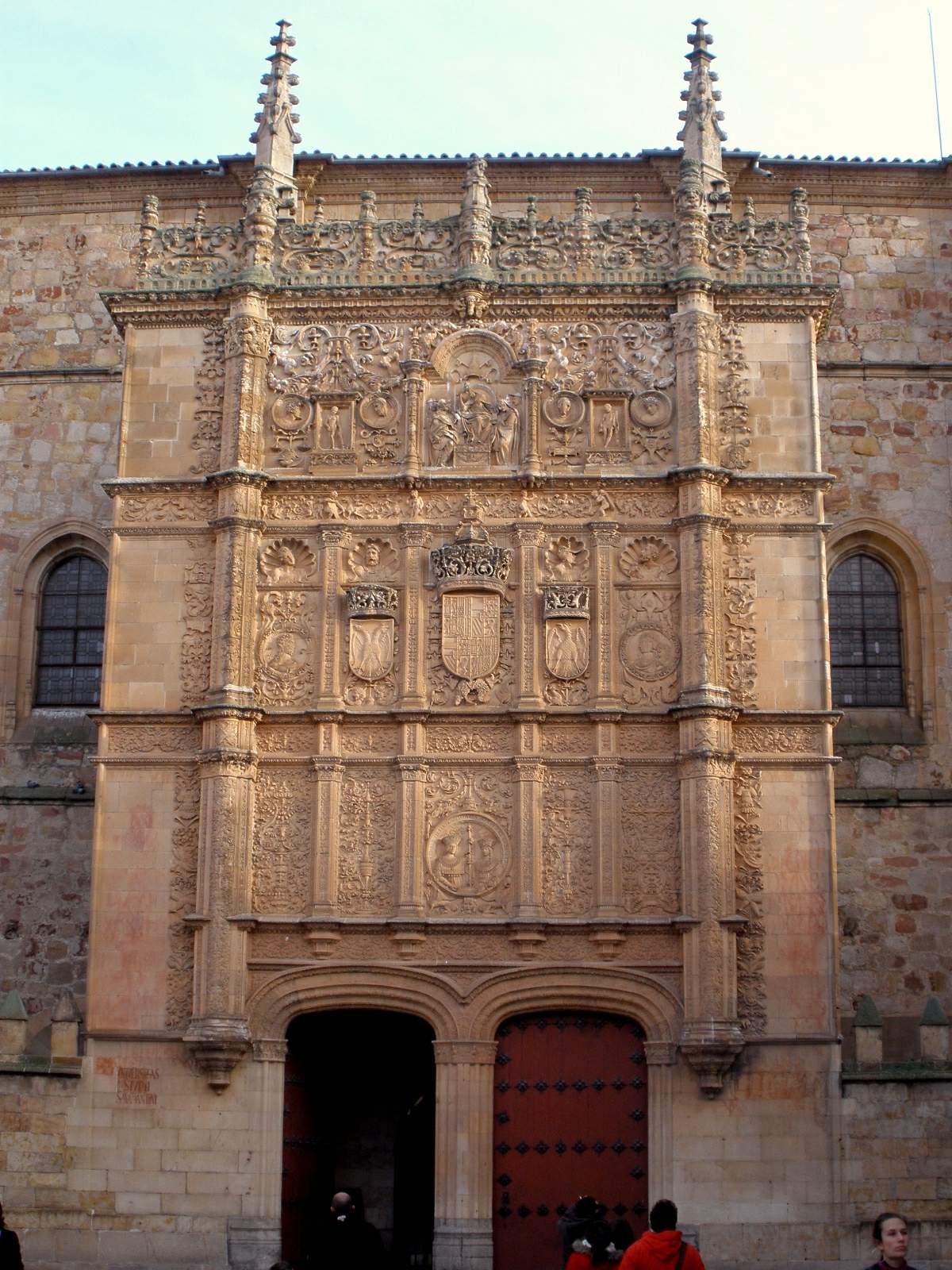
Palacio de Orellana is a historic palace standing in the old town of Salamanca, one of Spain's best-preserved historic city centres. The building is regarded as an example of late Renaissance architecture, blending classical proportions with Mannerist flourishes — a style typical of the late 16th and early 17th centuries, when Spanish architects began moving away from the strict symmetry of the early Renaissance toward more decorative facade treatments.
Salamanca is known for its dense cluster of noble palaces, many built by families connected to the city's university, one of the oldest in Europe. Palacio de Orellana sits within that fabric, tucked among the narrow streets of the old town near other residences from the same era, all built from the golden sandstone that gives the district its warm glow in the late afternoon light.
How do you get there?
The palace stands within Salamanca's historic centre, so the easiest way to reach it is on foot — the old town is compact and largely pedestrian-friendly. From Plaza Mayor, the city's main square, it's typically just a few minutes' walk to the surrounding streets of the historic quarter. Visitors arriving by train or bus can take a local bus or taxi to the edge of the historic zone and continue on foot from there, which is the best way to take in the tightly packed architecture of this part of the city.
What will you see?
The main draw of Palacio de Orellana is its facade — a combination of classical proportions and the freer, more ornamental details typical of Mannerism. It offers a good example of how palace architecture in Salamanca evolved with the tastes of the period while keeping the local character of stone construction intact. While exploring the surroundings, look out for carved stonework, window frames and entrance portals, elements that in this region of Spain often carry family crests and symbols tied to a residence's history.
Walking on from the palace, it's easy to reach other landmarks of the old town: the cathedrals, university courtyards and townhouses from a similar period. Palacio de Orellana is best treated as one stop on a longer walk through the historic centre rather than a standalone destination.
When should you visit?
The best conditions for exploring the old town come in spring (April to June) and early autumn (September to October), when temperatures are mild and the city sees fewer visitors than at the height of summer. Salamanca can get quite hot in summer, making long walks along the stone streets uncomfortable in the middle of the day. The golden sandstone used throughout most of the historic buildings looks its best in late afternoon light, so it's worth timing a walk through this part of the city closer to sunset.
Frequently asked questions
Can you go inside Palacio de Orellana? The building serves a historical function, and public access can vary depending on its current use. It's worth checking current information on site or at a local tourist information point before visiting.
How much time should you set aside for the area around the palace? The building itself can be viewed from the outside in a matter of minutes, but it's worth combining the visit with a walk through the whole old town, which usually takes two to three hours.
Are there other landmarks nearby worth seeing? Yes — the palace sits within Salamanca's historic centre, surrounded by numerous townhouses, churches and university buildings from a similar period, making this one of the most densely packed historic areas in the city.
Is Salamanca easy to explore on foot? Yes, the historic centre is compact and largely closed to car traffic, which makes walking the most convenient way to explore the city, including the area around Palacio de Orellana.
Nearby places

Earn badges for the places you visit
Download NextOnTrip, discover new places and check off your trails.