About this place
Palacio de la Quinta del Pardo is an 18th-century palatial residence set within extensive Baroque gardens on the outskirts of Madrid, in the El Pardo district. Also known as the Quinta del Duque del Arco, it belonged to the Spanish royal family for centuries, and today its gardens are open to visitors free of charge.
How did the estate come to be?
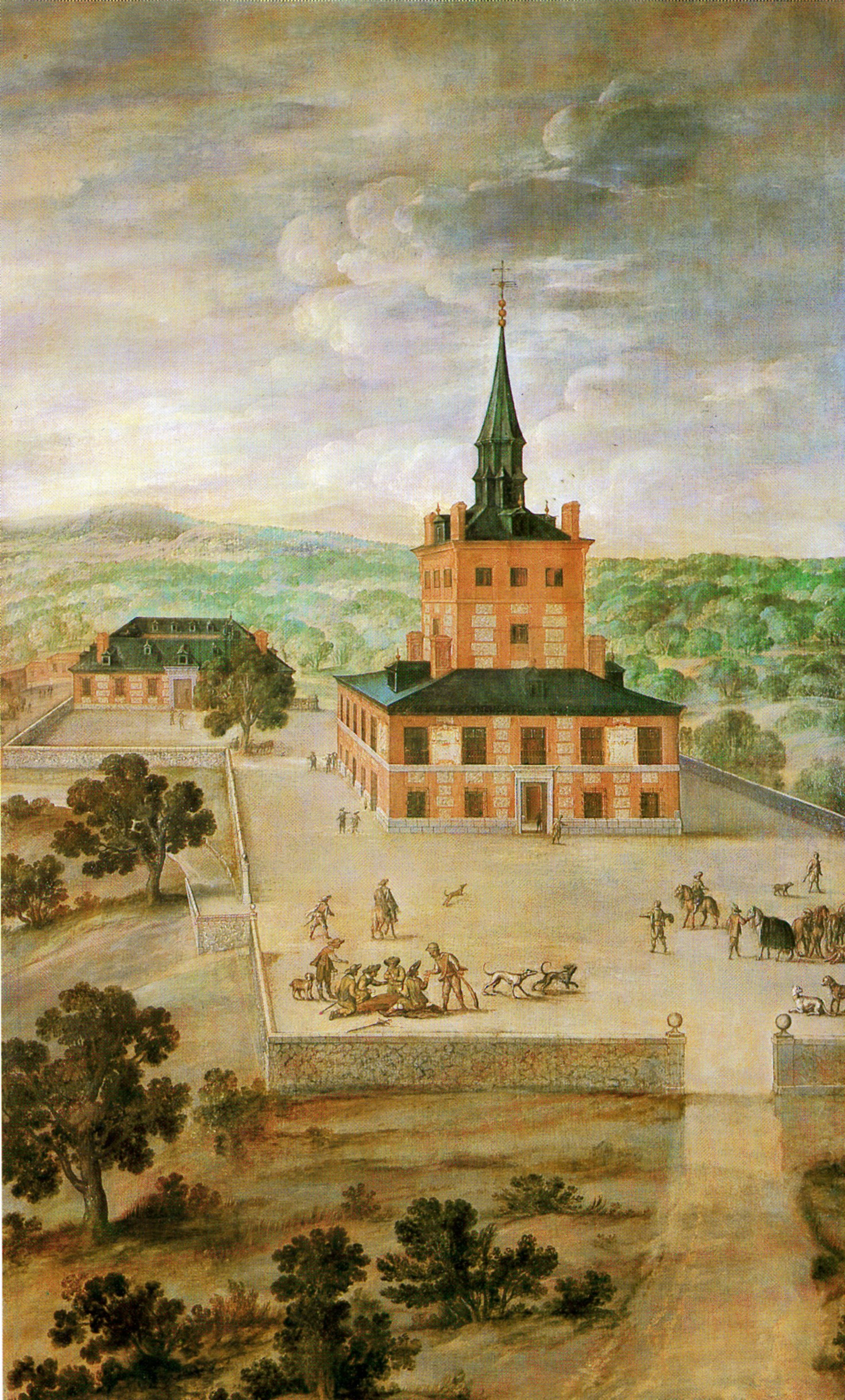
The story begins in 1717, when Alonso Manrique de Lara y Silva, Duke of Arco and a close courtier of Philip V, bought a farm known as Quinta de Valrodrigo from the widow of Francisco Quirivia. On the land he built a house echoing the architectural style of the nearby Zarzuela Palace. Between 1726 and 1737 he also commissioned the surrounding gardens, laid out in the late Baroque style — today regarded as one of the finest surviving examples of this formal garden tradition in Spain. A striking giant sequoia planted near the entrance has since become the estate's signature feature.
When the Duke died in 1745, his widow gifted the property to the reigning monarchs, Philip V and Elisabeth of Farnese, folding it into the Royal Estate of El Pardo. From that point on, the residence remained crown property.
What happened here in the 20th century?
During the 1930s the Quinta del Duque del Arco served as the residence of Manuel Azaña, president of the Second Spanish Republic. It was here that he learned of the military uprising of 17 July 1936, the event that triggered the Spanish Civil War. In 1935 the estate had already been declared a National Monument, with its gardens recognized as an artistic garden.
During the war, the palace housed the Republican Army's Fifth Division, which made it a recurring target for artillery fired from Nationalist positions in the nearby Casa de Campo. The damage sustained led to a thorough reconstruction between 1940 and 1941. The rebuilt palace was formally inaugurated in October 1942 by Francisco Franco as the Isabel la Católica Academy, a training school for female instructors of the Sección Femenina specializing in music, culture, and the arts.
What can visitors see today?
The palace is now managed by Patrimonio Nacional and rented out for private events and receptions, so its interior is closed to the public. The gardens, however, are a different story — they can be visited free of charge throughout the week. The main highlight is the fountain system, which is only switched on during Saturday and Sunday mornings, so weekend visits are the best bet for seeing them in full flow.
Walking the garden paths reveals the geometric layout typical of Baroque design: clipped hedges, symmetrical parterres, and carefully planned sightlines that draw the eye toward the palace façade.
How do you get there?
The Quinta del Pardo lies roughly 7 km from the town of El Pardo in the direction of Madrid, within the wider Royal Estate of El Pardo. It makes a natural stop if you're also planning to visit the Royal Palace of El Pardo, which is open on guided tours with a separate ticket. The surrounding area is well suited to a longer walk through green space, offering a quiet escape despite its proximity to the capital.
Frequently Asked Questions
Can you go inside the palace? No — the building is rented out for private events and receptions, and its interior is not open to visitors.
Is entry to the gardens free? Yes, access to the gardens is free of charge.
When do the garden fountains run? The fountains only operate on Saturday and Sunday mornings.
What else is worth combining with a visit to the Quinta del Pardo? A guided tour of the nearby Royal Palace of El Pardo and a walk through the grounds of the Royal Estate of El Pardo.
Nearby places

Earn badges for the places you visit
Download NextOnTrip, discover new places and check off your trails.