About this place
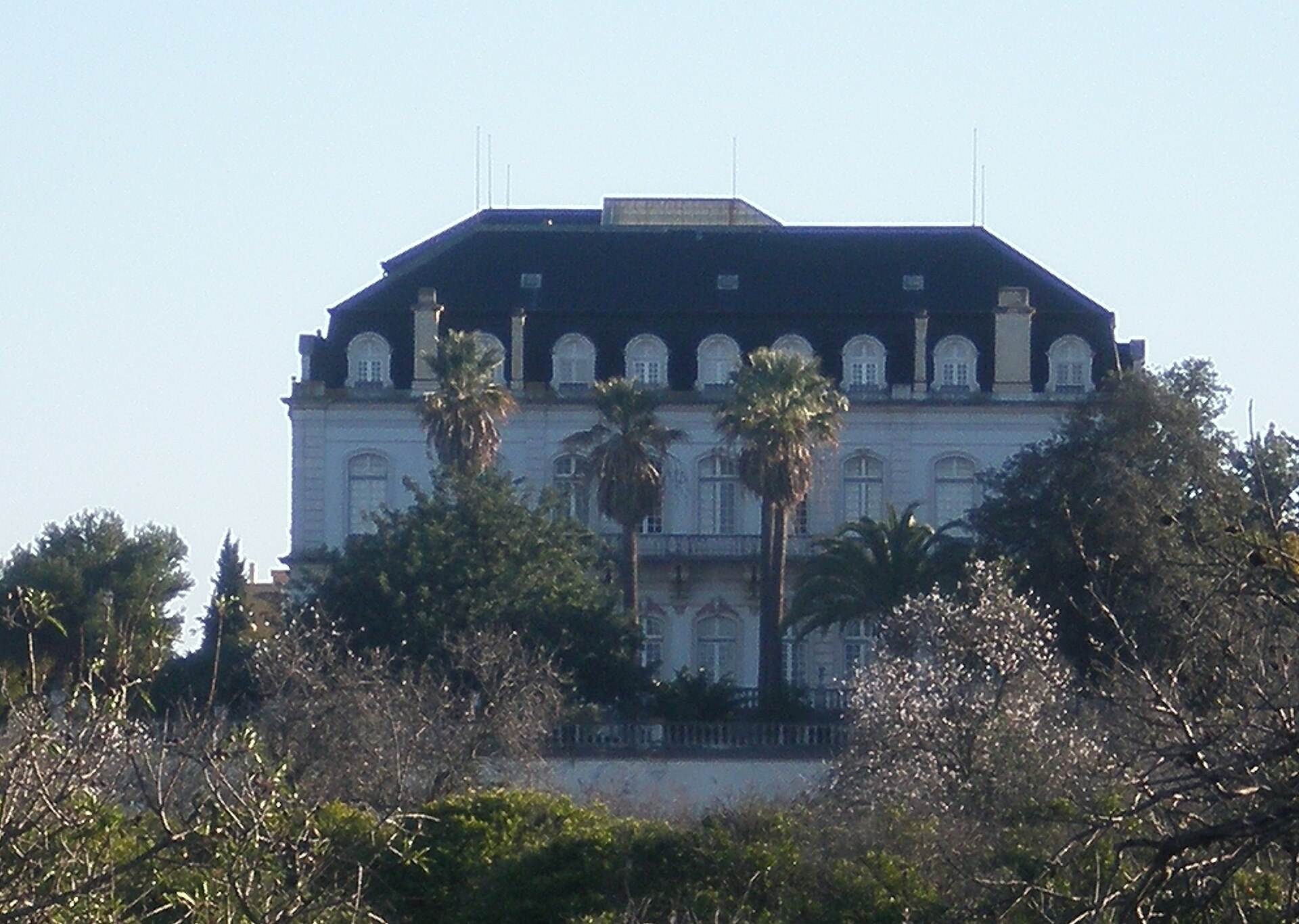
Palacete Belmarço is a historic townhouse in Faro, the capital of Portugal's Algarve region. It is regarded as one of the city's symbols and is the leading example of revivalist architecture in Faro. You will find it in the centre, close to the old town, at coordinates 37.014 N, 7.933 W.
Who built Palacete Belmarço?
The design dates from 1912 and came from Manuel Joaquim Norte Júnior, one of the most respected Portuguese architects of his day. The client was Manuel de Jesus Belmarço, a wealthy merchant who made his fortune trading coffee and cereals. Construction began in 1912 and finished in 1917.
What does the building look like?
The palacete is a fine example of bourgeois residential architecture with eclectic and revivalist features. The designers drew on forms from earlier periods and combined them in a showpiece villa meant to display the owner's standing. In Faro it is considered the best example of this trend. The building is classified as a Monument of Public Interest (Monumento de Interesse Público).
What is there to see inside?
The interior is decorated with two remarkable azulejo tile panels dated 1916 and signed Pinto. They show assorted Portuguese scenes, including the Belém Tower, the port of São João do Estoril and the Pena Palace in Sintra. For anyone interested in traditional Portuguese tilework, they are the main reason to look inside.
What happened to the house afterwards?
Manuel de Jesus Belmarço died in 1918, a year after the house was completed. His son Vidal Belmarço inherited it, and he and his wife lived there until the 1960s. In 1996 the Faro municipal council (Câmara Municipal) bought the building, planning to restore it and use it as the seat of the Court of Appeal in Faro. Its rehabilitation later featured in Portuguese publications on heritage conservation.
Frequently asked questions
Where is Palacete Belmarço? In the city of Faro, in the Algarve region of southern Portugal.
When was it built? Work ran from 1912 to 1917.
Who designed it? Manuel Joaquim Norte Júnior, commissioned by the merchant Manuel Belmarço.
What style is the building? Eclectic and revivalist, and considered the most important example of its kind in Faro.
What is most interesting inside? Two azulejo panels from 1916 showing well-known Portuguese sights such as the Belém Tower and the Pena Palace.
Is it worth adding to a walk around Faro? Yes. It sits near the old town, so it is easy to combine with the cathedral, the marina and the narrow streets of the centre. Check current opening hours with the tourist office or the city website before you go, as access to the interior depends on how the building is currently used.
Nearby places

Earn badges for the places you visit
Download NextOnTrip, discover new places and check off your trails.