Save this place and discover nearby attractions with NextOnTrip
In the app you can add it to your favorites, see what else is worth visiting nearby on the map, and earn a badge for your visit.
The app is available for iPhone and Android.
About this place
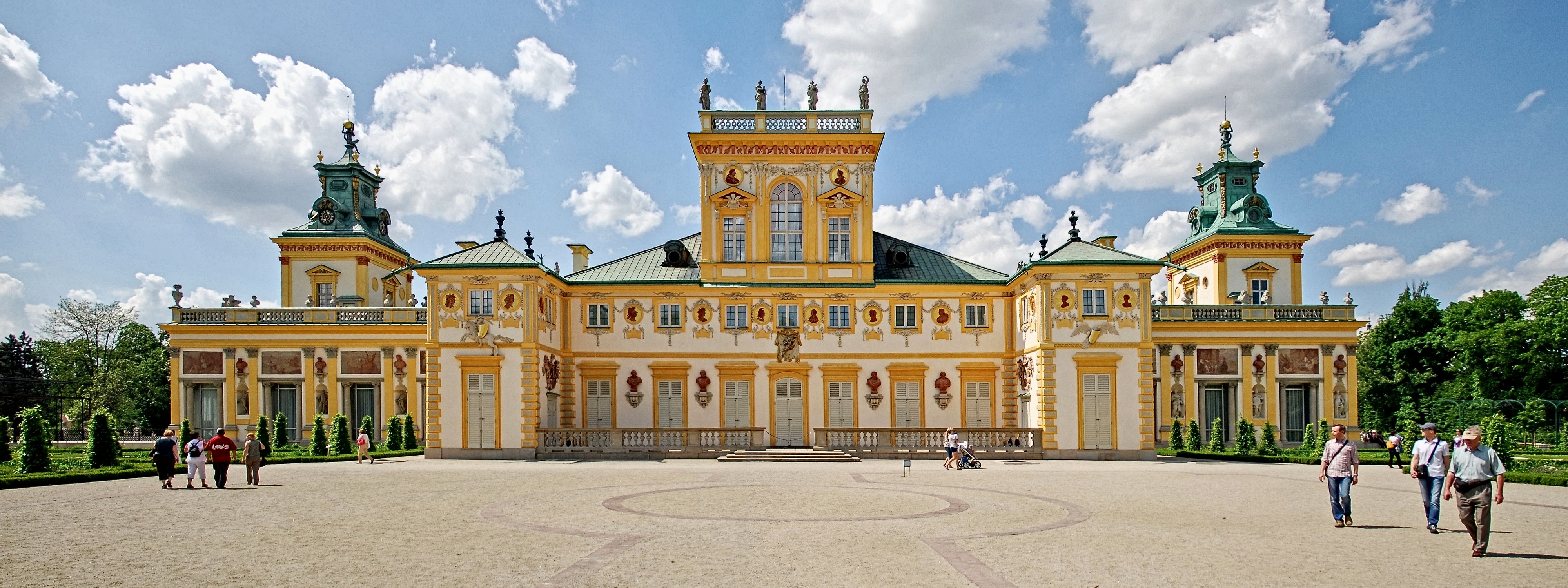
Wilanów Palace is a Baroque royal residence in the south of Warsaw, one of the few grand historic sites in the capital that came through the wars of the past largely intact. The palace and its gardens form a palace-and-park complex that has ranked among Poland's finest addresses for over three centuries.
Who built Wilanów Palace?
The residence was built for King John III Sobieski and Queen Marie Casimire. The king bought the village of Milanów in 1677 and wanted a summer home there modelled on an Italian villa set within a garden. He called it "Villa Nova", which Varsovians gradually turned into "Wilanów". Construction ran from 1681 to 1696 to a design by Augustyn Wincenty Locci, the king's secretary and artistic adviser. The building has the proportions of a country villa, yet its facades carry sculptures, cartouches and reliefs celebrating the king's victories, including the Relief of Vienna.
How did the palace change after the Sobieskis?
After Sobieski's death the estate passed through several hands. In 1720 it came to Elżbieta Sieniawska, daughter of Stanisław Herakliusz Lubomirski. She added the side wings (built 1723–1729), renovated the garden and hired artists to decorate the interiors. Later Lubomirski owners, among them Maria Zofia Denhoff and Izabela Czartoryska Lubomirska, gave the residence an artistic character rooted in Baroque and Rococo taste.
Poland's first art museum
In the 19th century Aleksandra Potocka and her husband Stanisław Kostka Potocki built up a collection of art. In 1805 a museum opened at Wilanów that welcomed visitors from every social class, regarded as the first public art museum in Poland. Today the palace houses the Museum of King Jan III's Palace at Wilanów, and nearby buildings are home to the Poster Museum, which presents a collection of graphic art and posters.
What to see at Wilanów
- The palace interiors: state rooms, portraits, furniture and historic art collections.
- The Baroque garden, laid out on two levels and descending in terraces toward the lake. Its present form is the result of reconstruction in the 1950s.
- The rose garden, in a neo-Renaissance style.
- The English-style landscape park, ideal for a walk after touring the rooms.
- The Poster Museum, the first museum of its kind in the world, close to the palace.
The gardens are being revitalized step by step, so some paths and beds may look different from older photographs.
Frequently asked questions
How long does a visit take? Allow about an hour for the palace interiors and about as long for the gardens. With a relaxed stroll and a stop at the Poster Museum, half a day works comfortably.
Is Wilanów a good place to visit with children? Yes. The extensive gardens and park offer plenty of room to move around, and the route through the rooms is a good way to tell the story of King Sobieski's era.
Is the palace worth visiting in any season? The grounds change through the year: greenery and roses in spring and summer, colourful foliage in autumn. Check the museum's website for interior opening hours before you go.
Why is it called Wilanów? The name comes from the Italian "Villa Nova", meaning "new villa", the title the king gave his residence.
Who designed the palace? Augustyn Wincenty Locci designed it, while the later wings were added under Elżbieta Sieniawska.
Nearby places

Earn badges for the places you visit
Download NextOnTrip, discover new places and check off your trails.