About this place
Potštejn Chateau
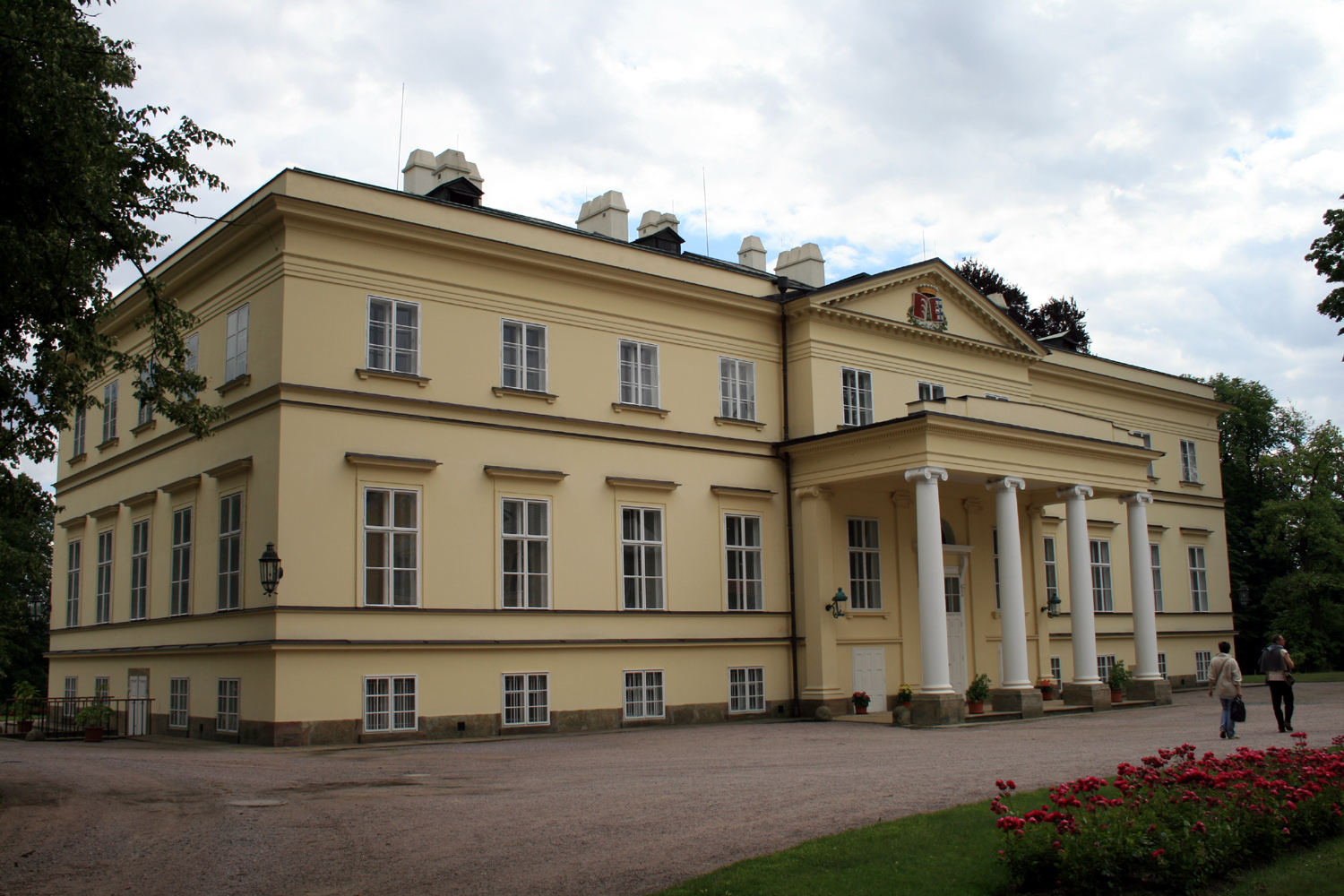
Potštejn Chateau is a Baroque residence standing at the very center of the small village of Potštejn, in the Rychnov nad Kněžnou District of the Hradec Králové Region, in northeastern Czechia. Built in the mid-18th century as a new seat for the local estate, it later passed through a turbulent stretch of 20th-century history — from a rest retreat for the British ambassador to a trade-union training center — before reopening its restored rooms to visitors in recent decades.
Where exactly does the chateau stand?
The building sits in the heart of Potštejn, close to the Divoká Orlice river, in the Podorlicko area. It should not be confused with the medieval Potštejn Castle, whose ruins crown a hill above the village on a separate site — it was precisely the fate of that older stronghold that led to the chateau being built down in the valley.
Why was the chateau built here?
Once the hilltop castle overlooking Potštejn had fallen into ruin and could no longer serve as a comfortable residence, the estate's owner decided to raise a new seat at the foot of the hill, on the site of an existing complex of manor farm buildings. The new structure was meant as a successor to the abandoned fortress — a representative center for the estate, but without any defensive purpose.
Who built the Baroque chateau?
The chateau was built between 1749 and 1755 on the initiative of Count Harbuval Chamaré, who acquired the estate in 1749 and personally oversaw the design of his new residence. The architectural plans were drawn up by Josef Jäger. The richest decoration went to the entrance facade, where a portal was crowned with a balcony resting on columns. A chapel with a distinctive semicircular projection was added to the south wing.
What happened to the chateau in the 20th century?
After the Second World War, between 1945 and 1946, the chateau was rented by the British Embassy as a rest retreat for the ambassador. In 1949 it was taken over by the Revolutionary Trade Union Movement, which turned it into a training center for officials and workers. That period left a heavy mark on the building: it underwent numerous structural alterations, its interiors were damaged, and much of its original furnishing was removed or lost. The trade unions did not leave the building until 1989.
What can visitors see at the chateau today?
Following years of neglect, the chateau has been undergoing a gradual, comprehensive restoration. Part of the interior is already open to the public, including an impressive mirrored hall, while further rooms are being prepared for opening one by one. The chateau welcomed tourists again in 2006, and in 2010 an English-style park was opened alongside it, now a natural complement to any visit.
Frequently asked questions
When was Potštejn Chateau built? Between 1749 and 1755, commissioned by Count Harbuval Chamaré and designed by architect Josef Jäger.
Is the chateau the same as Potštejn Castle? No. Potštejn Castle is a separate medieval ruin on the hill above the village — the chateau was built in the valley as its representative successor.
Why does the chateau still need restoration? Because between 1949 and 1989 it served as a trade-union training center, which caused extensive damage to its interiors and the loss of much of its original furnishing.
Since when can the chateau be visited? It reopened to tourists in 2006, and its surrounding English-style park was opened to visitors in 2010.
What is worth seeing inside? Highlights include the mirrored hall and the entrance portal with its column-supported balcony, the richest decorative feature of the facade.
Nearby places

Earn badges for the places you visit
Download NextOnTrip, discover new places and check off your trails.