About this place
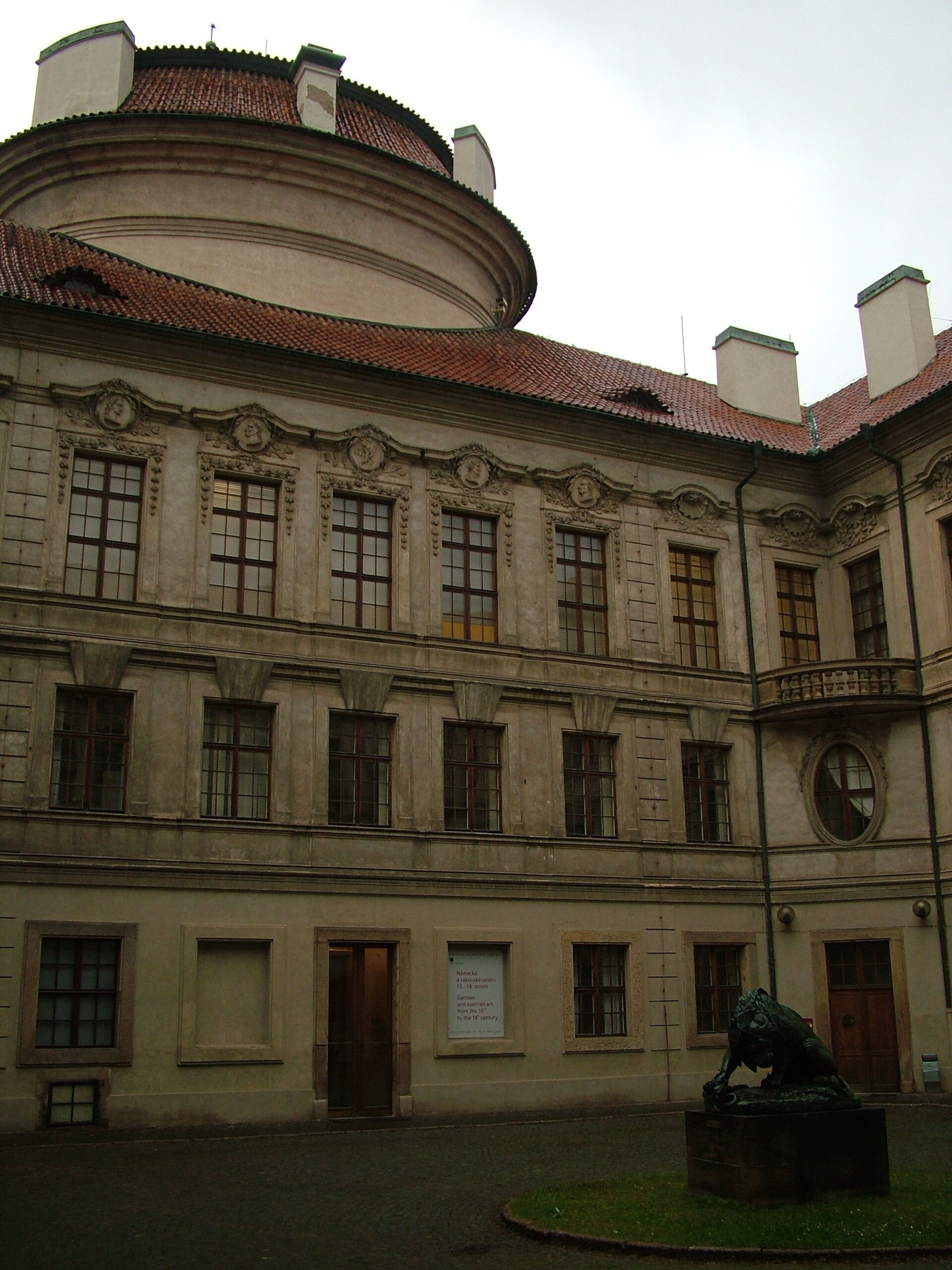
Sternberg Palace is a Baroque residence tucked just off the main approach to Prague Castle, and for decades it has served as one of the principal homes of the National Gallery Prague. Behind a modest façade set back around an oval courtyard sits a collection of European old-master paintings substantial enough to make the palace a genuine destination in its own right, not just a stop on the way to the castle gates.
Who built it, and why the name?
Construction began around the turn of the 18th century at the initiative of the Sternberg family, one of the aristocratic houses tied to the Habsburg court in Bohemia. The design is usually credited to Giovanni Battista Alliprandi, an Italian architect active in Prague at the time, though some historians also point to Jan Blažej Santini-Aichel or other figures in his circle, since surviving records from the period are patchy. The founder's death left the project unfinished relative to its original plan, which is still visible today in the slightly asymmetrical arrangement of wings around the courtyard. The elaborate interior stucco work is attributed to the Italian stuccoist Giuseppe Donato Frisoni, with painters such as Michael Václav Halwax and Jan Rudolf Bys contributing to the decorative schemes.
How did a private palace become an art gallery?
The building's life as an exhibition space traces back to the 19th century and the Society of Patriotic Friends of Art, a body that collected and displayed paintings long before today's National Gallery existed in its current form. That tradition is the direct ancestor of the palace's present role: since 1947 it has housed one of the most important collections of historical European painting in the Czech Republic. Worth noting for anyone cross-referencing this database — a separate entry for the same building appears under the name "Šternberský palác," a duplication in the source data rather than a second, distinct location.
What's actually on display?
The permanent exhibition, titled "Old Masters II," walks visitors through 14th- and 15th-century Italian painting, Dutch and German works from the early modern period, and Central European art of the 17th and 18th centuries. The undisputed centerpiece is Albrecht Dürer's "Feast of the Rosary," an altarpiece painted in Venice in 1505 and later brought to Prague under Rudolf II, in which Dürer included his own likeness in the background. Alongside it hang works by El Greco, Rembrandt, Rubens and Goya, together with paintings from the Brueghel family and Netherlandish masters such as Jan Gossaert and Geertgen tot Sint Jans. The galleries also hold a run of medieval altarpieces and a substantial collection of Bohemian miniatures.
Where exactly is the palace, and how do visitors reach it?
The palace stands in the Hradčany district, on a small square right at the entrance to the Prague Castle complex, next door to Strahov Monastery and the Archbishop's Palace. That position makes it an easy add-on to a castle-hill visit — most travelers arrive on foot after touring St. Vitus Cathedral or while walking up from Malá Strana toward the castle gates.
Frequently asked questions
Is Sternberg Palace part of Prague Castle itself? Not administratively — the building belongs to the National Gallery Prague — but it sits right beside the castle's main entrance, so most visitors combine the two on a single outing.
What's the single most famous painting here? Albrecht Dürer's "Feast of the Rosary" is consistently singled out as the collection's highlight and one of the key works of the German Renaissance held outside Germany.
Does the palace host temporary exhibitions? Yes, alongside the permanent "Old Masters" display, the National Gallery regularly organizes temporary shows focused on individual artists or periods.
How much time should visitors set aside? Around ninety minutes to two hours suits anyone genuinely interested in the paintings, though the courtyard and exterior architecture can be taken in much faster.
Nearby places

Earn badges for the places you visit
Download NextOnTrip, discover new places and check off your trails.