About this place
Kinský Palace (Czech: Palác Kinských) is a Rococo palace on Prague's Old Town Square, instantly recognisable by its pink façade covered in white stucco ornament. Beyond its architecture, the building is famous above all for what happened inside and on its balcony — from the schooldays of Franz Kafka to a speech that opened the era of communist rule in Czechoslovakia.
Who built the palace, and why does it carry the Kinský name?
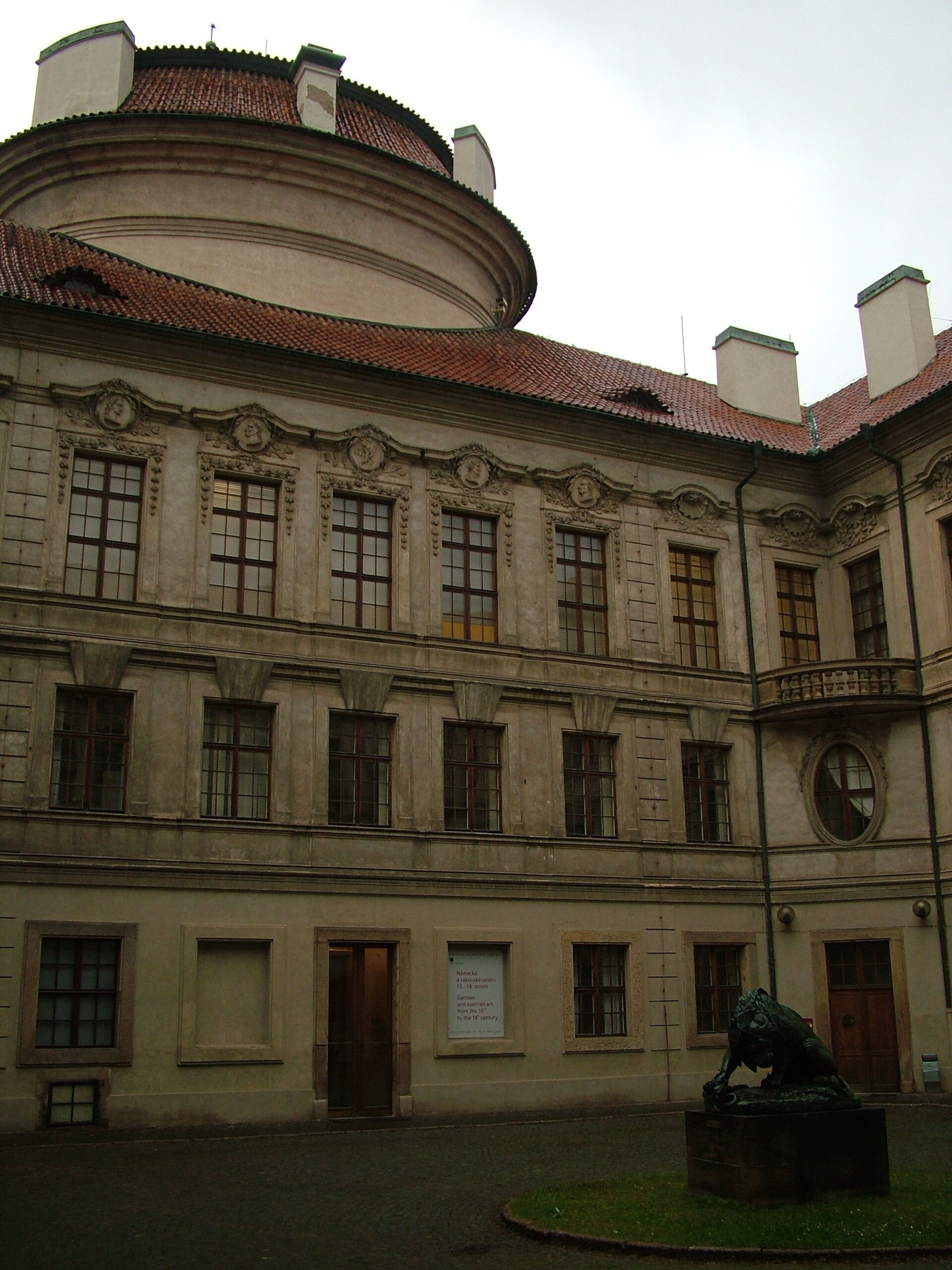
Construction at Old Town Square 12 began in the mid-18th century, commissioned by Count Jan Arnošt Golz, a Prussian nobleman — which is why the building is sometimes still called the Golz Palace. The design is attributed to Kilián Ignác Dientzenhofer, one of the leading architects of Prague Baroque, with the construction itself carried out by Anselmo Lurago. The result is a textbook Rococo façade: light, richly decorated with sculptural and stucco detail, standing out clearly from the heavier, earlier Baroque houses around the same square. Not long after completion, the property passed into the hands of the Kinský family, whose name the palace has carried ever since.
What was Franz Kafka's connection to the building?
The second floor of the palace housed a German grammar school, which the young Franz Kafka attended between 1893 and 1901 — long before he became one of the most influential writers of the 20th century. On the ground floor, his father Hermann Kafka ran a haberdashery and fashion-goods shop from 1912 onward. The Kafka family was therefore tied to this address in two separate ways, education and business, which is why the palace is now a regular stop on Kafka-themed walks through the Old Town.
What happened on the palace balcony in 1948?
On 25 February 1948, Klement Gottwald addressed the crowd gathered on Old Town Square from the balcony of Kinský Palace, announcing that the Communist Party had taken full control of the government. The event, remembered in Czech history as "Victorious February," marked the start of decades of one-party rule in Czechoslovakia. A photograph of Gottwald on that balcony, flanked by his colleagues, became one of the most recognisable images of communist propaganda — and later, after one of the men in it was airbrushed out of official copies, a textbook example of the regime rewriting its own history.
Who was Bertha von Suttner, and how is she connected to the palace?
In 1843, Bertha Kinská — later known as Bertha von Suttner — was born in the palace. An Austrian writer and pacifist, she became the first woman ever awarded the Nobel Peace Prize, in 1905. Her birth here adds a lesser-known but significant chapter to the building's history.
What is Kinský Palace used for today?
Since 1949, the palace has been part of the National Gallery Prague, originally serving as the seat of its graphic art collection and today used for temporary exhibitions. A major renovation between 1995 and 2000 opened up the Romanesque and Gothic cellars preserved beneath the building to the public — physical evidence of a much older structure that once stood on this spot, long before the current palace was built.
Frequently asked questions
Can visitors go inside Kinský Palace? Yes. The building belongs to the National Gallery Prague and regularly opens its interior for temporary exhibitions, accessible to the public under standard museum conditions.
Why is it called Kinský Palace if Count Golz built it? The building was commissioned by Jan Arnošt Golz, but soon after its completion it passed to the Kinský family, whose name it has kept ever since.
What is the palace's connection to Franz Kafka? Kafka attended the German grammar school on its second floor from 1893 to 1901, and his father ran a haberdashery shop on the ground floor starting in 1912.
What historic event took place on the palace balcony? On 25 February 1948, Klement Gottwald spoke from the balcony to announce the Communist takeover of Czechoslovakia, an event known as "Victorious February."
Nearby places

Earn badges for the places you visit
Download NextOnTrip, discover new places and check off your trails.